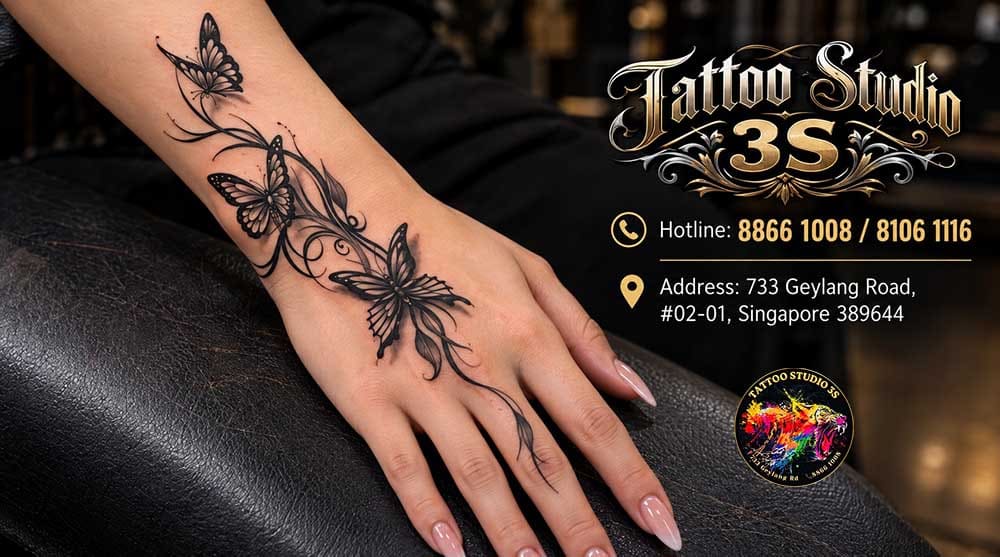
Black tattoos can be bold, striking, and long-lasting, but they can also become challenging when you no longer want the original design. Whether your tattoo has faded, no longer matches your style, or simply carries a meaning you have outgrown, a cover up black tattoo can give old ink a completely new direction.
Covering black ink is usually more complex than working over a light or faded tattoo. Dark pigment, heavy outlines, and solid areas can limit the colors and designs available. However, with thoughtful planning, the right tattoo style, and an experienced cover-up artist, many black tattoos can be transformed into fresh and visually impressive artwork. This guide explores how black tattoo cover ups work, which designs and styles are suitable, whether laser fading is necessary, and what you should consider before transforming dark old ink.
Can You Cover Up A Black Tattoo?
Yes, many black tattoos can be covered, but the possibilities depend heavily on the existing tattoo. Black is one of the strongest and most visually dominant tattoo pigments. Unlike a small, lightly faded tattoo, dense black ink cannot simply disappear beneath a few lighter colors. Instead, an experienced artist studies the existing lines, shapes, dark areas, and available negative space before creating a new composition around them. The objective is not always to completely “erase” the old tattoo with new ink. A successful cover up redirects attention toward the new artwork and incorporates or disguises the original design.
Why Black Ink Is More Difficult To Cover
Tattoo cover ups do not work like painting over a wall. New tattoo pigment is deposited into skin that already contains old pigment, so the underlying black ink can continue to influence the appearance of the new tattoo. Dense black areas and thick outlines are particularly challenging because lighter pigments generally cannot simply hide them. For this reason, artists often use strategic shading, texture, strong shapes, and darker areas within the new artwork to disguise existing black ink.
What Makes A Black Tattoo Easier Or Harder To Cover?
Several factors determine the difficulty of a black tattoo cover up, including:
- Size of the existing tattoo
- Amount of solid black ink
- Thickness of the outlines
- Age of the tattoo
- Degree of fading
- Location on the body
- Presence of scar tissue
- Size and style of the new design
An older tattoo with faded black lines may provide significantly more flexibility than a recent tattoo containing large areas of saturated black. This is why an in-person assessment is important before deciding what can realistically be achieved.
How Does A Black Tattoo Cover Up Work?
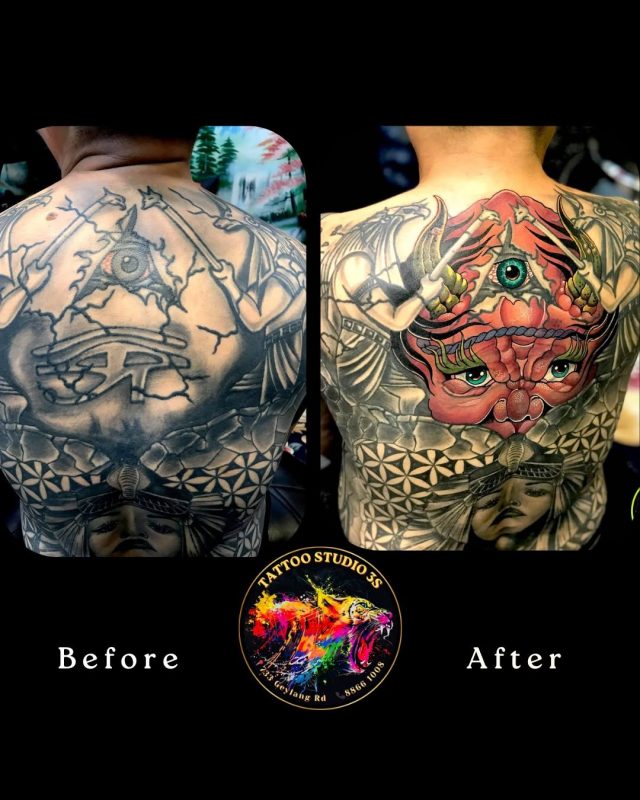
A successful black tattoo cover up starts with designing around the existing ink rather than ignoring it. The artist identifies which parts of the old tattoo can become shadows, textures, background elements, or darker sections of the new artwork. From there, a new composition is developed to make the original tattoo much less noticeable.
Using The Existing Black Ink As Part Of The New Design
Sometimes, the most effective solution is not fighting against the old black ink but incorporating it into the new tattoo.
For example, dark sections might become:
- Animal fur
- Flower shadows
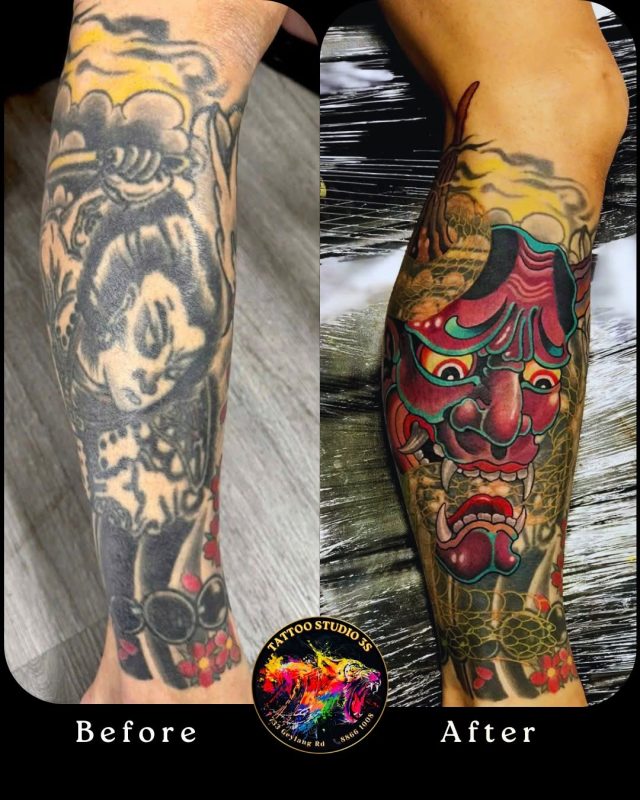
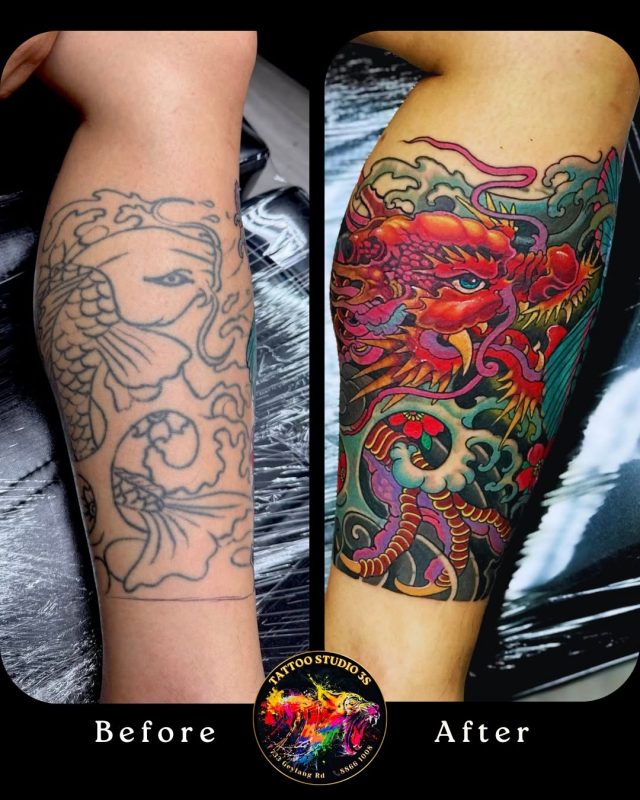
- Dragon or snake scales
- Hair
- Leaves
- Clouds
- Background elements
- Abstract textures
When done thoughtfully, the old tattoo becomes part of the visual structure of the new artwork rather than an obvious image underneath it.
Creating Contrast, Depth And Visual Distraction
Visual distraction is an important part of many cover-up designs. Strong focal points, detailed textures, shading, and carefully positioned highlights can draw attention toward the new subject instead of the old tattoo. The artist may also vary the amount of detail across the piece to create depth and prevent the covered area from appearing like one heavy block of ink.
Expanding The Design Beyond The Original Tattoo
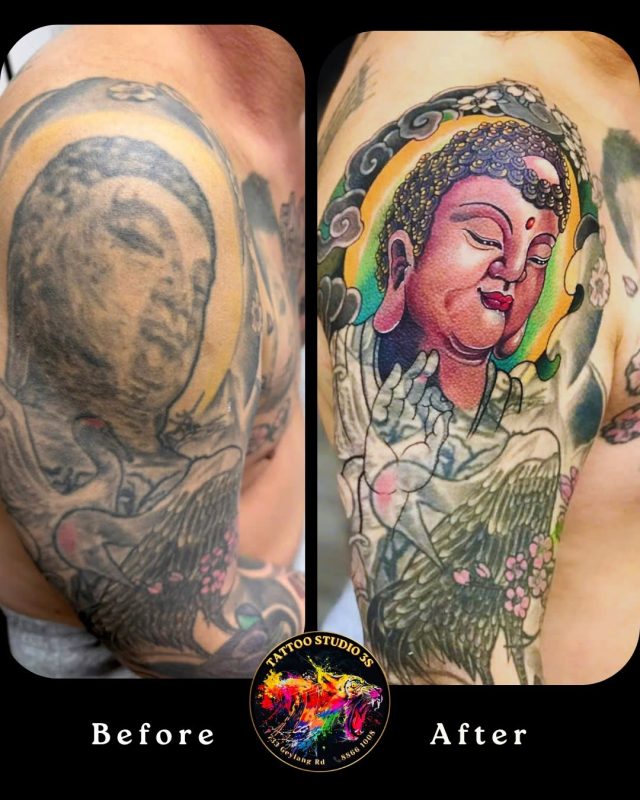
Black tattoo cover ups frequently need to be larger than the original artwork. Additional space allows the artist to create a balanced composition rather than forcing every important detail directly over dark pigment. For example, a small black tattoo on the upper arm might become part of a larger floral, animal, Japanese, or ornamental composition extending across more of the arm.
What Colors Can Cover A Black Tattoo?
Color selection is one of the biggest considerations when covering dark ink. There is no universal color that simply makes black tattoo pigment disappear. Instead, the artist needs to select colors based on the density of the old ink, the surrounding skin, and the overall composition.
Can You Cover Black Ink With Another Color?
- Colors can sometimes be incorporated into a black tattoo cover up, especially around lighter or faded sections.
- Deep reds, blues, greens, purples, and other saturated tones may be useful in certain designs. However, results depend on the existing tattoo.
- Adding a bright color directly over heavily saturated black does not guarantee that the black underneath will disappear.
- This is why color cover ups need to be planned as complete compositions rather than simply replacing black pigment with another color.
Dark Colors Vs Light Colors For Tattoo Cover Ups
- Darker and more saturated tones generally provide more flexibility when working around black ink.
- Lighter colors can still play an important role by creating contrast and highlights in areas where the old tattoo allows them to work effectively.
- The goal is not necessarily to make the entire new tattoo dark. Instead, a skilled artist balances darker coverage areas with lighter sections, negative space, and detail.
Can White Ink Cover A Black Tattoo?
- White ink should not be viewed as a simple eraser for black tattoo pigment.
- Applying white over black may produce different results depending on the tattoo, skin, technique, and healing process. It generally cannot be relied upon to turn a heavily saturated black tattoo back into blank-looking skin.
- White may instead be used selectively as part of a broader artistic approach when the tattoo artist considers it suitable.
Best Designs For Cover Up Black Tattoos
The best design is not simply the one you like most. It also needs to work with the shape and density of your existing tattoo. Designs containing texture, layered elements, shadows, and strong visual features often provide greater flexibility.
Blackwork Designs
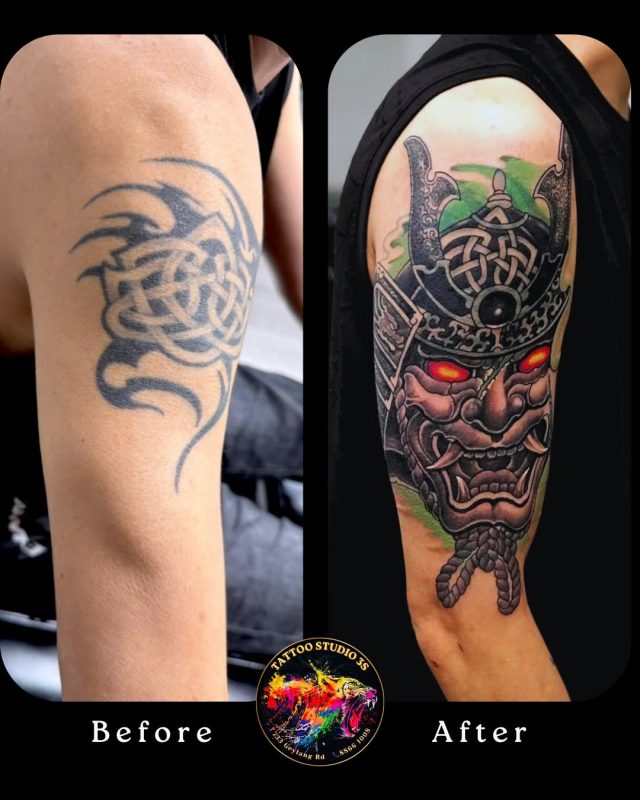
Blackwork is one of the most natural options for dealing with existing black pigment. Bold shapes, patterns, textures, and large areas of black can incorporate old lines while creating an entirely different composition. Blackwork can range from highly decorative pieces to contemporary abstract designs, so it does not necessarily mean covering the area with solid black.
Floral And Botanical Tattoos
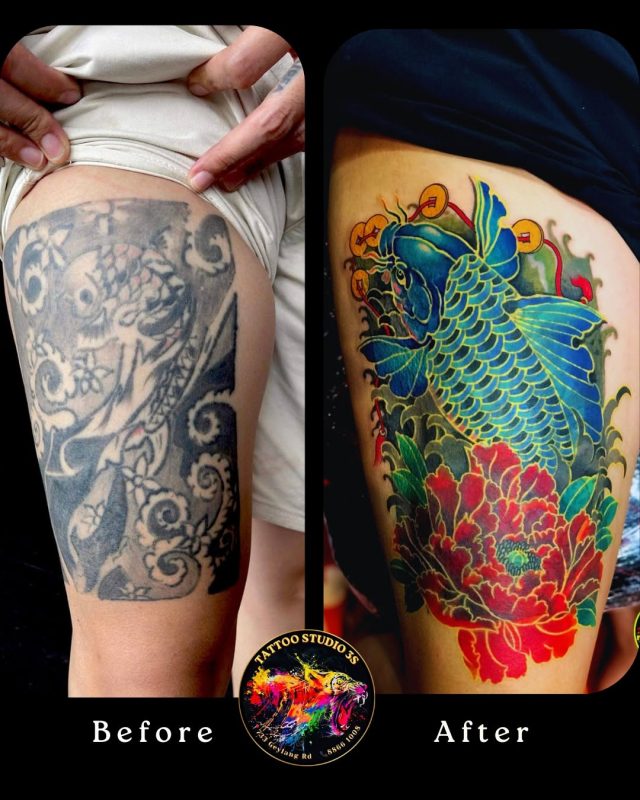
Flowers and botanical elements offer considerable flexibility because petals, leaves, stems, and shadows can be arranged around existing ink. Roses, peonies, chrysanthemums, and other layered flowers can create natural focal points, while darker leaves and background elements may help incorporate old black lines.
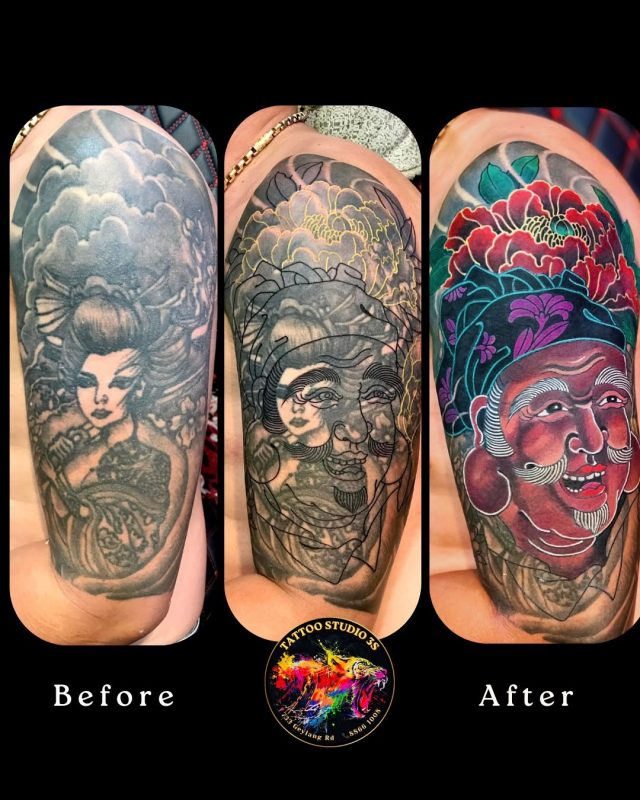
Japanese Tattoos
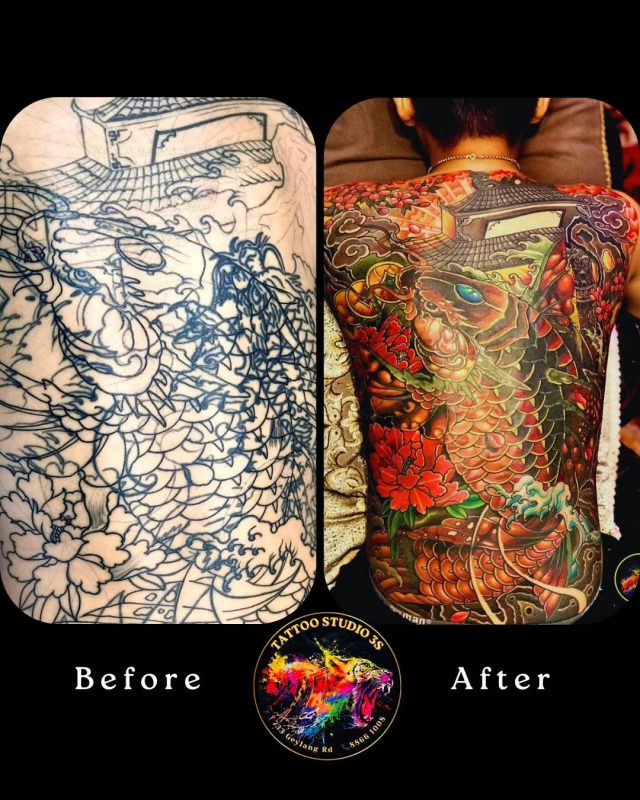
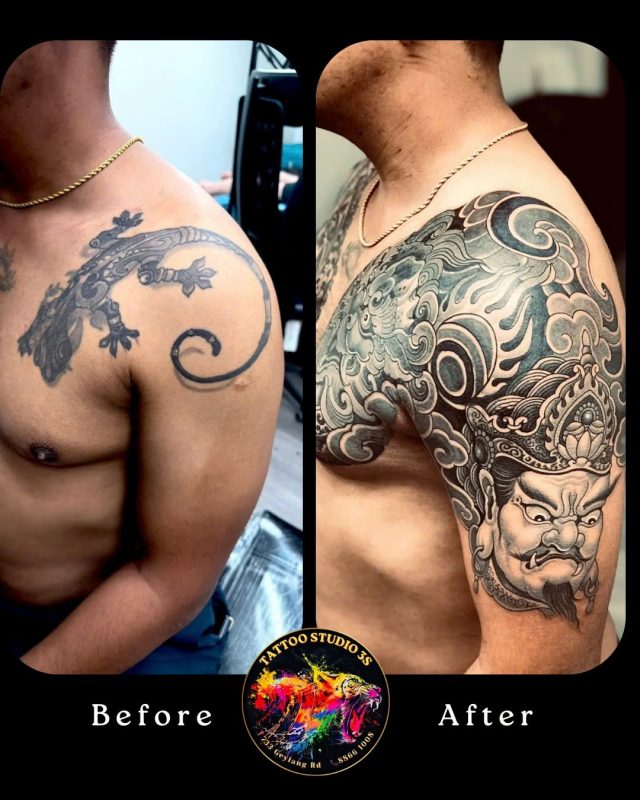
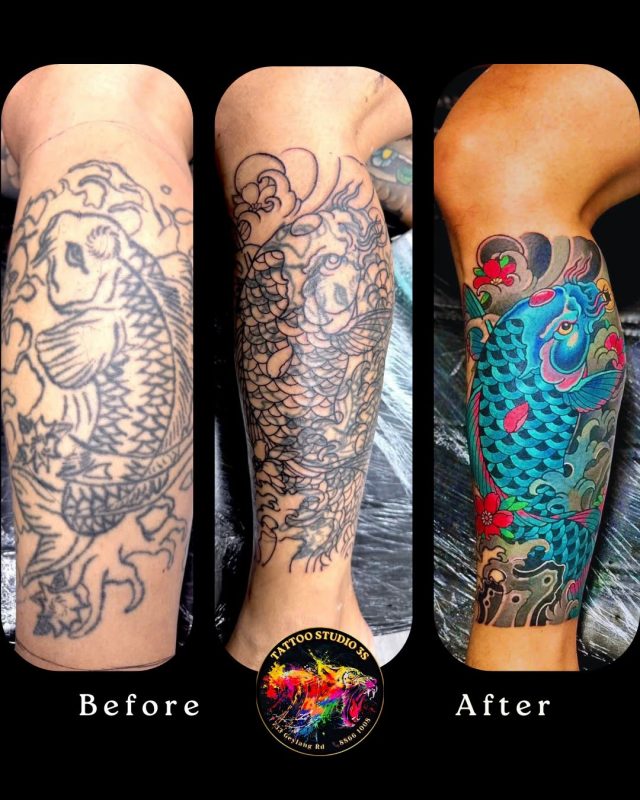
Japanese-inspired tattoos are particularly useful for some larger cover-up projects. Dragons, koi fish, tigers, snakes, flowers, waves, clouds, and wind elements can be combined into flowing compositions with substantial detail and shading. This flexibility can help integrate difficult areas of old black ink into a larger piece.
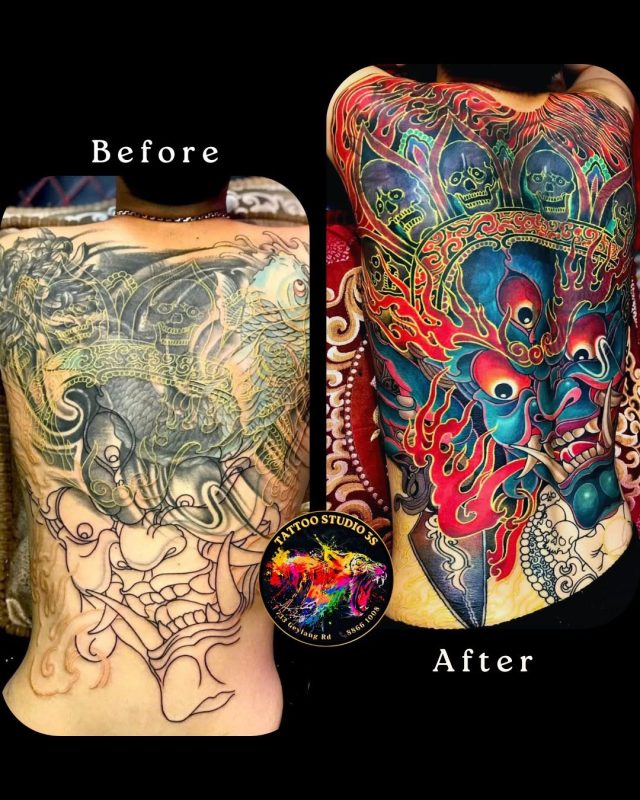
Animal And Wildlife Designs
Animals provide plenty of opportunities for texture and shadow. A lion’s mane, tiger stripes, bird feathers, snake scales, or wolf fur can sometimes incorporate darker sections of an existing tattoo. The new design can also be extended beyond the old tattoo to create a stronger focal point elsewhere.
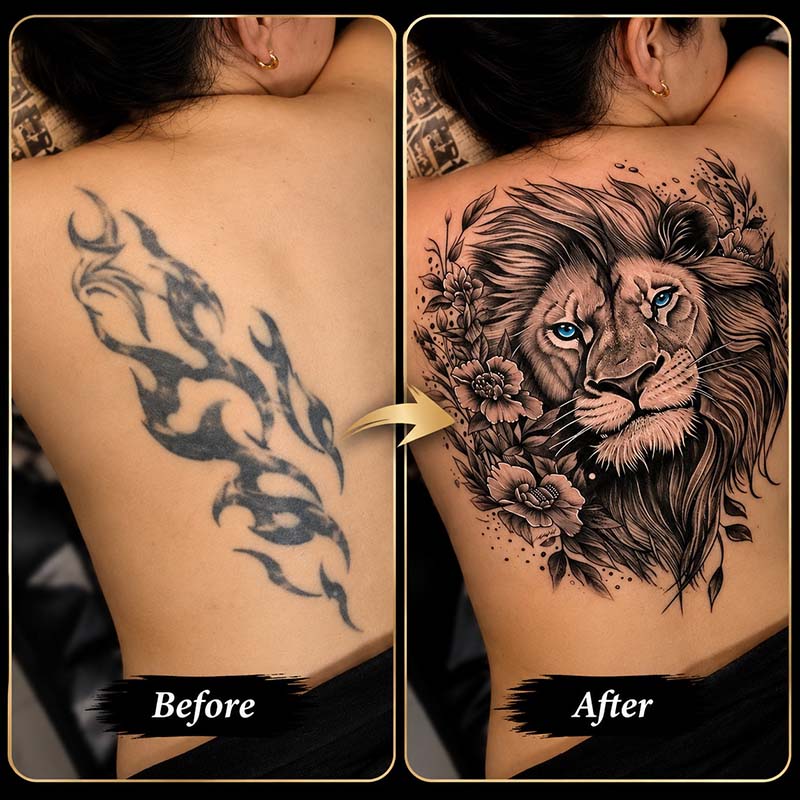
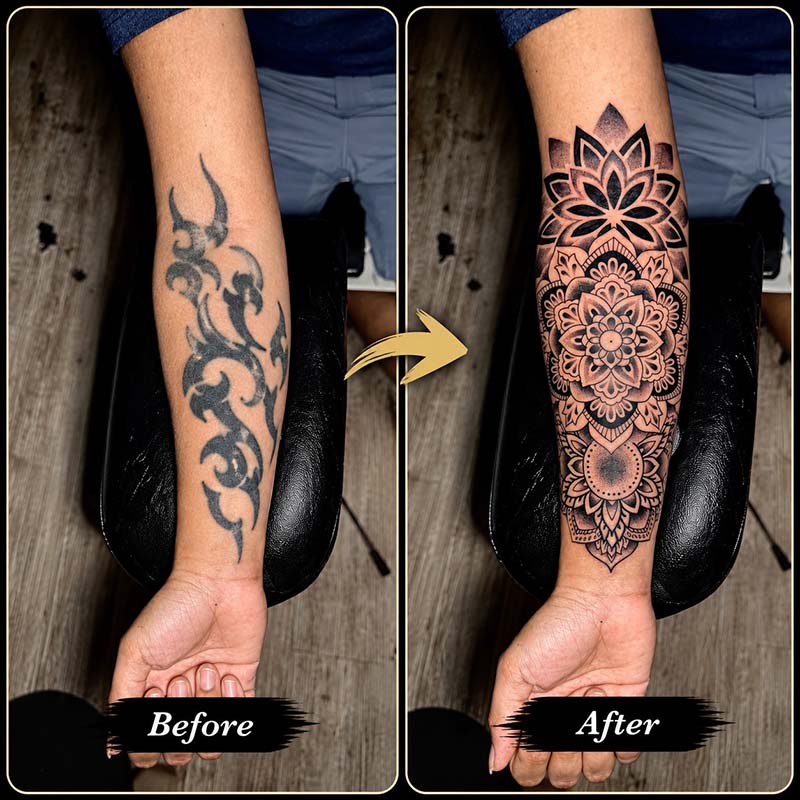
Ornamental And Mandala Tattoos
Ornamental designs can use patterns, decorative shapes, and repeating elements to transform suitable old tattoos. However, mandalas and highly symmetrical patterns require precision. If the existing tattoo contains irregular or extremely dark sections, the artist may need to modify the design considerably.
Abstract And Brushwork Designs
Abstract designs provide considerable creative freedom for challenging cover ups. Brush strokes, splashes, irregular shapes, textures, and expressive black areas can work around the existing tattoo without requiring strict symmetry. This can be especially useful when the old ink has an unusual shape.
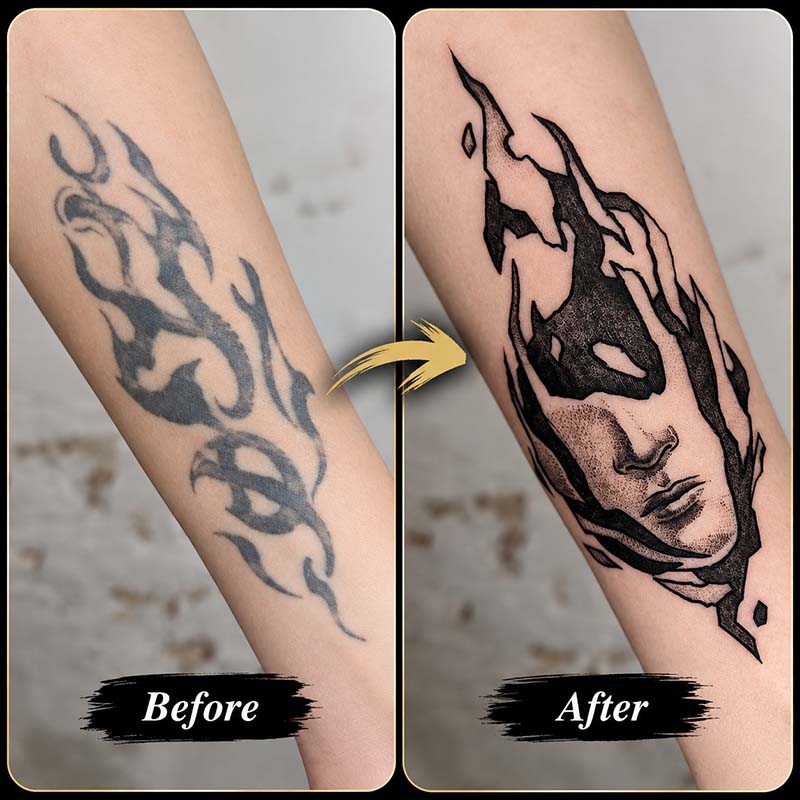
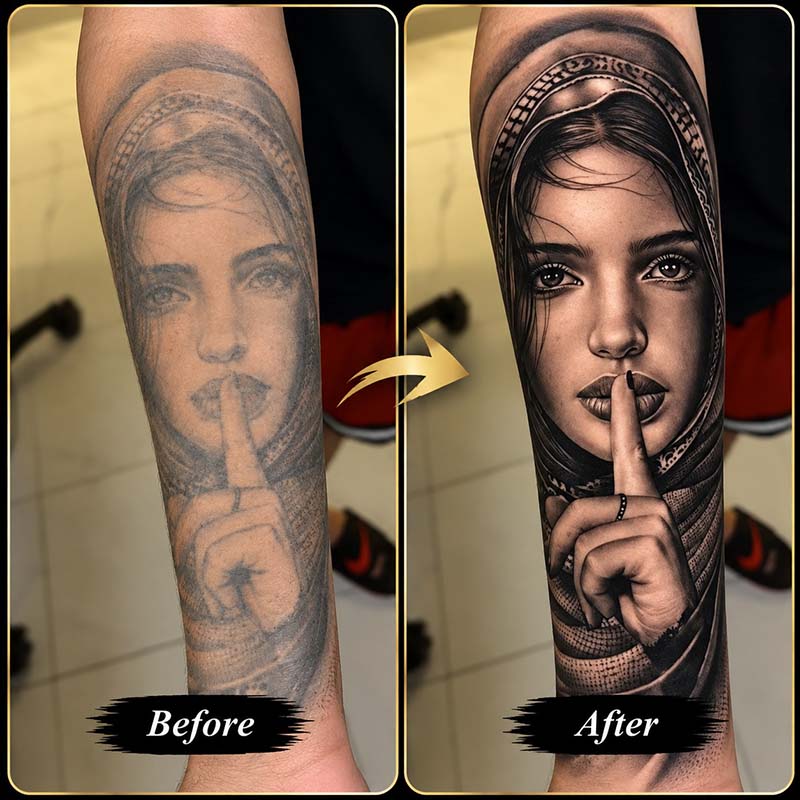
Dark Realism Tattoos
Dark realism uses realistic subjects combined with deep shadows, gradients, and detailed textures. Portraits, animals, statues, skulls, and other realistic imagery may work for certain black tattoo cover ups. However, realism requires careful planning because important facial features or fine details should not be positioned over areas where heavy old ink could interfere with them.
Best Tattoo Styles For Covering Heavy Black Ink
Heavy black ink limits some options, but certain tattoo styles provide more flexibility than others.
Blackwork And Blackout
Blackwork uses bold black shapes, patterns, and negative space, while blackout tattooing involves covering larger areas with solid or predominantly solid black ink. Both approaches may incorporate existing black tattoos, but they create very different visual results. Blackout is a significant aesthetic commitment, so it should be chosen because you genuinely want that appearance rather than simply as a quick way to hide unwanted ink.
Japanese Style
Japanese tattooing works particularly well for larger compositions because the main subject can be surrounded by waves, clouds, flowers, wind bars, or other background elements. This gives the artist more opportunities to place dark areas where coverage is needed.
Neo-Traditional Style
Neo-traditional tattoos often feature bold outlines, strong colors, decorative details, and dramatic shading. These characteristics can help create a visually dominant new composition over suitable existing tattoos.
Dark Realism
Dark realism can incorporate heavy shadows and complex textures while still creating depth and recognizable imagery. The feasibility depends strongly on the original tattoo, so an artist experienced in both realism and cover-up work is important.
Blackout Vs Cover Up: Which Approach Works For Black Tattoos?
A traditional cover up creates recognizable new artwork designed around the existing tattoo. A blackout tattoo, on the other hand, uses extensive areas of solid black ink as a major part of the finished appearance. For someone with a relatively small or faded black tattoo, a conventional cover-up design may provide many possibilities. When the existing tattoo contains extremely large areas of dense black ink, the available options may be more limited. Blackwork, blackout, or laser fading might become part of the discussion. Neither approach is universally suitable. Your existing tattoo and preferred aesthetic should guide the decision.
Can A Large Black Tattoo Be Covered?
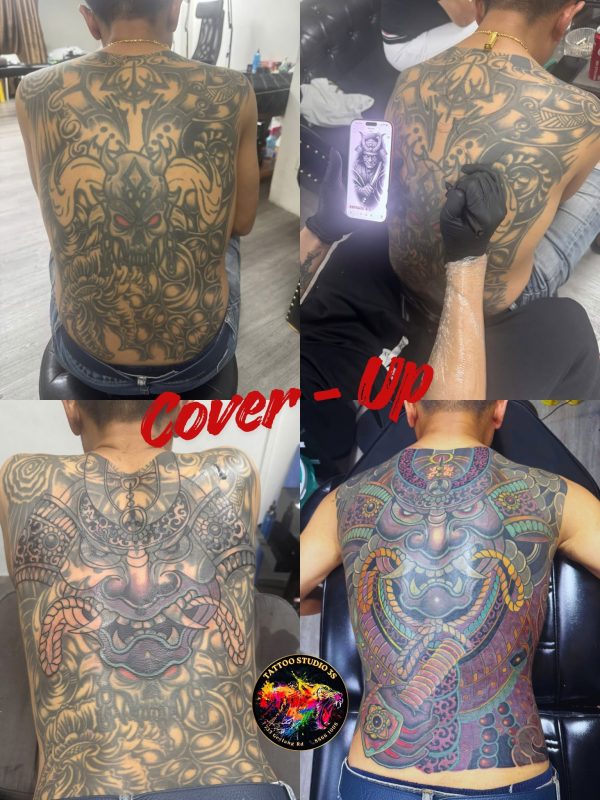
Large black tattoos can sometimes be covered or transformed, but they require significantly more planning. The larger and darker the original tattoo, the more limitations the artist may need to work around.
– Covering Large Areas Of Solid Black Ink: Solid black sections are among the most challenging areas to transform because there is limited opportunity to place lighter detail directly over them. An artist may incorporate these areas into a new blackwork composition, redesign the surrounding space, or suggest fading selected areas before tattooing.
– Turning A Small Tattoo Into A Larger Composition: Expanding the tattoo is often one of the most effective strategies. Instead of concentrating all the new detail over the old tattoo, the artist can create a larger composition with focal points placed on clearer skin. This allows the original black ink to become a secondary part of the overall artwork.
– Using Negative Space In The New Design: Negative space can help prevent a cover up from looking unnecessarily heavy. Where the original tattoo allows it, areas of untouched skin can provide contrast between darker elements and create a more balanced appearance. Negative space must be planned around the old tattoo rather than placed randomly.
Should You Fade A Black Tattoo Before Covering It?
Laser fading is not required for every black tattoo cover up. However, it may be worth considering when the original tattoo is extremely dark, large, densely packed, or positioned in a way that significantly restricts the new design.
When Laser Fading May Help
- Laser fading may help when certain black lines or solid sections interfere with the design you want.
- Reducing the visibility of these areas can give the tattoo artist more flexibility when planning the new artwork.
- A qualified laser professional should assess whether treatment is suitable for you.
Full Tattoo Removal Vs Partial Fading
- You do not always need to remove an unwanted tattoo completely before getting another one.
- Full removal aims to eliminate as much pigment as possible through multiple treatment sessions. Partial fading, by contrast, aims only to lighten enough of the existing tattoo to make a future cover up easier.
- For someone who already intends to get another tattoo in the same area, partial fading may sometimes be discussed as part of the overall plan.
How Fading Can Create More Design Options
- The lighter the most restrictive parts of an old tattoo become, the less the new artist may need to rely on extremely dark shapes to conceal them.
- This can potentially create more flexibility with composition, shading, and placement of important details.
How To Choose The Right Design For A Black Tattoo Cover Up
Choosing a cover-up design requires balancing personal taste with what is technically realistic. Bring reference images to your consultation, but expect your artist to adapt them to your existing tattoo.
– Consider The Shape And Density Of The Old Ink: Two black tattoos of the same size can require completely different approaches. A tattoo consisting mainly of thin faded outlines provides different possibilities from one filled with dense black pigment. Your artist should evaluate the distribution of the existing ink before deciding where new focal points, shadows, and details should go.
– Choose A Design With Enough Detail And Coverage: Designs with multiple layers, textures, shadows, and supporting elements can provide more flexibility than extremely simple designs. However, adding detail simply for the sake of hiding old ink can make a tattoo look cluttered. Every element should still contribute to the overall composition.
– Be Open To A Larger Tattoo: Trying to keep the new tattoo exactly the same size as the original can severely restrict the artist. Increasing the size provides more clean skin to work with and makes it easier to create natural transitions around the old tattoo.
– Let The Artist Adapt Your Ideas: Reference images are useful for communicating your preferences, but copying a design exactly may not work for a cover up. Allow your artist to modify the orientation, scale, shading, colors, and individual elements according to the tattoo already on your skin.
Common Mistakes To Avoid When Covering A Black Tattoo
A poorly planned cover up can leave you with an even larger tattoo that you still do not like. Avoiding several common mistakes can help you make a more informed decision.
- Choosing A Design That Is Too Small: A design that barely reaches the edges of the original tattoo leaves little room for visual redirection. Allowing the new artwork to extend beyond the old tattoo can create a more natural composition.
- Expecting Light Colors To Completely Hide Black Ink: Yellow, white, pale pink, and other light pigments should not be treated as paint capable of simply covering solid black ink. Color behaves differently when tattooed into skin containing existing pigment. Your artist should explain which colors are realistic for your particular tattoo.
- Adding Too Much Dark Ink Without A Clear Composition: More black does not automatically mean a better cover up. Adding dark areas without considering balance, focal points, negative space, and body flow can produce a visually heavy tattoo. The goal should be a cohesive new design rather than simply hiding every old line beneath darkness.
- Choosing An Artist Without Cover Up Experience: Cover-up tattooing requires specific planning skills. Before selecting an artist, review their portfolio and look for examples of actual cover-up projects, ideally including healed results where available.
Does A Black Tattoo Cover Up Take More Sessions?
It can, but there is no fixed number of sessions. A small, faded black tattoo may require relatively straightforward work, while a large piece containing dense black areas may need several tattoo sessions. The timeline depends on factors such as the size of the old tattoo, saturation of the black pigment, complexity of the new artwork, placement, skin response, and healing time. If laser fading is included before tattooing, the overall process will naturally take longer because adequate healing time is needed between treatments and tattoo sessions.
Is A Black Tattoo Cover Up More Painful?
A black tattoo cover up is not automatically more painful simply because the skin has previously been tattooed. Pain varies according to the location, individual sensitivity, length of the session, amount of shading, and condition of the skin. Large or complex cover ups may feel more demanding because sessions can be longer and certain areas may require substantial work. Your artist can help plan longer projects across multiple appointments when appropriate.
How To Care For A Black Tattoo Cover Up
Proper aftercare supports healthy healing and helps preserve the appearance of your new tattoo. Always prioritize the specific aftercare instructions given by your tattoo artist.
– Keep The Tattoo Clean And Protected: Wash the area according to your artist’s instructions and keep it clean during the healing period. Avoid unnecessary contact with dirty surfaces and do not repeatedly touch a fresh tattoo with unwashed hands.
– Avoid Picking, Scratching And Excessive Friction: Itching and peeling can occur during tattoo healing. Avoid scratching, picking at flakes or scabs, or allowing clothing to repeatedly rub against the area. Let the skin heal naturally.
– Protect Your Tattoo From Sun Exposure: Excessive UV exposure can contribute to tattoo fading over time. Keep a fresh tattoo away from direct sun while it heals. Once fully healed, appropriate sun protection can help preserve its appearance.
Why Choose Tattoo Studio 3S For A Black Tattoo Cover Up?
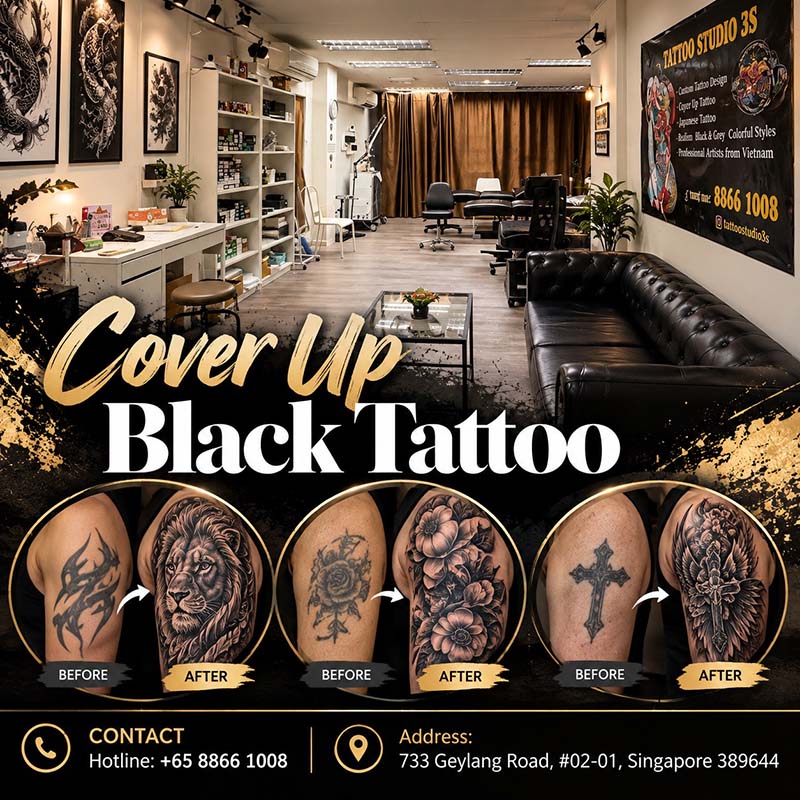
Covering dark ink requires more than choosing a new image from a catalogue. The new tattoo needs to be designed around what is already present on your skin. At Tattoo Studio 3S, the process can begin with an assessment of your existing tattoo and a discussion about the style and result you want to achieve.
– Personalized Cover Up Planning: Every black tattoo has a different size, shape, pigment density, and placement. A personalized consultation allows the artist to evaluate these characteristics and develop a cover-up direction suited to the existing tattoo.
– Experienced Cover Up Tattoo Artists: Cover-up experience matters when dealing with heavy outlines and dark pigment. An experienced artist can identify which parts of the old tattoo can be incorporated, which areas require stronger coverage, and where new focal points should be positioned.
– Designs Adapted To Your Existing Ink: Instead of forcing a predetermined design over the old tattoo, the artwork can be adapted around the ink already present. Size, orientation, shading, details, and composition can all be adjusted to create a more cohesive final piece.
FAQs About Cover Up Black Tattoos
Below are answers to several common questions about covering black tattoo ink.
Can You Cover Black Ink With Red?
Red can be incorporated into some black tattoo cover-up designs, but it should not be expected to simply hide heavily saturated black ink. The feasibility depends on where the red is placed, how dark the old tattoo is, and how the entire new composition is structured.
Can You Tattoo Skin Color Over Black Ink?
Skin-toned tattoo pigment does not simply restore heavily tattooed black areas to their original appearance. Tattoo pigment remains within the skin, and adding another pigment does not work like applying opaque paint over a surface. If your goal is to substantially reduce the visibility of dense black ink before a new design, discuss realistic options with experienced tattoo and laser professionals.
Can A Black Tattoo Be Covered Without Laser?
Yes. Many black tattoos can be covered without laser treatment. Whether this is practical depends on the size, density, age, and shape of the original tattoo as well as the design you want. Laser fading becomes an option when existing dark areas significantly restrict what the artist can create.
Does The Old Black Ink Show Through A Cover Up?
A successful cover up aims to make the original tattoo difficult to identify, but no artist should assume every piece of black ink can be made completely invisible. Results depend on the original pigment, new design, technique, skin, and how the tattoo heals. Viewing healed examples of an artist’s previous cover-up work can help you develop realistic expectations.
How Big Should A Black Tattoo Cover Up Be?
There is no fixed size ratio. The new tattoo often needs to extend beyond the original piece, but the exact dimensions depend on the shape and density of the old ink. Rather than deciding on a specific size beforehand, allow your artist to determine how much additional space is necessary to create a balanced design.
A dark tattoo you no longer love does not necessarily have to remain unchanged. With careful planning, many cover up black tattoo projects can transform old ink into artwork with a completely different style, composition, and meaning. The key is understanding the limitations of existing black pigment. Instead of simply placing another image over it, an effective cover up works with the old tattoo through strategic sizing, shading, color, texture, and composition. For particularly dark or complex pieces, laser fading may also provide additional design possibilities.
If you are considering a black tattoo cover up in Singapore, contact Tattoo Studio 3S for a personalized consultation. Our tattoo artists can assess your existing ink, discuss your preferred style, and explore suitable ways to transform it into a fresh new design.
CONTACT
Hotline: +65 8866 1008
Address: 733 Geylang Road, #02-01, Singapore 389644