Traditional tattoos are instantly recognizable for their bold outlines, strong colors, and iconic imagery. From roses and eagles to anchors, daggers, snakes, and swallows, these designs have helped shape tattoo culture for generations. Also commonly associated with old-school tattooing, the Traditional style focuses on clear compositions and powerful visual symbols rather than excessive detail. While tattoo trends continue to evolve, Traditional tattoos maintain a distinctive character that still feels relevant today. Whether you prefer a colorful sleeve, a bold chest piece, or a small classic design, Traditional tattooing offers plenty of possibilities for creating artwork with personality and lasting visual impact.
What Are Traditional Tattoos?
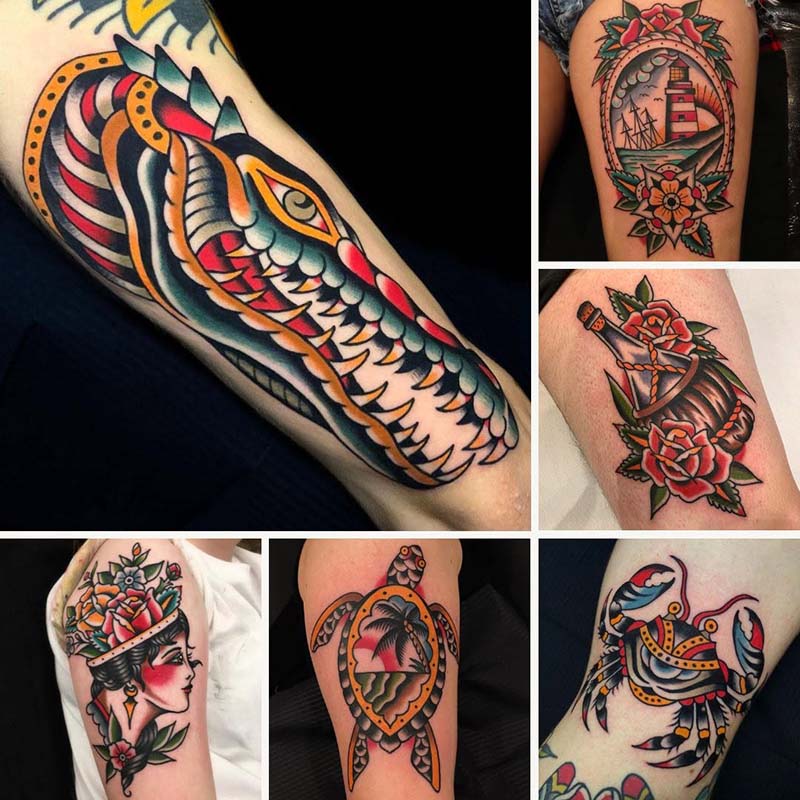
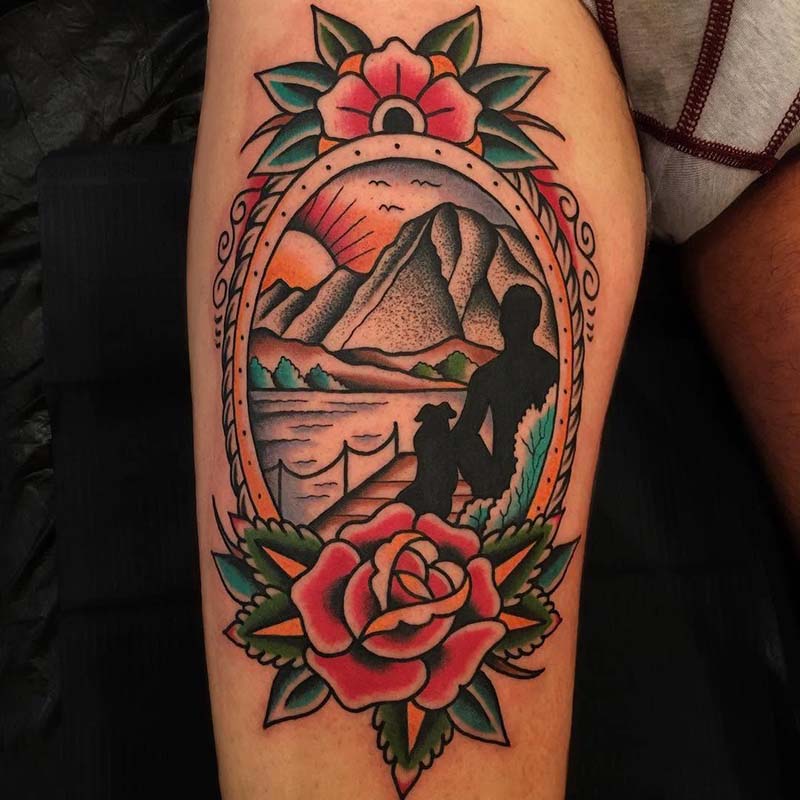
Traditional tattoos are a classic tattoo style characterized by bold black outlines, relatively simple compositions, solid colors, and easily recognizable imagery. The style is strongly associated with Western tattoo traditions, particularly American Traditional or Old-School tattooing. Classic designs frequently feature subjects connected with sailors, travel, love, courage, luck, danger, and adventure. Anchors, ships, swallows, roses, hearts, eagles, snakes, panthers, and daggers are some of the best-known examples. Rather than relying on highly realistic details, Traditional tattooing emphasizes strong silhouettes and visual clarity. This distinctive approach is one reason the style remains recognizable even from a distance.
What Makes Traditional Tattoos Unique?
Traditional tattoos have a visual language that makes them easy to distinguish from many contemporary tattoo styles.
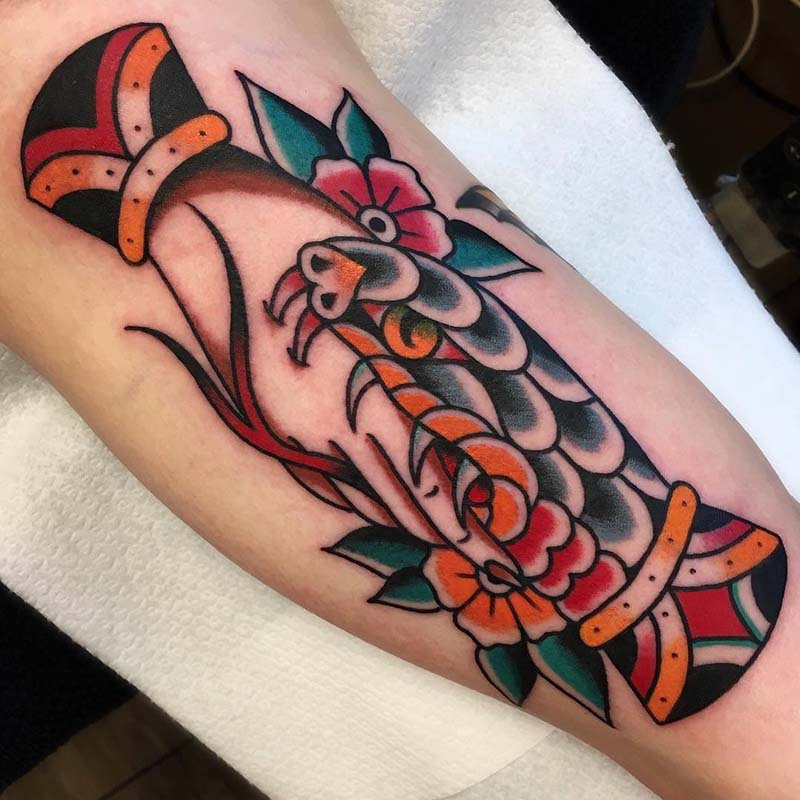
- Bold Black Outlines: Thick black outlines are one of the defining characteristics of Traditional tattooing. They create clear boundaries between different elements and give the artwork a strong visual structure. Bold outlines can also help maintain the readability of a properly designed tattoo as it ages.
- Simple but Striking Designs: Traditional tattoos usually prioritize recognizable shapes and balanced compositions rather than extremely fine details. A rose, eagle, tiger, or dagger can immediately capture attention without requiring a highly complex design.
- Bold and Limited Color Palette: Classic Traditional tattoos often use a relatively limited palette featuring colors such as red, yellow, green, blue, and black. Strong color saturation combined with dark outlines creates the bold appearance closely associated with Old-School tattooing.
- Iconic Tattoo Imagery: Traditional tattoo culture is filled with instantly recognizable symbols. Anchors, roses, eagles, swallows, ships, hearts, daggers, snakes, and panthers have appeared in tattoo art for generations, with many carrying symbolic associations.
- Timeless Old-School Aesthetic: Traditional tattoos retain their distinctive identity even as new tattoo styles emerge. Bold lines, classic imagery, and uncomplicated compositions give the style an aesthetic that can feel both nostalgic and contemporary.
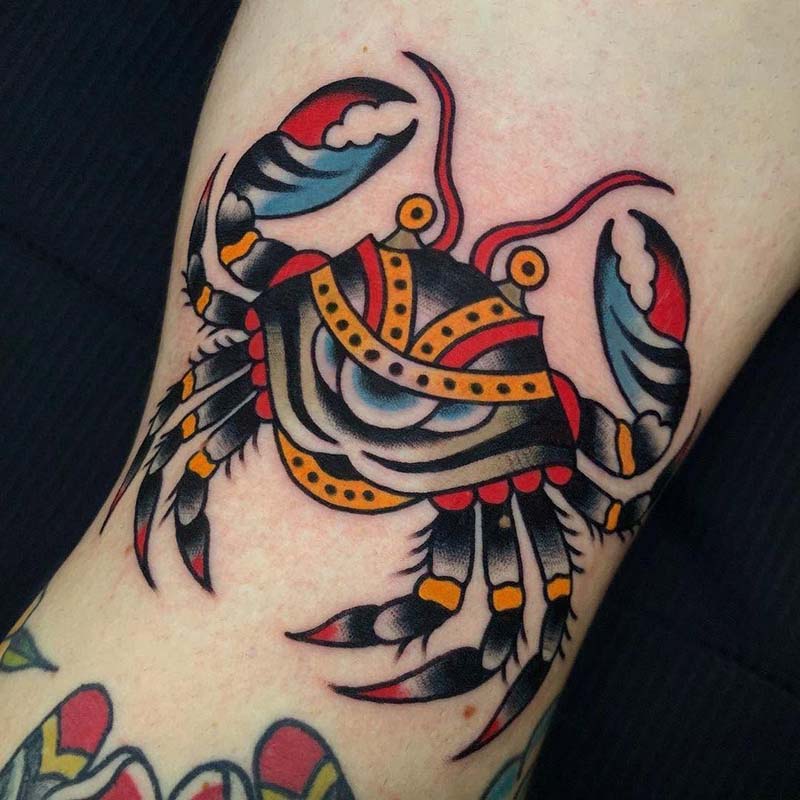
Popular Traditional Tattoo Designs and Their Meanings
Traditional tattoo imagery often combines striking aesthetics with symbolism. Meanings can vary between cultures and individuals, so each classic motif can also be adapted to represent a personal story.
1. Traditional Rose Tattoos
The rose is one of the most recognizable motifs in Traditional tattooing. It is commonly associated with love, beauty, passion, and remembrance. Traditional roses typically feature bold black outlines, layered petals, and saturated red tones, although yellow, black, pink, and other variations are possible. Roses are also frequently paired with daggers, skulls, snakes, hearts, or lettering.
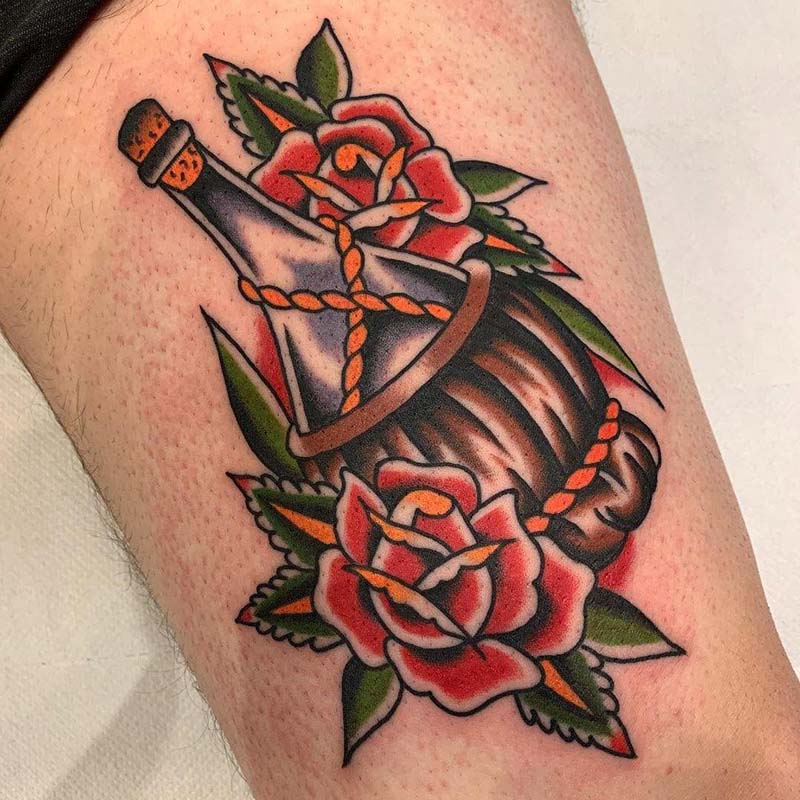
2. Traditional Eagle Tattoos
Eagles create powerful Traditional tattoo designs because their broad wings and sharp features translate naturally into bold compositions. They are commonly associated with freedom, strength, courage, and independence. An eagle can work as a standalone piece or become the focal point of a larger chest, back, arm, or leg tattoo.
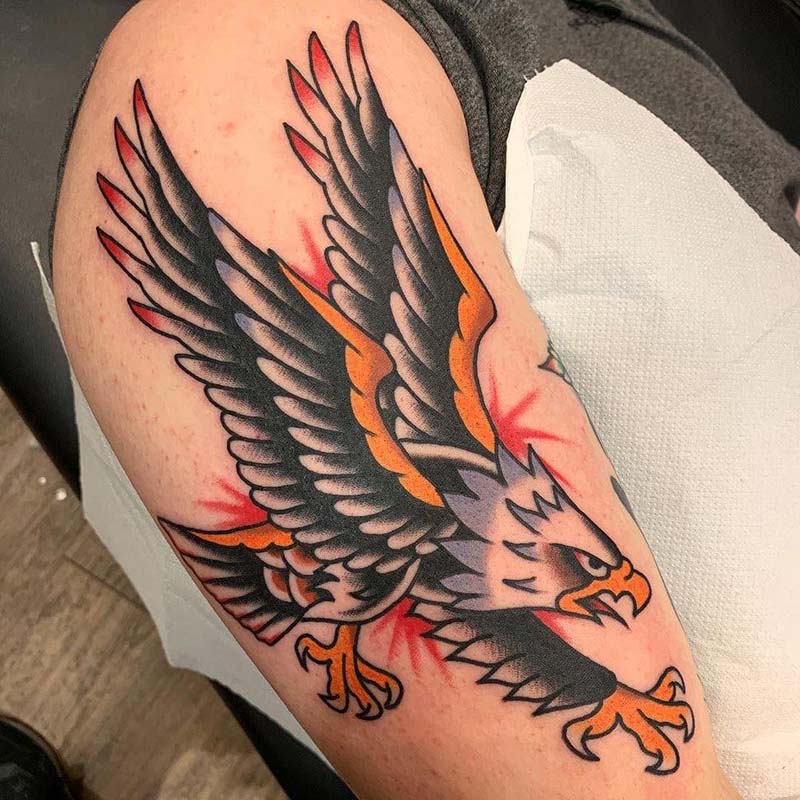
3. Traditional Snake Tattoos
Snakes offer excellent movement and flexibility within a tattoo composition. Their curved bodies can wrap naturally around arms, legs, daggers, skulls, flowers, and other elements. Depending on the design and personal interpretation, snakes can represent transformation, rebirth, danger, protection, or resilience.
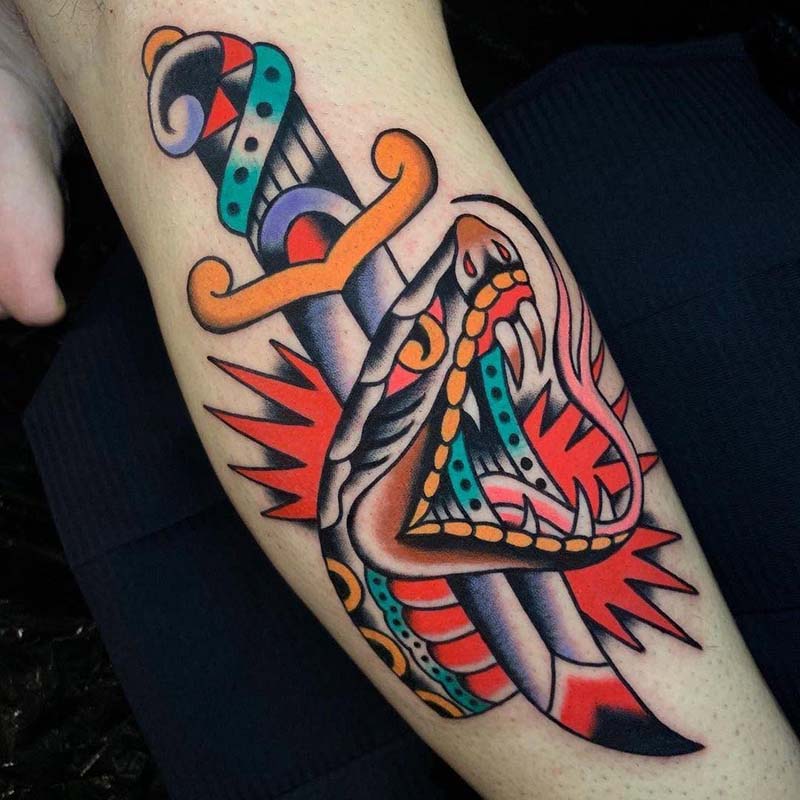
4. Traditional Tiger Tattoos
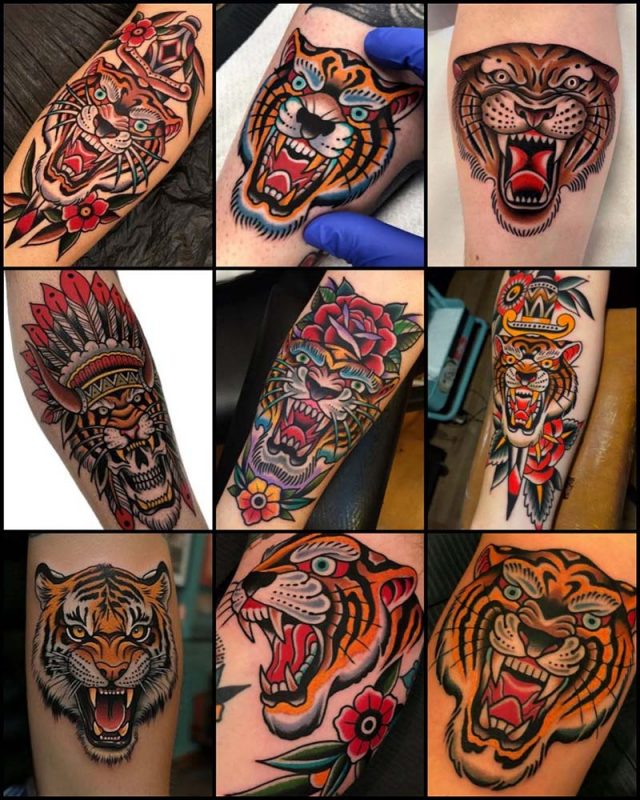
Traditional tiger tattoos are bold, energetic, and immediately recognizable. The tiger is often depicted roaring, showing its teeth, or surrounded by floral and decorative elements. Strength, courage, independence, and determination are commonly associated with tiger imagery. Larger placements allow the artist to emphasize the animal’s expression and powerful features.
5. Traditional Swallow Tattoos
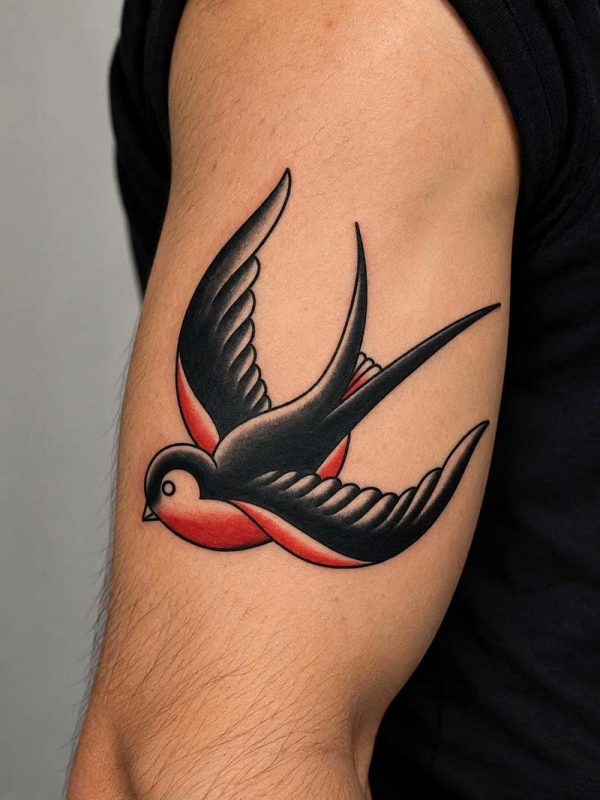
Swallows have strong historical connections with maritime tattoo culture. Traditionally, sailors used swallow imagery in ways associated with their experience at sea and the hope of returning home safely. Today, swallow tattoos may represent travel, loyalty, freedom, homecoming, or personal journeys. Their compact shape makes them suitable for both small tattoos and larger compositions.
6. Traditional Anchor Tattoos
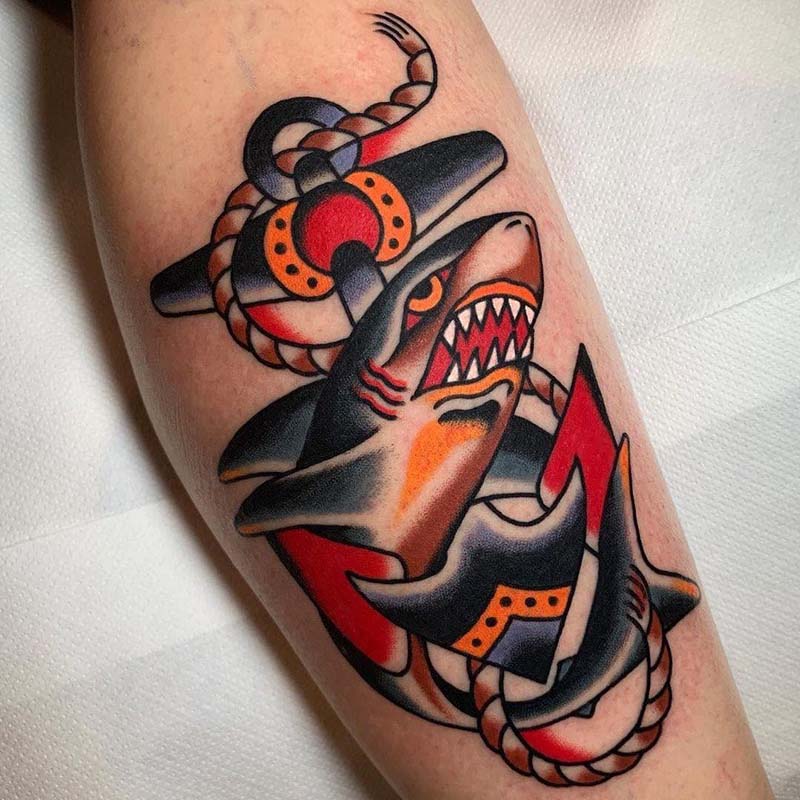
The anchor is another classic motif with deep roots in maritime tattooing. It is often interpreted as a symbol of stability, strength, security, and staying grounded during difficult times. Traditional anchor tattoos can be combined with ropes, roses, banners, hearts, ships, or swallows to create more personalized designs.
7. Traditional Dagger Tattoos
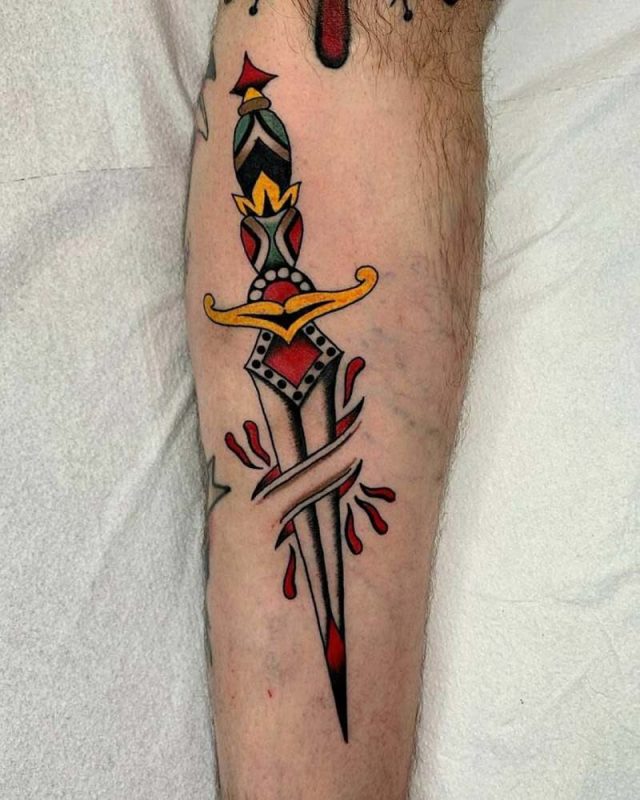
Daggers create a strong visual centerpiece because of their long, symmetrical shape. They can symbolize courage, sacrifice, conflict, protection, or overcoming difficult experiences depending on the wearer’s interpretation. A dagger is often paired with a rose, snake, heart, skull, or animal head. These combinations can add additional symbolic meaning and visual interest.
8. Traditional Skull Tattoos
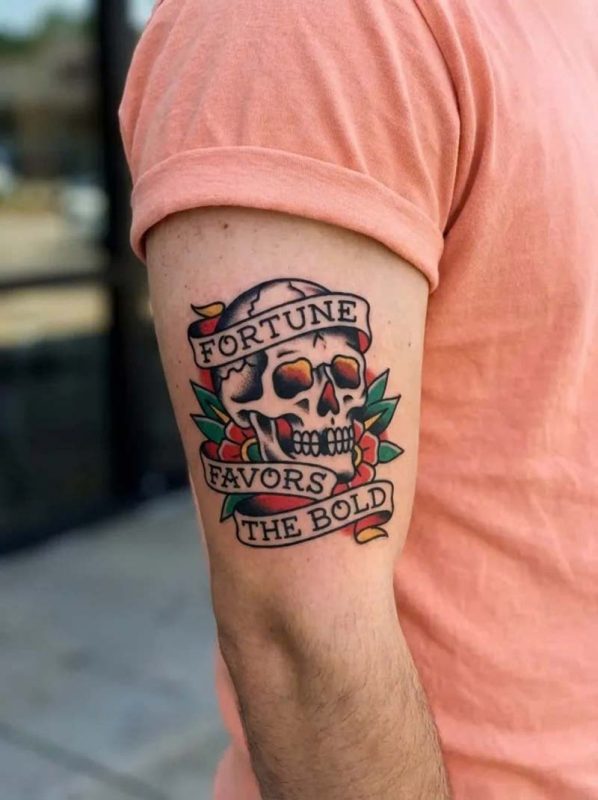
Skulls have remained a major part of tattoo culture for generations. They may represent mortality, acceptance of life’s temporary nature, transformation, rebellion, or overcoming hardship. Traditional skulls usually feature simplified shapes, heavy black outlines, and strong shadows. Roses, flames, snakes, daggers, and other classic motifs can be added around them.
9. Traditional Heart Tattoos
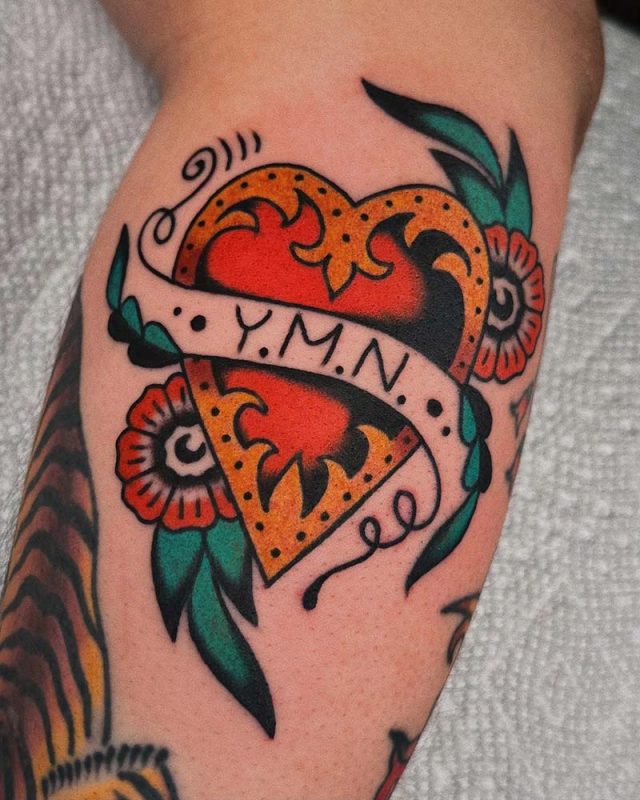
Traditional heart tattoos are commonly connected with love, relationships, devotion, and emotional memories. They may include banners with names or meaningful words, flames, wings, daggers, roses, or arrows. This makes the heart one of the easiest Traditional motifs to personalize.
10. Traditional Ship Tattoos
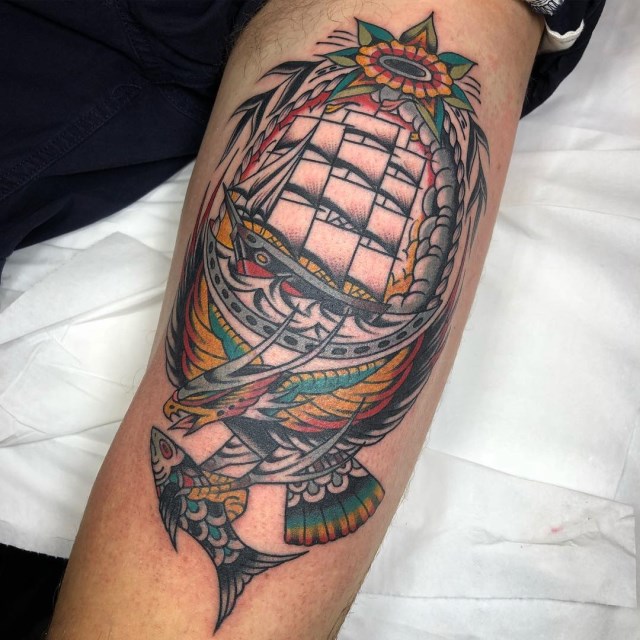
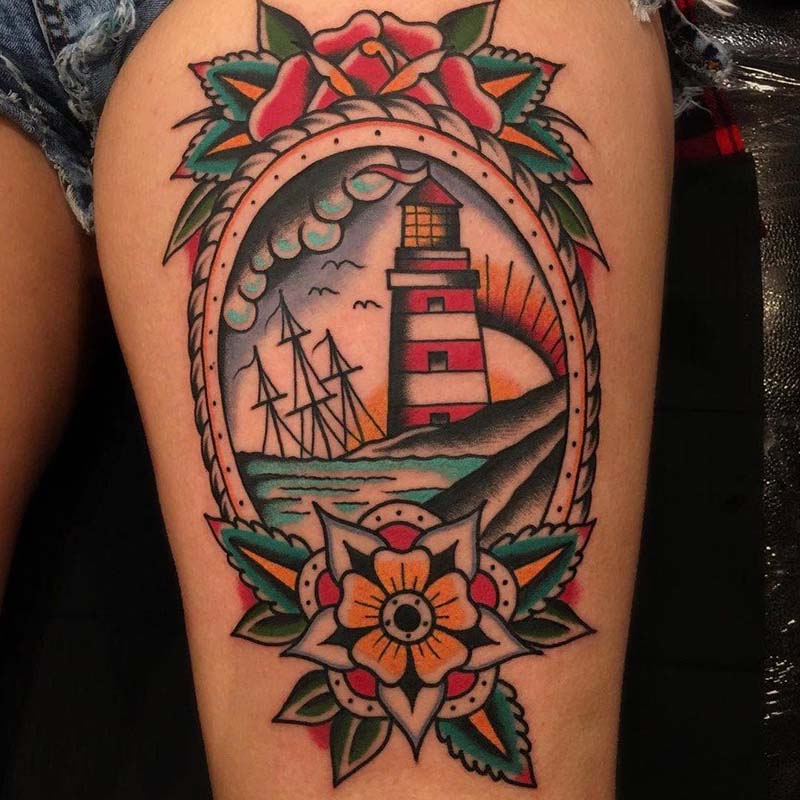
Ships reflect the strong connection between Traditional tattooing and maritime history. They can represent adventure, exploration, journeys, freedom, or the ability to navigate difficult periods in life. Large ship tattoos provide enough space for sails, waves, clouds, sunsets, and other nautical details while retaining a classic Old-School appearance.
11. Traditional Panther Tattoos
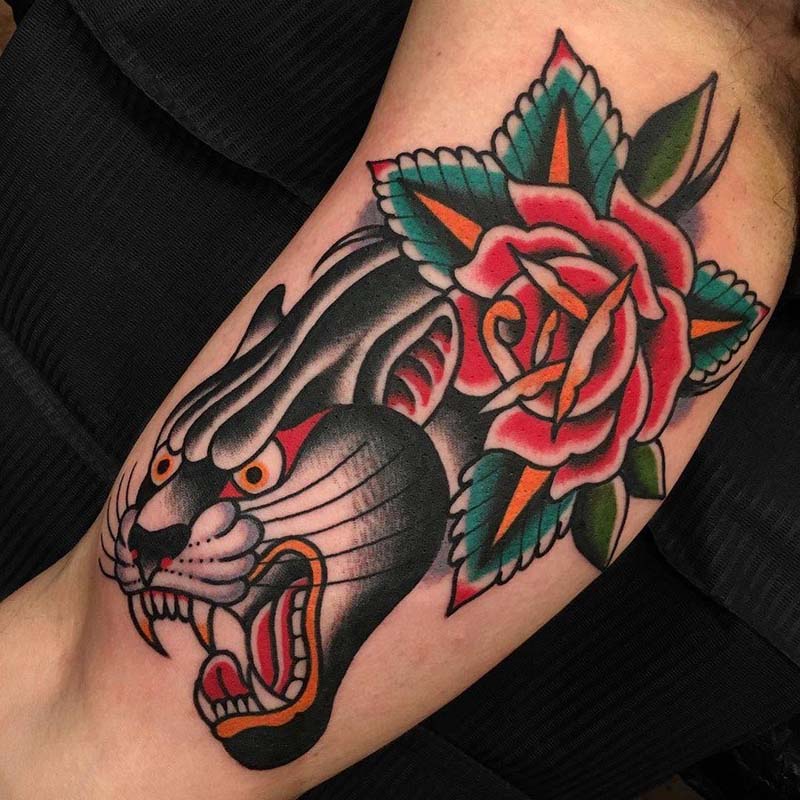
The crawling panther is one of the most iconic images in classic tattoo art. Its long body works especially well on arms and legs, where the design can follow the natural shape of the limb. Panthers are commonly associated with strength, confidence, courage, and fierceness. Heavy black areas can also give these designs a particularly bold appearance.
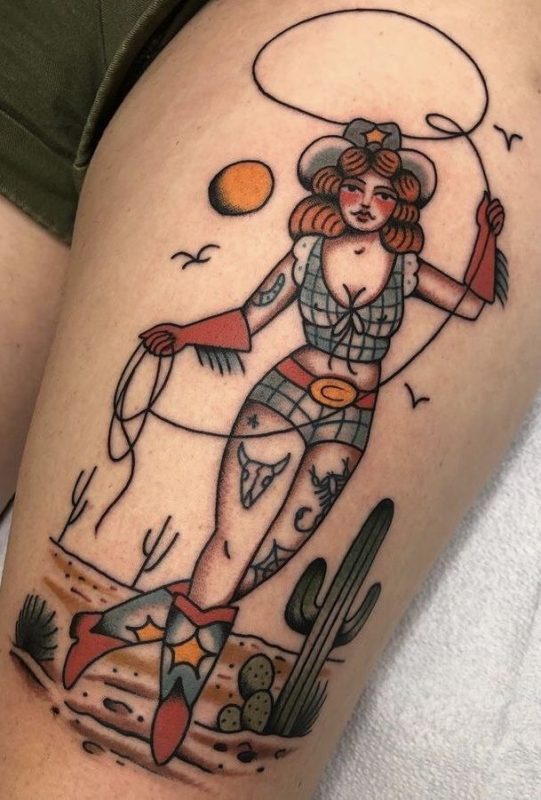
12. Traditional Pin-Up Tattoos
Pin-up tattoos are another recognizable part of Old-School tattoo culture. Inspired by classic pin-up illustrations, these designs typically feature stylized figures with expressive poses, hairstyles, and clothing. Modern versions can preserve the vintage aesthetic while introducing customized outfits, accessories, themes, and personal details.
Traditional Tattoo Ideas by Placement
Choosing the right placement can enhance the proportions and overall visual impact of a Traditional tattoo. Because this style relies on strong shapes and clear outlines, it can work effectively across many areas of the body.
Traditional Sleeve Tattoos
Traditional sleeves can be created as one connected composition or as a collection of individual Old-School designs arranged together. Roses, snakes, eagles, daggers, tigers, swallows, skulls, and filler elements can be combined across the arm. Careful spacing helps each design remain visually distinct while still creating a cohesive sleeve.
Traditional Forearm Tattoos
The forearm is an excellent location for medium-sized Traditional designs. Its visibility makes bold imagery such as daggers, roses, snakes, panthers, eagles, and hearts particularly noticeable. Vertical subjects can also follow the natural length of the forearm and create a balanced composition.
Traditional Chest Tattoos
The chest offers enough room for symmetrical or wide compositions. Eagles with extended wings, paired animals, ships, hearts, roses, and banners can all work well in this area. Chest pieces may also extend toward the shoulders and upper arms to create a larger Traditional tattoo composition.
Traditional Back Tattoos
The back provides one of the largest canvases for Traditional tattooing. Artists can use the available space for oversized eagles, ships, tigers, panthers, snakes, or combinations of several classic elements. A large back piece also allows the design to maintain bold proportions without sacrificing important visual details.
Traditional Leg Tattoos
Traditional designs work naturally on the thigh, calf, shin, and other areas of the leg. Tigers, panthers, snakes, daggers, roses, and ships are especially suitable because their shapes can be adapted to the contours of the leg. Multiple individual tattoos can also gradually develop into a Traditional leg sleeve.
Traditional Shoulder Tattoos
The rounded shape of the shoulder suits compact designs with strong silhouettes. Roses, animal heads, eagles, skulls, and nautical symbols are popular options. Shoulder pieces can remain standalone tattoos or later connect with chest, back, or sleeve designs.
Traditional Hand Tattoos
The hand offers limited space but high visibility. Roses, panther heads, skulls, eyes, snakes, and small symbolic designs can create an immediate visual impact. Because hand tattoos experience frequent movement, washing, friction, and sun exposure, design simplicity and proper aftercare are particularly important.
Traditional Tattoos for Men and Women
Traditional tattooing is not limited by gender. The same imagery can be adjusted in size, composition, color, and placement to suit individual preferences.
Traditional Tattoo Ideas for Men
Popular options include eagles, tigers, panthers, snakes, daggers, skulls, ships, and large sleeve compositions. Chest, back, forearm, upper arm, and leg placements provide plenty of space for bold Old-School artwork. The design does not necessarily need to be large. A simple anchor, swallow, dagger, or animal head can deliver the same distinctive Traditional aesthetic on a smaller scale.
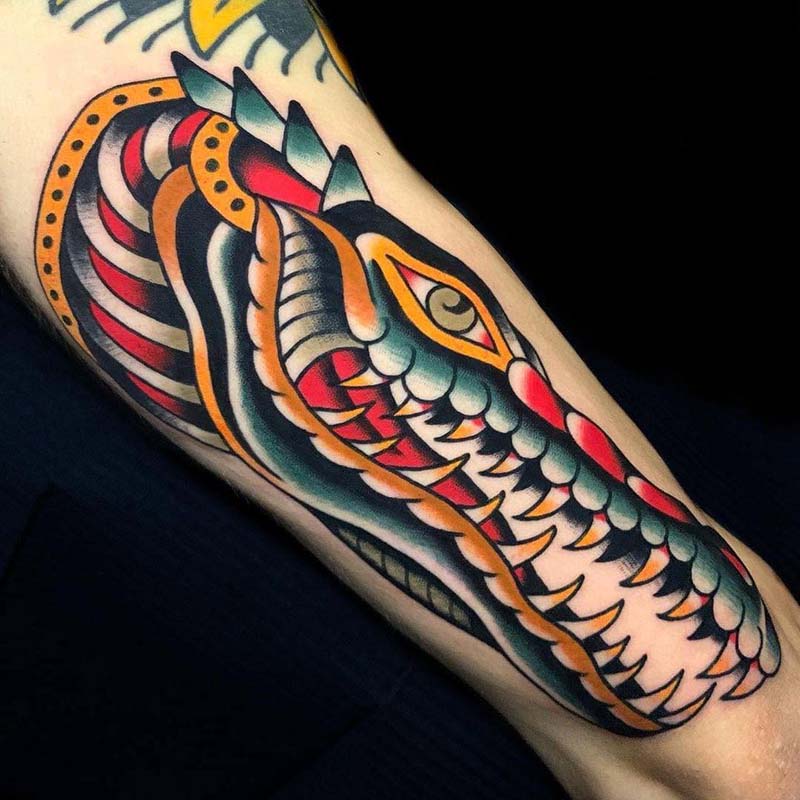
Traditional Tattoo Ideas for Women
Roses, hearts, swallows, butterflies, florals, snakes, pin-ups, and ornamental Traditional designs are popular choices. These can range from small individual pieces to full sleeves and larger compositions. The bold characteristics of Traditional tattooing can also be balanced with floral details, curved compositions, and carefully selected placements to achieve the desired aesthetic.
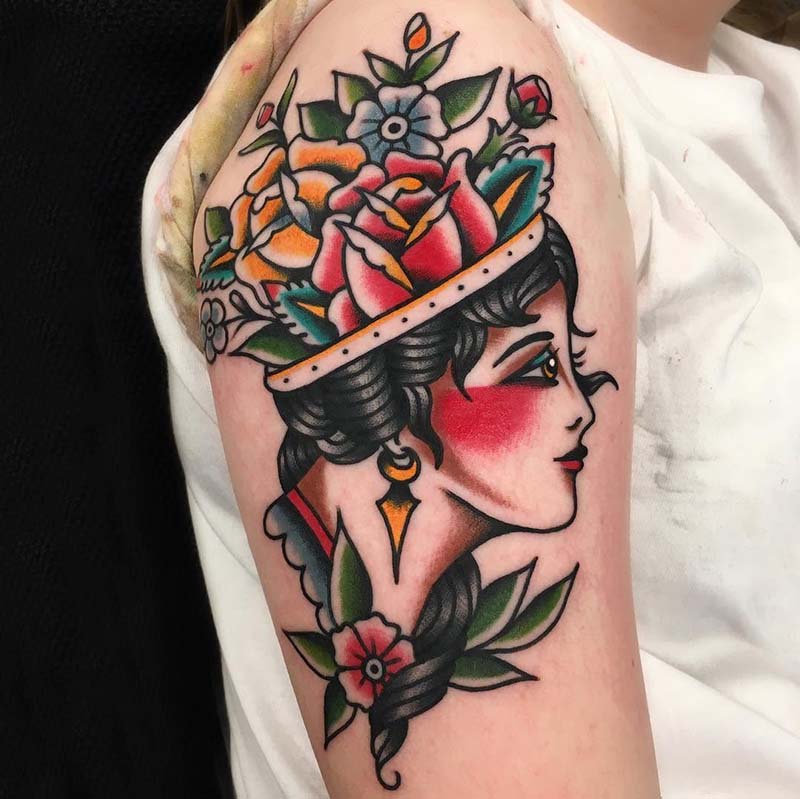
Traditional vs. Neo-Traditional Tattoos: What’s the Difference?
– Traditional and Neo-Traditional tattoos share several visual characteristics, particularly bold outlines and recognizable subjects. However, they differ significantly in how those elements are interpreted.
– Traditional tattoos generally use simpler shapes, flatter areas of color, a more restricted palette, and relatively straightforward shading. Classic imagery such as roses, anchors, eagles, daggers, and swallows is particularly common.
– Neo-Traditional tattooing builds on this foundation but often incorporates greater detail, more elaborate shading, broader color palettes, decorative elements, and more complex compositions.
– Both approaches can feature similar subjects, but their visual results can be noticeably different. Choosing between them largely depends on whether you prefer the simplicity of classic Old-School artwork or a more detailed contemporary interpretation.
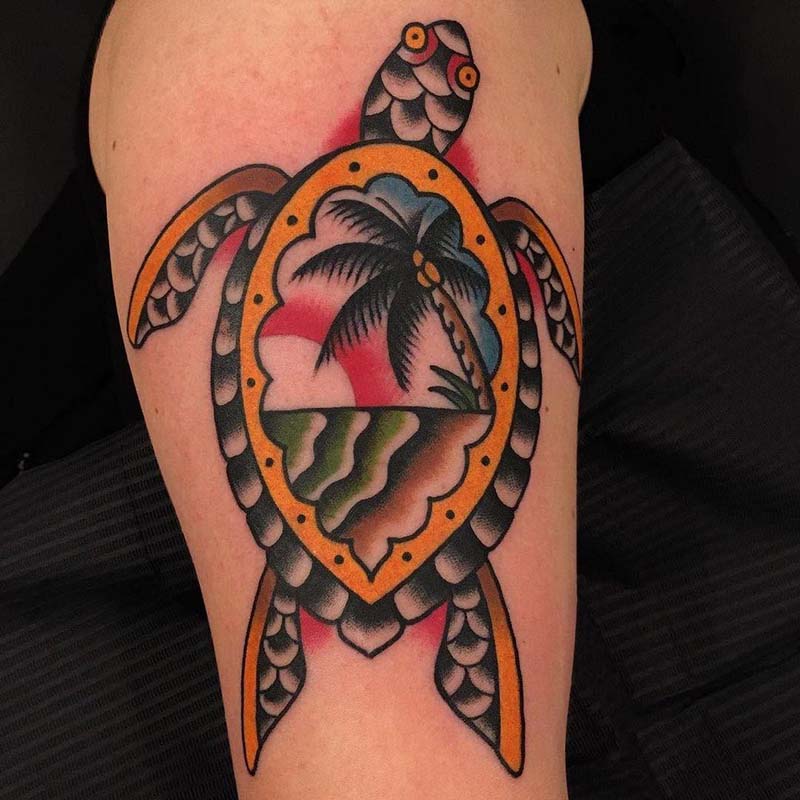
Color vs. Black and Gray Traditional Tattoos
– Color is closely associated with classic Traditional tattooing. Red roses, yellow highlights, green leaves, blue backgrounds, and heavy black outlines create the bright and recognizable Old-School aesthetic.
– However, Traditional designs can also be created in black and gray. Without color, the emphasis shifts toward linework, contrast, shading, and negative space while maintaining recognizable Traditional shapes.
– Color designs tend to offer a brighter and more nostalgic Old-School appearance, while black and gray versions can feel more restrained and dramatic. The better option depends on your personal aesthetic and the overall concept.
How to Choose the Right Traditional Tattoo
– Begin by deciding which imagery connects with you. Traditional tattooing offers an extensive visual vocabulary, including animals, flowers, nautical imagery, weapons, hearts, skulls, and symbolic objects.
– Next, consider the size and placement. A simple rose or swallow can work in a relatively small area, while an eagle, ship, tiger, or multi-element composition may need more space to maintain strong proportions.
– Think about whether you want classic colors, black and gray, or a customized palette. Reference images can help communicate your preferences, but your artist should adapt the final artwork to your anatomy rather than simply copying an existing tattoo.
– Finally, choose an artist with experience in Traditional tattooing. Look closely at line consistency, color saturation, spacing, composition, and healed work when reviewing a portfolio.
Do Traditional Tattoos Age Well?
– Traditional tattoos are often designed with characteristics that can support long-term readability, including bold outlines, clear shapes, strong contrast, and sufficient spacing between important details.
– However, no tattoo remains completely unchanged. Ink naturally settles and can soften over time as the skin ages. Sun exposure, placement, tattooing technique, aftercare, skin characteristics, and lifestyle can all influence the tattoo’s appearance.
– Proper healing care is essential during the first few weeks. After healing, protecting tattooed skin from excessive UV exposure and maintaining healthy skin can help preserve the artwork.
– A well-planned Traditional design should also avoid squeezing excessive detail into a space that is too small, helping the major elements remain visually clear as the tattoo ages.
Get Your Traditional Tattoo at Tattoo Studio 3S
At Tattoo Studio 3S, we can help transform your Traditional tattoo idea into a custom design that suits your preferred imagery, placement, size, and aesthetic.
Whether you want a classic rose, fierce tiger, eagle, snake, dagger, skull, nautical piece, or a complete Traditional sleeve, the design can be developed around your individual concept and anatomy.
Our tattoo process emphasizes clear consultation, thoughtful composition, strong linework, balanced colors, and careful execution. Before your session, you can discuss reference images, symbolism, placement, scale, and other details with the artist to develop a design that feels personal rather than generic.
Ready to explore your Traditional tattoo idea? Contact Tattoo Studio 3S to discuss your next piece.
Hotline: +65 8866 1008
Address: 733 Geylang Road, #02-01, Singapore 389644

FAQs About Traditional Tattoos
What Is the Difference Between Traditional and Old-School Tattoos?
The terms Traditional and Old-School are often used interchangeably when referring to classic Western tattoo aesthetics, especially American Traditional tattooing. Both commonly describe designs featuring bold outlines, solid colors, recognizable imagery, and relatively simple compositions. However, terminology can vary between artists and tattoo communities, so it is useful to show your artist visual references when discussing the exact style you want.
What Colors Are Commonly Used in Traditional Tattoos?
Traditional tattoos are known for using a relatively limited but bold color palette. Black, red, yellow, green, and blue are among the colors commonly associated with classic Old-School artwork. Modern artists may expand this palette depending on the concept while preserving the fundamental visual characteristics of Traditional tattooing.
Can Traditional Tattoos Be Black and Gray?
Yes. Although saturated colors are strongly associated with classic Traditional tattoos, Old-School-inspired designs can also be created using black and gray. Bold outlines and recognizable shapes help preserve the Traditional character, while gray shading and negative space provide dimension and contrast.
Do Traditional Tattoos Fade?
Yes. Traditional tattoos can fade or soften over time just like other tattoo styles. UV exposure, skin aging, placement, friction, technique, pigment, and aftercare can all affect their appearance. Bold lines and clear compositions may help maintain visual readability, but proper aftercare and long-term sun protection remain important.
Are Traditional Tattoos Good for Sleeves?
Yes. Traditional imagery is particularly adaptable to sleeves. Individual designs such as roses, eagles, snakes, daggers, skulls, hearts, and swallows can be arranged together while maintaining their own recognizable silhouettes. A sleeve can be planned from the beginning or developed gradually, although considering the overall composition early can help achieve a more cohesive result.
Can Traditional Tattoos Be Used for Cover-Ups?
Traditional tattoos can sometimes work well for cover-ups because bold outlines, strong colors, and areas of solid black may help conceal parts of an existing tattoo. However, the feasibility of a cover-up depends on the size, darkness, color, age, and placement of the original tattoo. The new design usually needs to work with the existing shapes rather than simply being placed directly over them.
For heavily saturated or very dark tattoos, an artist may recommend partial laser fading before the cover-up to provide more flexibility for the new design.