An old tattoo does not always have to stay with you forever. Maybe the design has faded, the artwork no longer reflects your style, or the meaning behind it has changed over time. Whatever the reason, a well-planned cover up old tattoo design can transform unwanted ink into a new piece of body art that feels more personal and visually appealing. However, tattoo cover ups require more than simply placing a new image over an existing tattoo. The artist needs to consider the old ink, size, colors, placement, skin condition, and the structure of the new design. Understanding how the process works can help you make better decisions before getting started.
What Is An Old Tattoo Cover Up?
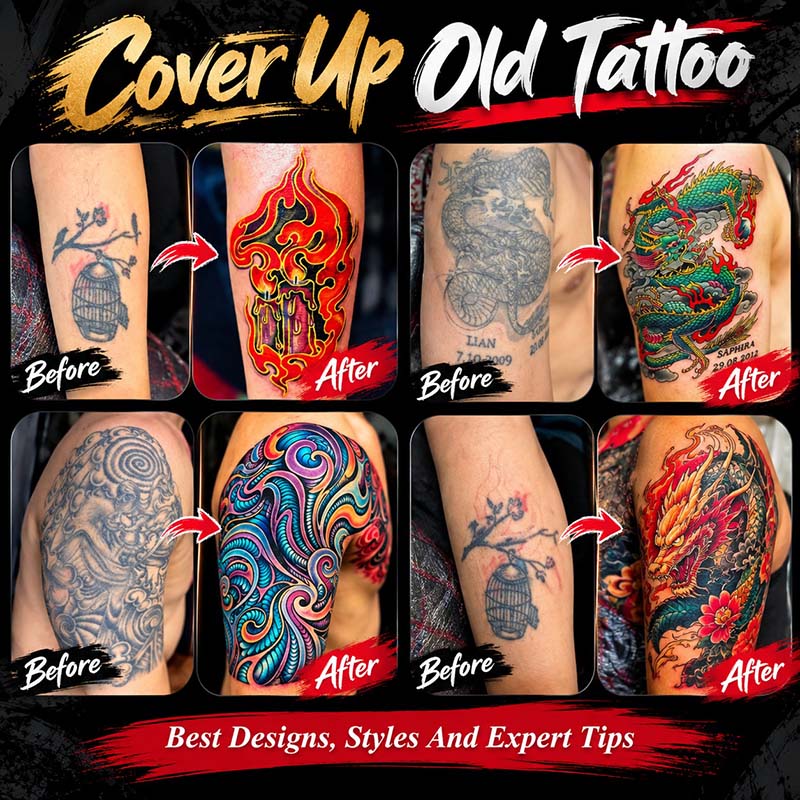
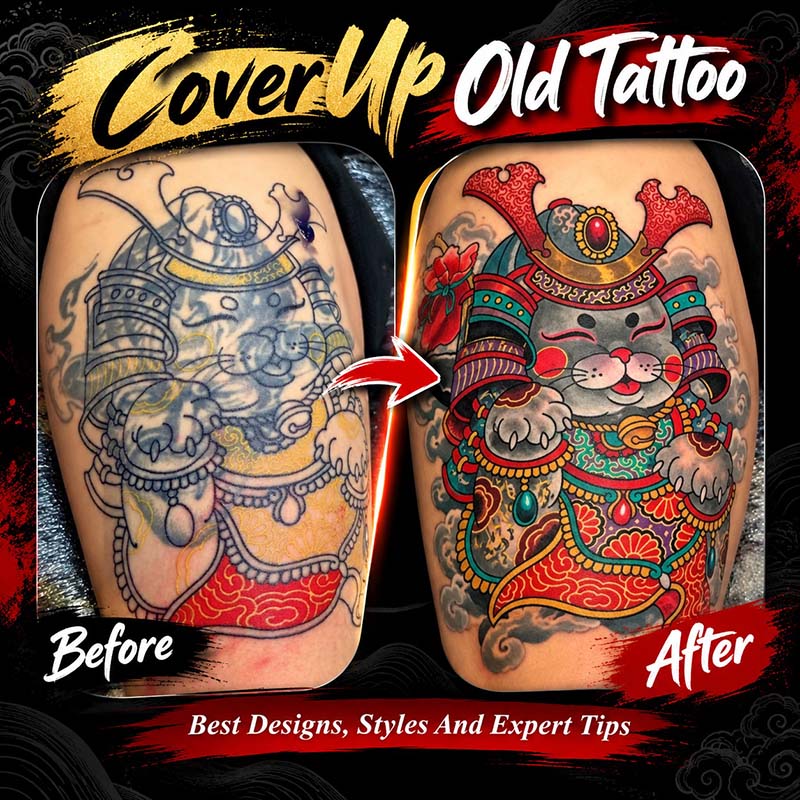
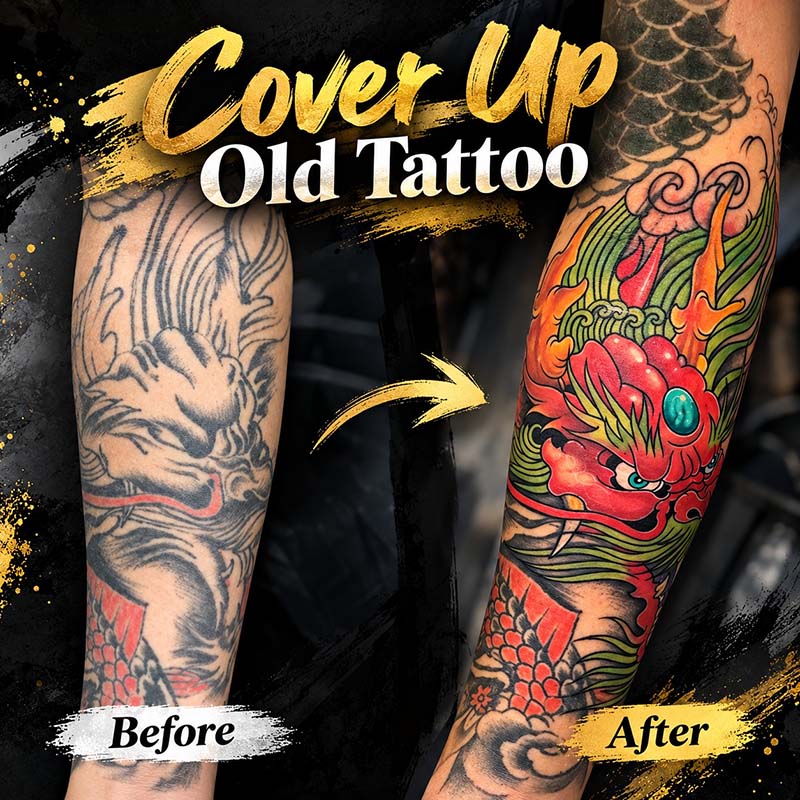
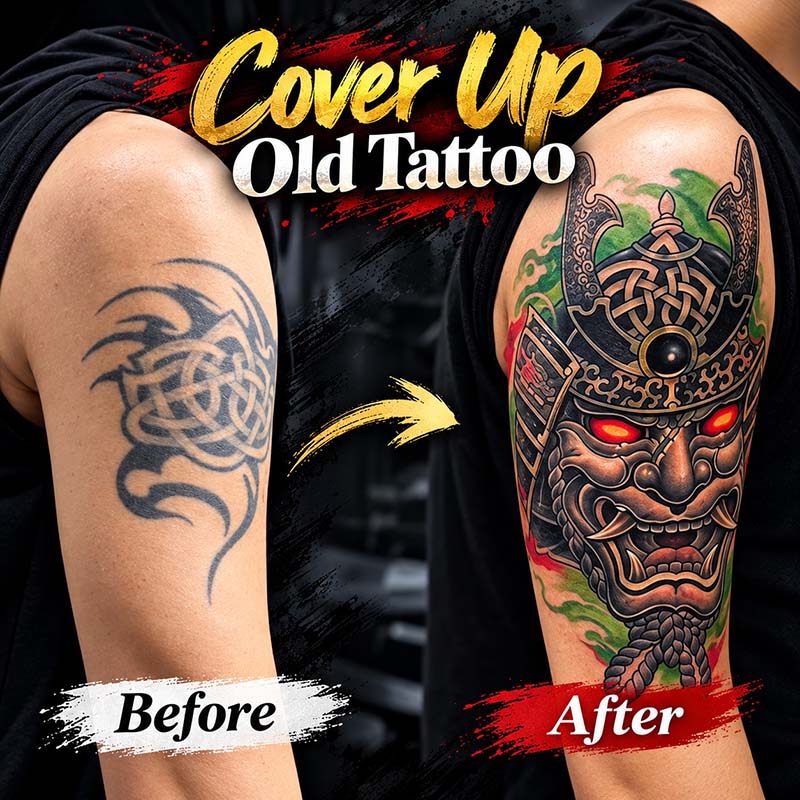
An old tattoo cover up is the process of creating a new tattoo over an existing one to conceal or transform the original artwork. Instead of removing the tattoo completely, the artist incorporates or hides the old lines, colors, and shapes within a new design. A successful cover up should draw attention toward the new artwork rather than the tattoo underneath. This often requires careful planning, strategic shading, suitable colors, and a design that works naturally with the existing ink.
How Does A Tattoo Cover Up Work?
Tattoo ink sits beneath the surface of the skin, so adding new ink does not physically erase the original tattoo. Instead, tattoo artists use new shapes, colors, textures, and shading to visually disguise the existing design. The artist will first assess the old tattoo and identify its darkest areas, outlines, colors, and negative spaces. A new composition can then be designed around these features. In many cases, the new tattoo will need to be larger than the original to create enough space for a natural-looking composition.
Cover Up Vs Tattoo Removal
Tattoo cover up and laser tattoo removal are two different approaches to dealing with unwanted ink. A cover up transforms the existing tattoo into new artwork without completely removing the old pigment. Laser removal, meanwhile, uses laser energy to gradually break down tattoo pigment so that the body can clear it over time. You do not necessarily have to choose one or the other. Some people undergo several laser fading sessions rather than complete removal. Lightening particularly dark sections can give the tattoo artist more flexibility when designing the cover up.
Can Every Old Tattoo Be Covered Up?
Many old tattoos can be covered, but not every tattoo presents the same level of difficulty. Some designs provide plenty of flexibility, while others require careful planning or preliminary laser fading. A professional tattoo artist should assess the tattoo in person before determining which options are realistic.
Size And Darkness Of The Existing Tattoo
- Small and faded tattoos generally provide more flexibility than large pieces with dense black ink.
- Dark outlines and heavily saturated areas can be particularly challenging because the new design needs enough visual strength to disguise them effectively.
- The size of the original tattoo also influences how large the new artwork may need to be.
Age And Condition Of The Old Ink
- Older tattoos often become softer and lighter as the pigment naturally fades over time. This can make them easier to incorporate into a new design.
- However, age alone does not determine whether a tattoo is easy to cover. Ink density, colors, technique and how the tattoo has aged all matter.
Skin Condition And Tattoo Placement
- Healthy skin provides a better foundation for tattooing. Scarring, texture changes, previous tattoo work, or sensitive skin may influence how an artist approaches the cover up.
- Placement also matters because the new design should follow the natural shape and movement of the body.
When Should You Consider Covering Up An Old Tattoo?
There is no single reason to get an old tattoo covered. The decision is personal, but several situations commonly lead people to explore tattoo cover-up options.
– Your Tattoo Has Faded Over Time: Years of sun exposure, skin changes, and natural aging can make tattoos appear faded or less defined. Instead of simply touching up the original design, a cover up gives you an opportunity to completely rethink the artwork.
– You No Longer Like The Original Design: Personal tastes change. A tattoo you loved years ago may no longer suit your current aesthetic. Covering it allows you to replace outdated artwork with something that better represents your style today.
– The Tattoo No Longer Has The Same Meaning: Names, symbols, quotes, and other meaningful tattoos can become less relevant as circumstances change. A thoughtfully designed cover up can turn that old piece into artwork associated with a new chapter or meaning.
– You Want To Fix A Poorly Executed Tattoo: Uneven lines, awkward proportions, poor shading, or an unfinished tattoo can sometimes be transformed rather than simply corrected. Depending on the original work, an experienced cover-up artist may redesign the entire area to create a more cohesive result.
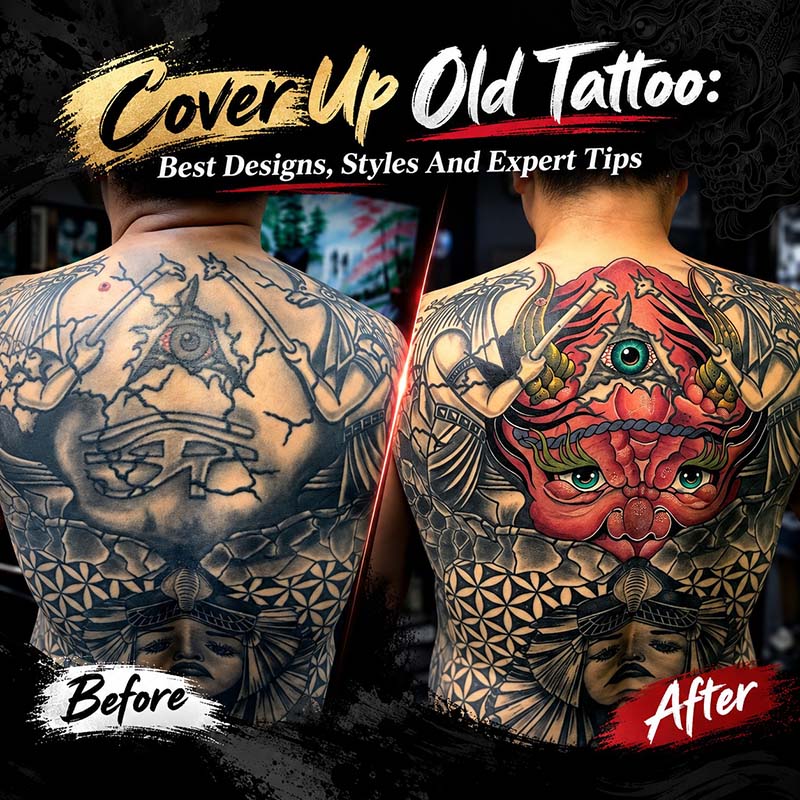
Best Designs For Cover Up Old Tattoos
The best cover up tattoo designs combine visual appeal with practical coverage. Designs containing natural texture, shading, overlapping elements, and varied line work often give artists more freedom to conceal old ink.
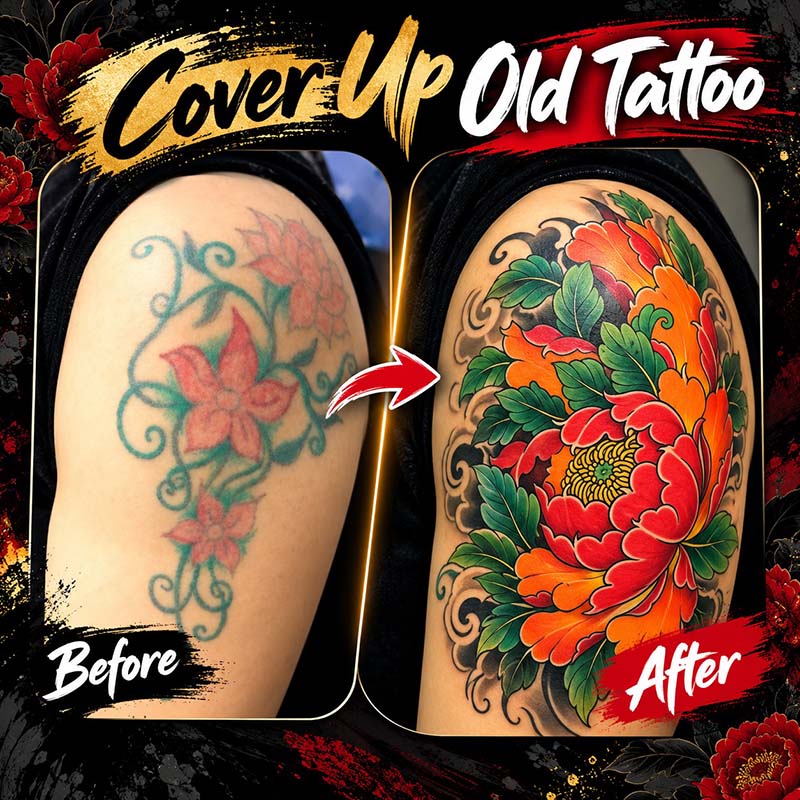
Floral And Botanical Designs
Flowers, leaves, vines, and botanical elements are versatile choices for tattoo cover ups. Petals and leaves can be positioned strategically over existing lines, while shadows and layered botanical elements help disguise darker areas. Roses, peonies, chrysanthemums, lotus flowers, and foliage are common options, but the final choice should depend on the original tattoo.
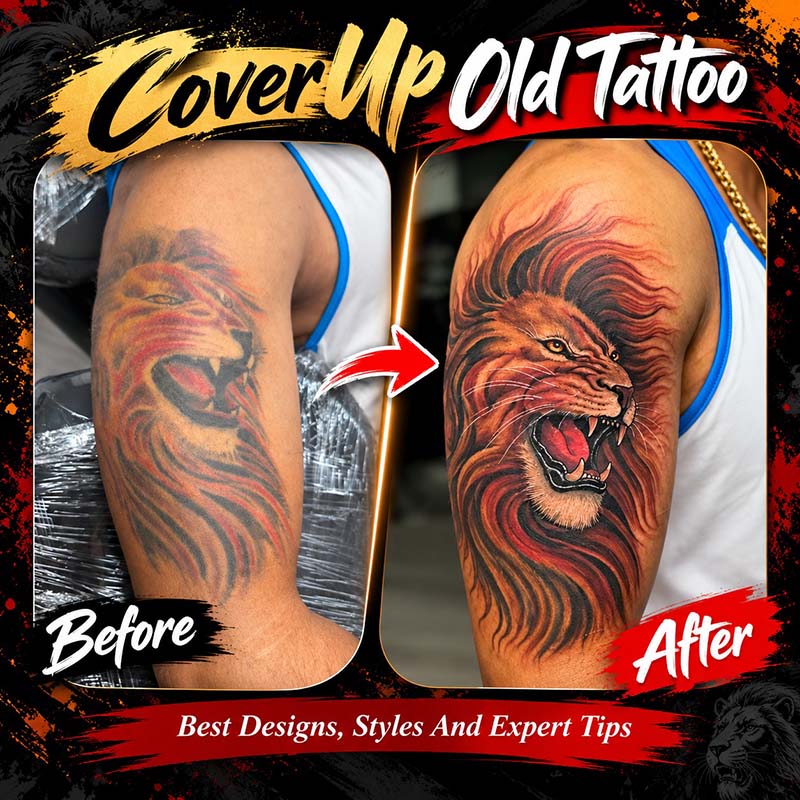
Animal And Wildlife Tattoos
Lions, tigers, wolves, snakes, birds, and other animals can provide plenty of detail for hiding old ink. Fur, feathers, scales, shadows, and background elements give the artist opportunities to incorporate darker sections of an existing tattoo naturally.
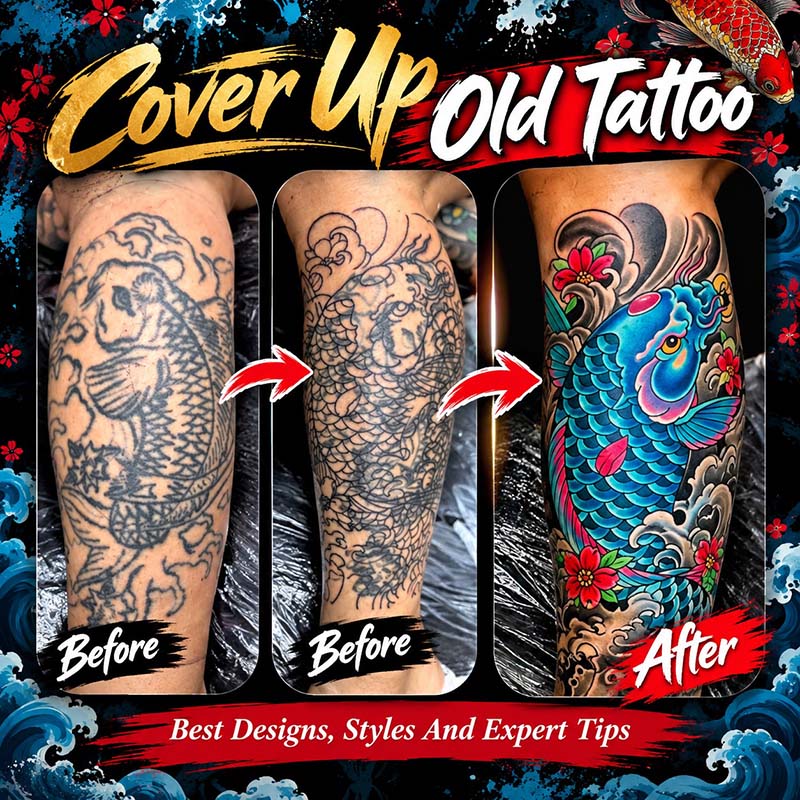
Japanese Tattoo Designs
Japanese-inspired tattooing can work particularly well for larger cover ups because these designs often combine bold subjects with backgrounds, movement, shading, clouds, waves, wind bars, and other supporting elements. Dragons, koi fish, tigers, snakes, peonies, and chrysanthemums can all become part of a larger composition.
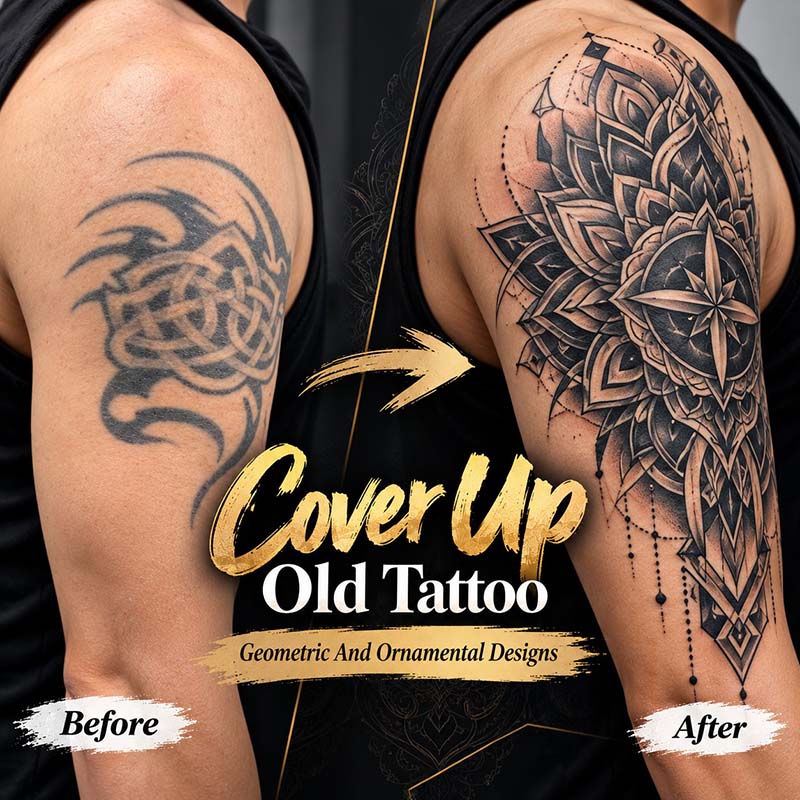
Geometric And Ornamental Designs
Geometric and ornamental tattoos use repeating shapes, patterns, decorative lines, and symmetrical elements to create visually striking artwork. These styles may work for certain old tattoos, although precise geometry can make covering irregular dark areas more challenging. The existing tattoo needs to be assessed carefully before choosing this approach.
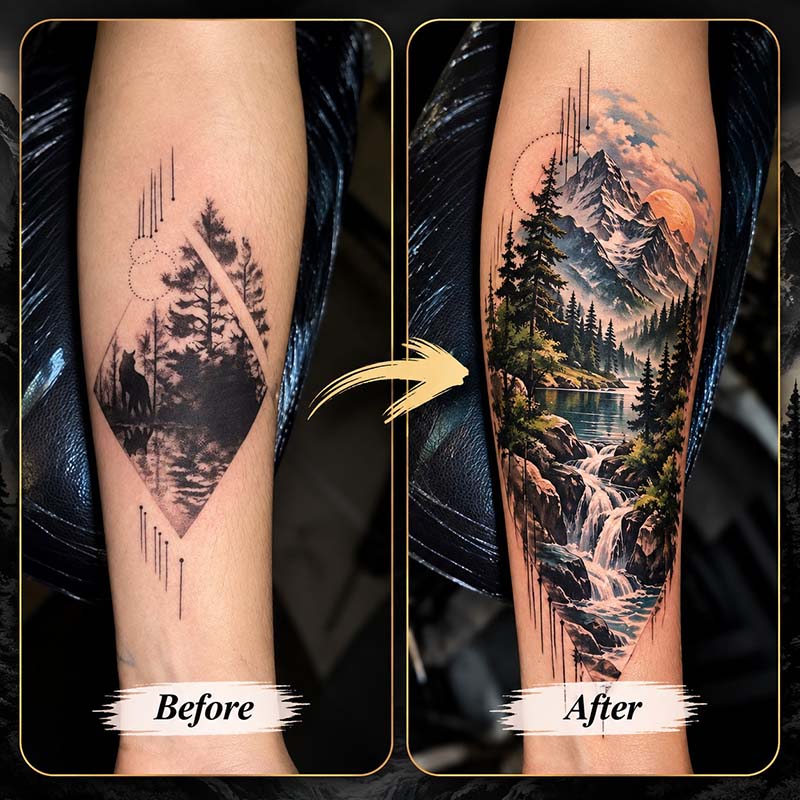
Nature And Landscape Tattoos
Forests, mountains, waves, trees, and other natural imagery can provide substantial visual detail. Different textures and layers allow an artist to redirect attention away from the original design while creating depth within the new tattoo.
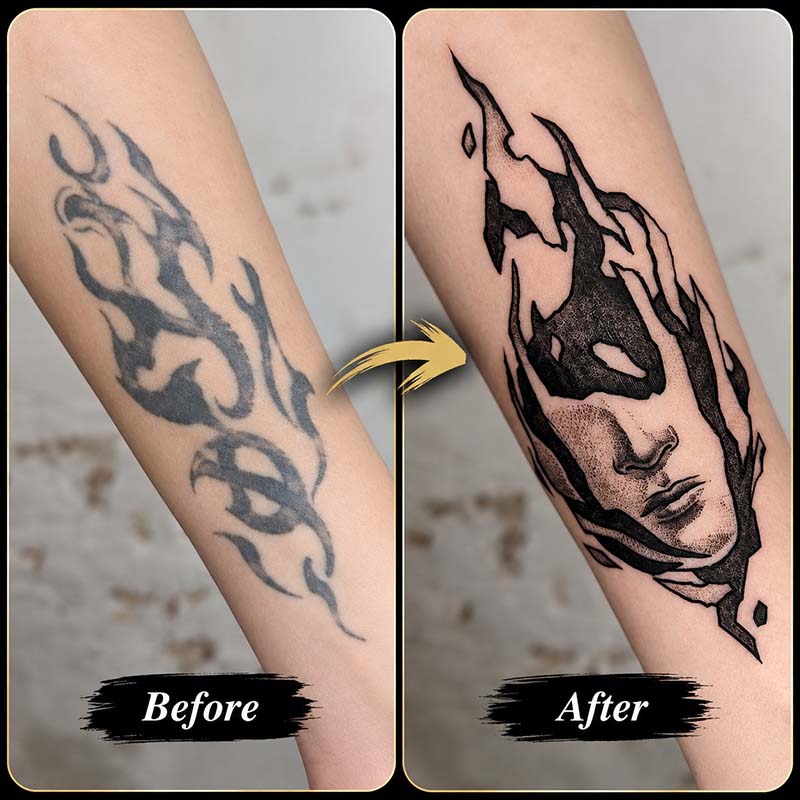
Abstract And Creative Designs
Abstract tattooing gives the artist considerable creative freedom. Brush-like elements, unusual shapes, textures, contrasting forms, and expressive shading can be adapted around existing ink instead of forcing the old tattoo into a rigid composition.
Best Tattoo Styles For Covering Old Ink
Choosing an appropriate tattoo style is just as important as selecting the subject. Certain styles naturally provide greater flexibility when covering old tattoos.
Blackwork
Blackwork uses strong black areas, bold shapes, patterns, and contrast. It can be particularly useful when dealing with existing dark ink. However, blackwork does not necessarily mean covering the entire old tattoo with a solid black shape. Skilled artists can use negative space, patterns, and intentional composition to create a more sophisticated result.
Black And Grey
Black and grey tattoos use different shades and gradients to create depth. For suitable old tattoos, careful shading can help integrate existing lines into a new composition while maintaining a detailed and dimensional appearance.
Japanese
Japanese tattoo styles often feature bold outlines, strong visual flow, detailed subjects, and extensive backgrounds. These characteristics can provide considerable flexibility for larger or more complicated cover-up projects.
Neo-Traditional
Neo-traditional tattoos typically feature bold outlines, rich shading, recognizable subjects, and strong compositions. The combination of structure and detail can help artists incorporate existing ink into a visually dominant new design.
Realism
Realism can sometimes be used for tattoo cover ups, particularly when the artist has enough space to incorporate shadows, textures, and detailed elements. However, not every old tattoo is suitable for a realistic cover up. Highly detailed realism requires careful planning to prevent the underlying tattoo from interfering with important features.
How To Choose The Right Cover Up Design
Instead of choosing a design based only on appearance, consider how effectively it can work with your existing tattoo.
Work With The Shape Of Your Existing Tattoo
- One of the most important principles of tattoo cover-up design is working with what is already there.
- An experienced artist may incorporate certain lines or dark areas into shadows, textures, backgrounds, hair, petals, scales, or other features of the new artwork.
- This often creates a more natural result than trying to ignore the original tattoo entirely.
Consider A Larger Design
- Cover-up tattoos frequently need to extend beyond the boundaries of the old tattoo.
- Additional space gives the artist more freedom to create visual flow and move the viewer’s attention away from the original ink.
Choose Colors And Shading Carefully
- Dark tones and strategic shading can help disguise existing pigment, but simply making everything darker is not always the best approach.
- Color selection should depend on the old tattoo, your skin tone, and the intended design.
Keep Your Expectations Realistic
- Bring inspiration to your consultation, but remain open to changes.
- A design that looks great on blank skin may not work over your existing tattoo. Your artist may recommend changing its size, orientation, colors, or details to achieve more effective coverage.
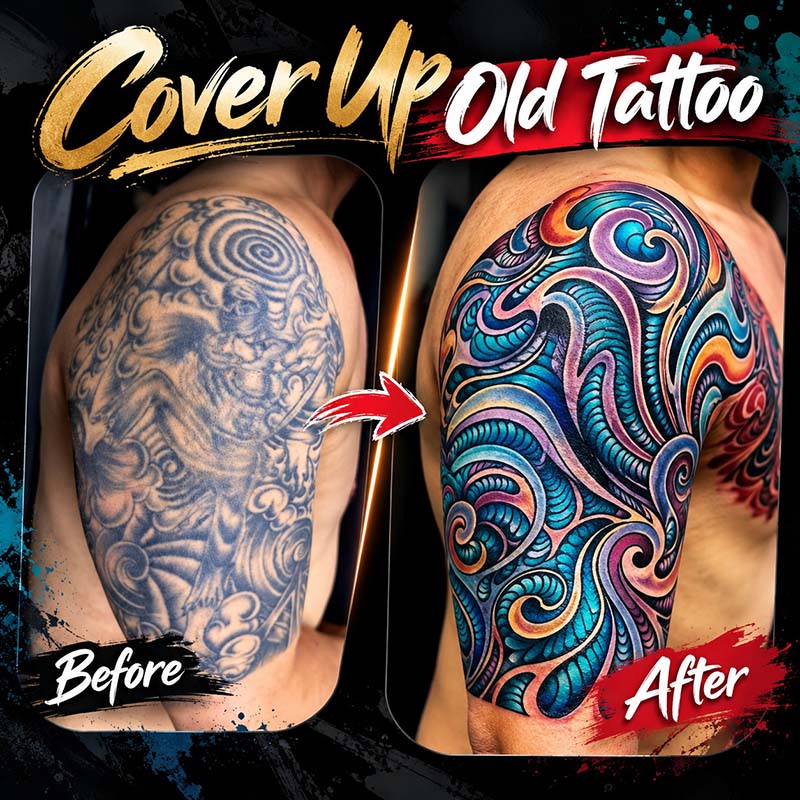
Does A Cover Up Tattoo Have To Be Darker And Bigger?
Not always, but many successful cover ups are larger and contain darker elements than the tattoos underneath. A larger design gives the artist room to move important features away from difficult sections of old ink. Darker areas can also help conceal existing outlines and saturated pigment. However, this does not mean your tattoo has to become a large black patch. The exact approach depends on how dark and dense the original tattoo is. A faded, lightly applied tattoo may provide considerably more creative freedom than heavily saturated blackwork.
Expert Tips For A Successful Old Tattoo Cover Up
Good results begin before the tattoo machine touches your skin. Planning, artist selection, realistic expectations, and proper aftercare can all influence the final result.
Choose An Artist Experienced In Cover Up Tattoos
Cover-up work requires a different approach from tattooing clean skin. Look through the artist’s portfolio and pay particular attention to healed cover-up work where available. This can help you understand how they handle old lines, dark areas, and challenging compositions.
Be Flexible With Your New Design
Your first design idea may need to change once the artist evaluates the existing tattoo. Being flexible about size, placement, colors, and composition gives the artist more freedom to develop a design that works with your old ink rather than against it.
Consider Laser Fading Before A Cover Up
Laser fading may be worth considering when an existing tattoo is extremely dark, dense, or difficult to incorporate. The goal does not necessarily have to be complete tattoo removal. Even partial fading can sometimes expand the range of possible cover-up designs. A qualified laser professional and tattoo artist can advise you separately on whether this approach is appropriate.
Allow Enough Time For Healing
If your existing tattoo is relatively new, do not rush into covering it. The skin needs to heal fully before it is tattooed again. Tattooing damaged or incompletely healed skin can increase complications and affect the final appearance.
Follow Proper Tattoo Aftercare
Once your cover up is finished, follow the aftercare instructions provided by your tattoo artist. Keep the tattoo clean, avoid picking or scratching, limit unnecessary friction, and protect the area from excessive sun exposure once healed. Proper care supports healthy healing and helps preserve the appearance of your new artwork.
How Many Sessions Does An Old Tattoo Cover Up Take?
There is no universal number of sessions for an old tattoo cover up. A relatively small and faded tattoo might be completed in one appointment, while a large or complex cover-up project may require several sessions. Factors that can influence the timeline include:
- Size of the old tattoo
- Density and color of the existing ink
- Size of the new design
- Level of detail
- Tattoo placement
- Individual skin response
- Healing time between appointments
Your artist can provide a more realistic estimate after examining the existing tattoo and discussing the new design.
Is Covering Up An Old Tattoo More Painful?
A cover-up tattoo is not automatically more painful simply because there is already ink in the skin. Pain levels depend heavily on tattoo placement, session length, individual sensitivity, and how much work is required in a particular area. Cover-up sessions can sometimes feel demanding because the artist may need to work extensively across certain sections. However, tattoo pain varies significantly from person to person.
How Much Does It Cost To Cover Up An Old Tattoo?
The cost of covering an old tattoo varies from project to project. Pricing may depend on the tattoo’s size, complexity, placement, design style, number of sessions required, and the artist’s experience. Cover-up work may also require additional planning and design time because the artist must develop new artwork around existing ink. For an accurate estimate, book a consultation and let the artist examine your current tattoo rather than relying on a generic price range.
Why Choose Tattoo Studio 3S For An Old Tattoo Cover Up?
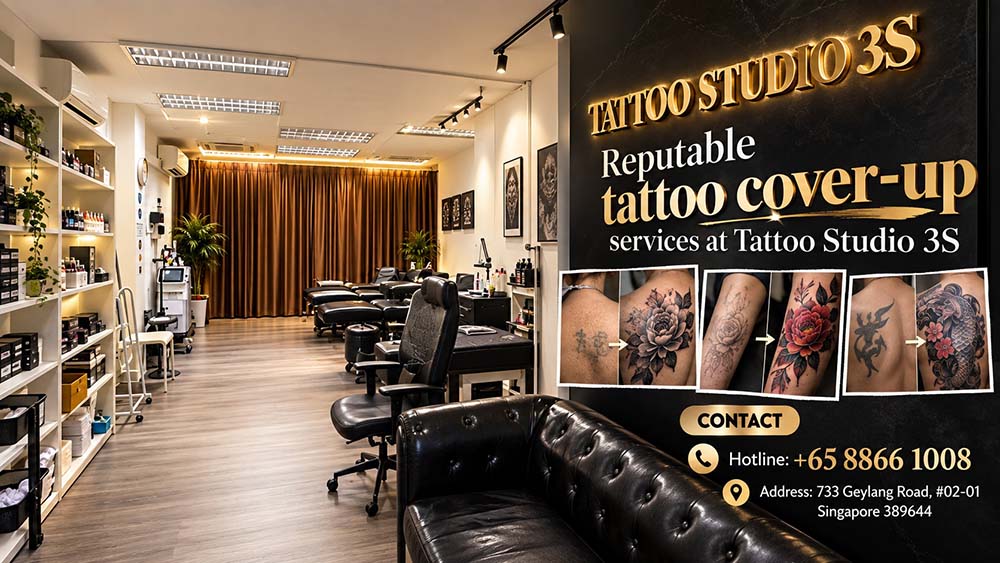
A cover up is an opportunity to turn unwanted ink into artwork you can feel comfortable wearing again. At Tattoo Studio 3S, each cover-up project can begin with an assessment of the existing tattoo before the new design is planned.
– Personalized Cover Up Design: Every existing tattoo presents different challenges. Rather than applying the same solution to every piece, the new design can be developed around your tattoo’s size, shape, placement, colors, and existing line work.
– Experienced Tattoo Artists: Experience is especially important for cover-up projects. An artist familiar with cover-up techniques can evaluate which areas need stronger coverage, which parts can be incorporated into the new artwork, and how the overall design should flow with the body.
– Professional Consultation And Tattoo Process: A consultation provides an opportunity to discuss your existing tattoo, preferred styles, design ideas, expectations, and practical limitations. This planning stage helps establish a clearer direction before the tattooing process begins.
FAQs About Cover Up Old Tattoos
Can A Black Tattoo Be Completely Covered?
Black tattoos can sometimes be covered, but heavily saturated black ink is among the more challenging types of old tattoo to work with. The possibilities depend on its size, density, age, and design. In difficult cases, laser fading may provide additional options.
Can You Cover An Old Tattoo With A Lighter Color?
A lighter color generally cannot simply erase or completely hide very dark pigment underneath it. Tattoo artists usually rely on strategic composition, darker tones, shading, and visual distraction rather than placing pale colors directly over dense black ink.
How Old Should A Tattoo Be Before Covering It?
The existing tattoo should be completely healed before you consider tattooing the area again. There is no single waiting period suitable for everyone because healing varies according to the tattoo, skin, and individual. Have the area assessed if you are unsure whether it has healed sufficiently.
Will The Old Tattoo Show Through The New Tattoo?
A well-designed cover up aims to make the original tattoo visually difficult to notice, but results vary. The old tattoo’s darkness, pigment density, colors, scar tissue, and the new design all influence the outcome. This is why realistic expectations are important when planning cover-up work.
Is Laser Removal Necessary Before A Cover Up?
No. Many tattoos can be covered without laser treatment. However, laser fading can be useful for certain large, dark, or heavily saturated tattoos. Lightening selected areas may give the artist more freedom when developing the new artwork.
An unwanted tattoo does not have to define what you wear on your skin forever. With thoughtful planning and the right artist, a cover up old tattoo project can transform faded, outdated, or unwanted ink into artwork that better represents who you are today. The key is not simply hiding the old tattoo. A successful cover up considers the existing ink and uses it as the foundation for a new composition with better flow, balance, and visual impact. If you are considering covering an old tattoo in Singapore, contact Tattoo Studio 3S for a consultation. Share your existing tattoo and the ideas you have in mind so the artist can assess the old ink and recommend a suitable direction for your new design.
Contact Tattoo Studio 3S
Hotline: +65 8866 1008
Address: 733 Geylang Road, #02-01, Singapore 389644