Legs have quickly become one of the most sought-after canvases in tattoo culture, and for good reason. Their long, muscular structure offers an expansive surface that can accommodate large-scale artwork, intricate detail, and multi-panel compositions that wrap seamlessly from hip to ankle. Unlike smaller tattoos limited to a single area, a full leg piece gives artists the room to build a sweeping visual narrative across thigh, knee, calf, and shin.
Legs also offer a practical advantage: versatility for large-scale art paired with easy concealment. A full leg tattoo can be as bold or as private as the wearer wants, easily hidden under pants for work and just as easily shown off with shorts or a skirt on the weekend. In this guide, we’ll cover what a full leg tattoo actually involves, the most popular styles for men and women, meaningful design themes, and the practical details people want to know before committing: cost, timeline, pain levels, and how to choose a design that flows naturally with the shape of the leg.
What Is a Full Leg Tattoo?
A full leg tattoo covers the entire leg, typically running from the hip or upper thigh down to the ankle. It’s one of the largest and most ambitious tattoo projects a person can take on, requiring careful planning, a skilled artist, and a real commitment of time and patience.
Full Leg vs. Thigh-Only vs. Calf-Only Pieces
Before committing to a full leg design, it helps to understand the different scopes of coverage available:
– Full leg: Covers the entire leg from hip or thigh to ankle, allowing for a continuous, wraparound composition.
– Thigh-only: Covers just the upper leg, often chosen for its ability to be completely concealed under most clothing, including shorts.
– Calf-only: Covers just the lower leg, a popular starting point that’s highly visible and easier to manage in terms of both pain and cost.
Many people build toward a full leg piece gradually, starting with a thigh or calf tattoo and expanding the design over time as their vision (and budget) grows.
Benefits of a Full Leg Tattoo
A full leg tattoo comes with several distinct advantages:
– Large canvas: The leg’s size and length allow for highly detailed, large-scale artwork that simply wouldn’t fit on smaller areas of the body.
– Easy to conceal with clothing: Despite its scale, a full leg tattoo can be completely hidden under trousers, making it a practical choice for those in more conservative workplaces.
– Panel-friendly design: The natural divisions between thigh, knee, and calf make it easy to break a large concept into visually distinct but connected sections.
Who a Full Leg Tattoo Suits
A full leg tattoo isn’t the right fit for everyone, and a few lifestyle factors are worth thinking through first. Lifestyle matters, since a full leg piece takes many hours across multiple sessions and the healing process requires avoiding tight clothing, prolonged sitting on the tattooed area, and activities like swimming for a period of time. Anyone with a very active or physically demanding routine should plan sessions around adequate recovery time.
Pain tolerance is another consideration, as the leg includes both highly tolerable areas and some genuinely sensitive spots. Building up to a full leg piece with smaller sessions can help gauge comfort levels before committing to the full design.
Popular Full Leg Tattoo Styles
The leg’s size and shape make it one of the most adaptable canvases for a wide range of tattoo styles.
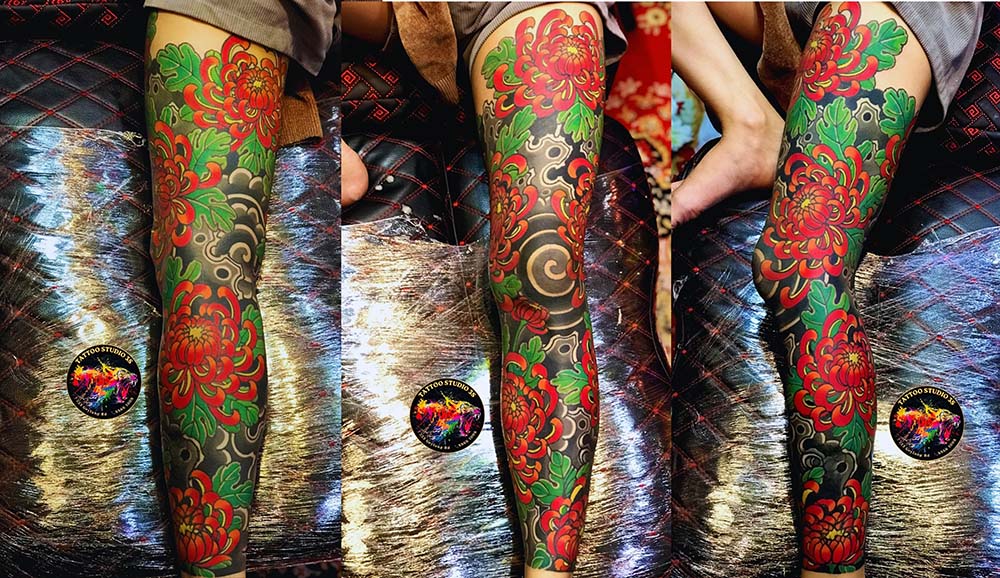
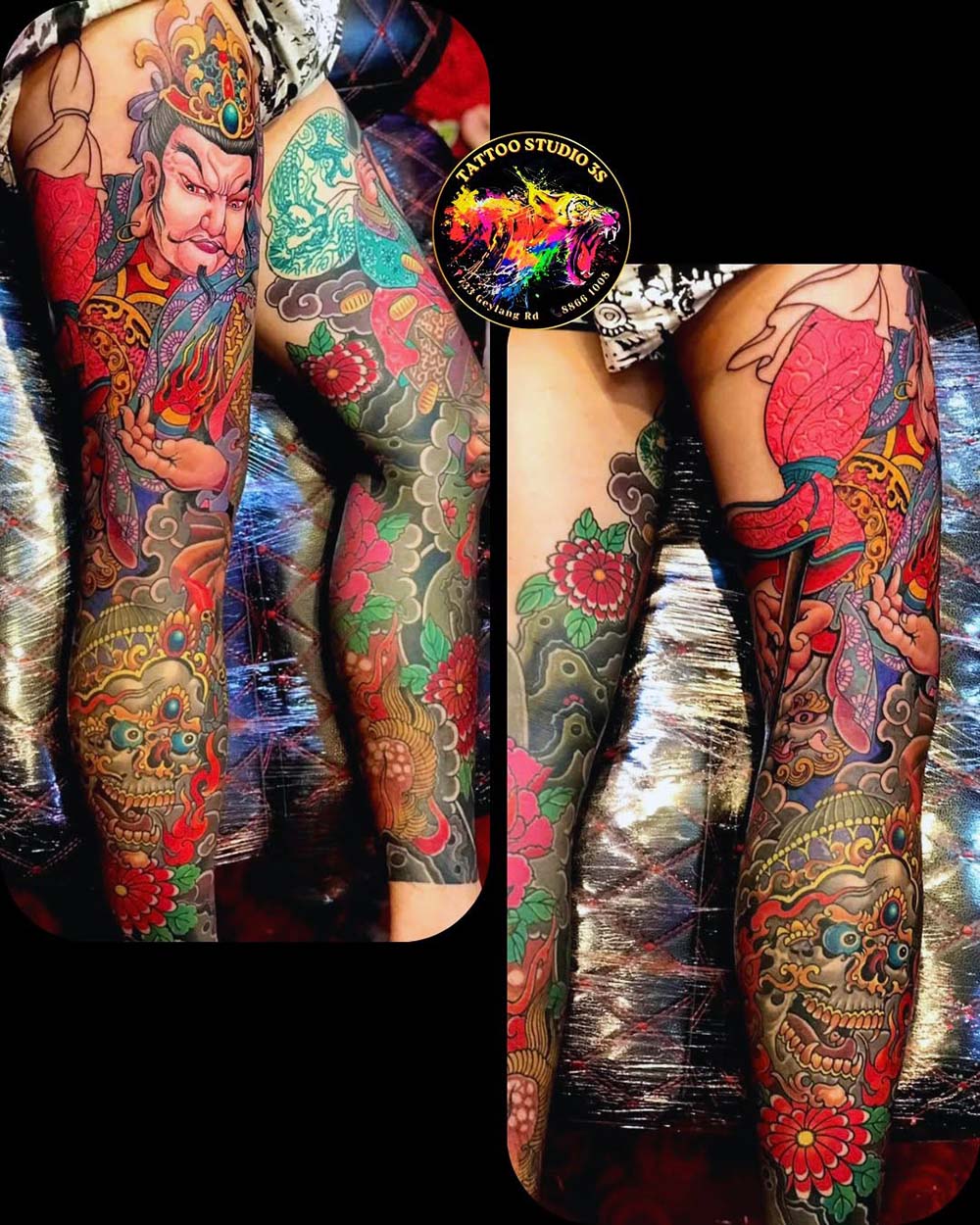
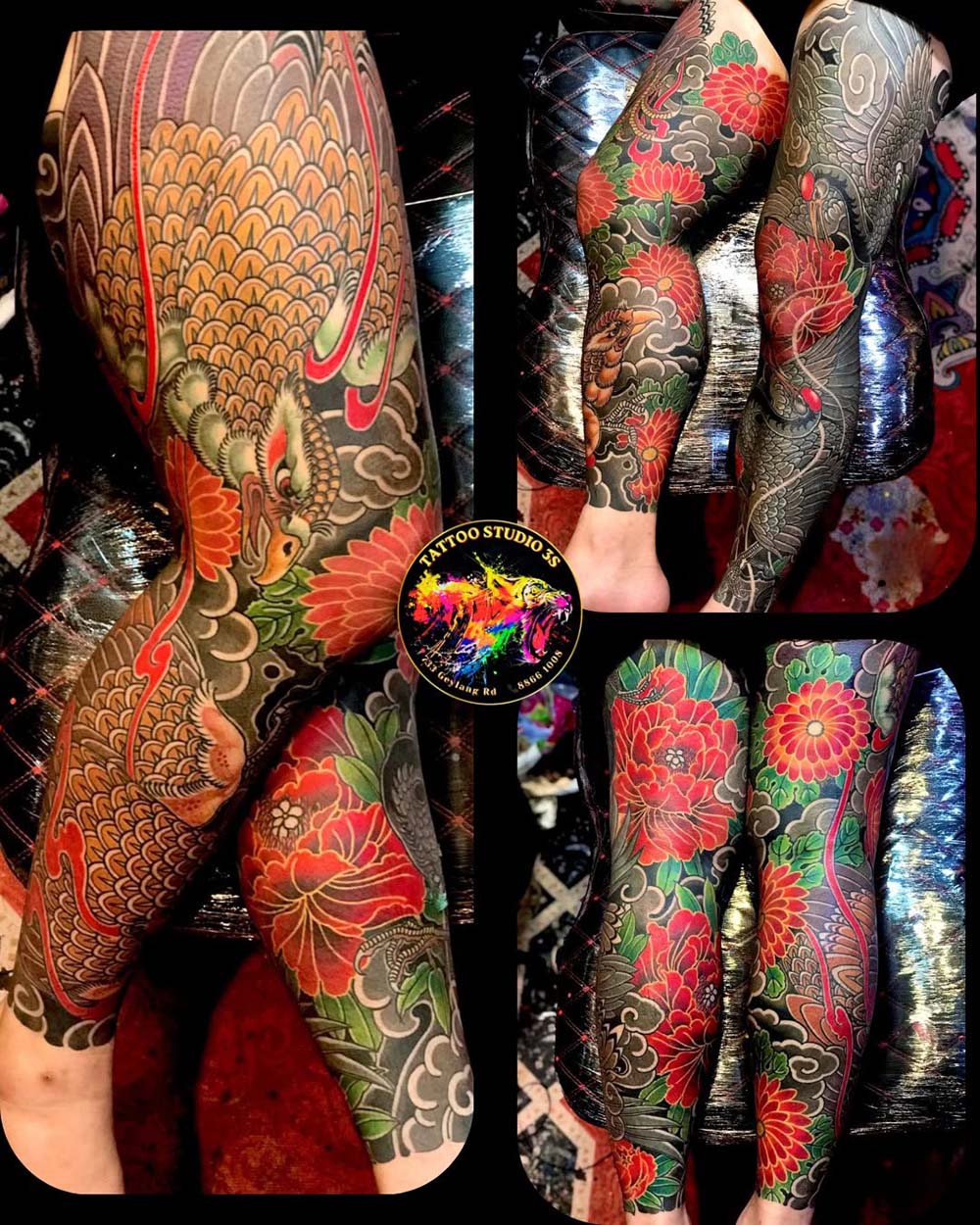
Japanese Leg Sleeve: Dragons, Koi, Cherry Blossoms
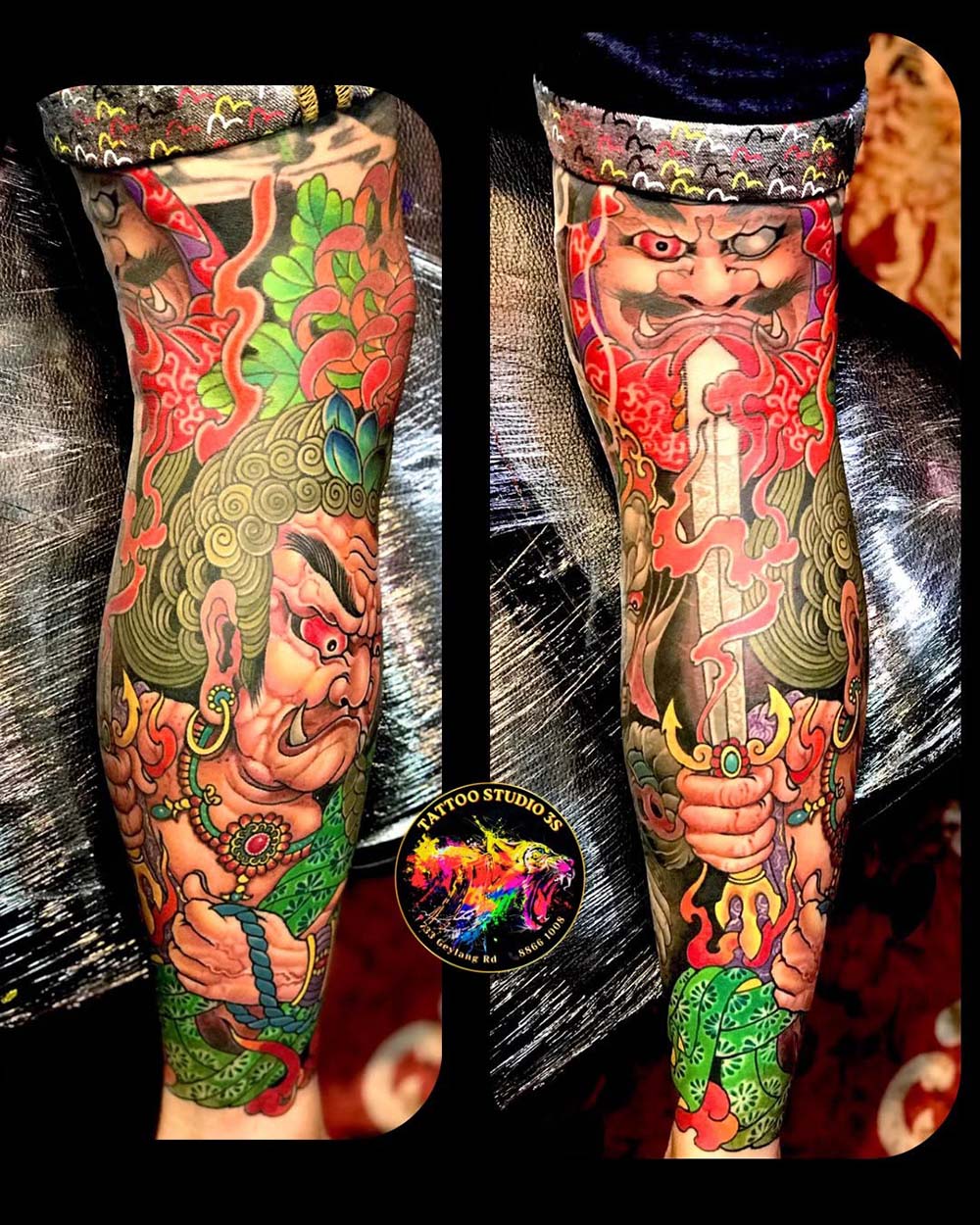
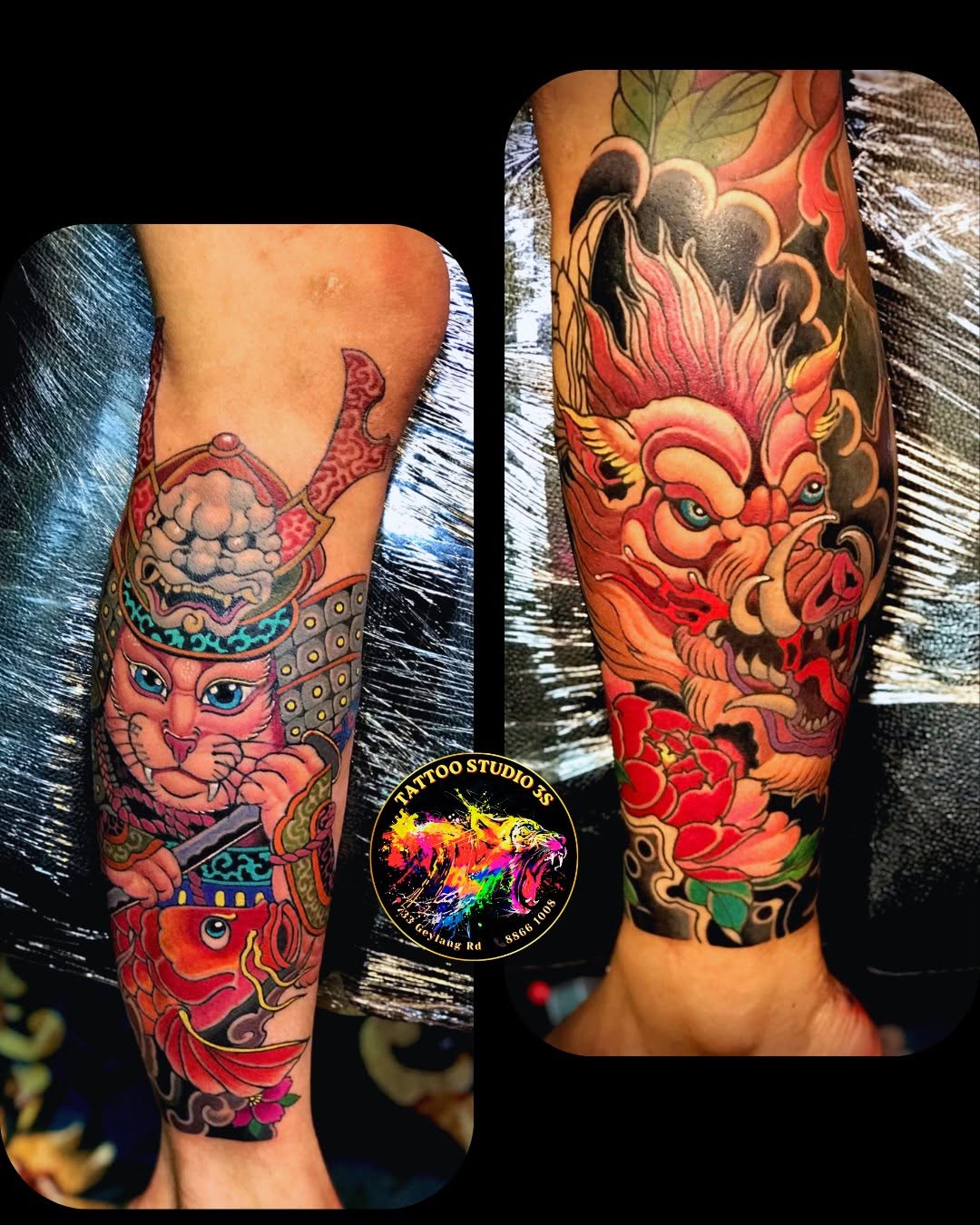
Traditional Japanese tattooing translates beautifully onto the leg, where dragons can coil naturally around the calf and thigh, koi fish can appear to swim upstream along the shin, and cherry blossoms can drift across the entire composition. This style relies on bold outlines, rich color, and dynamic movement that flows with the leg’s natural shape.
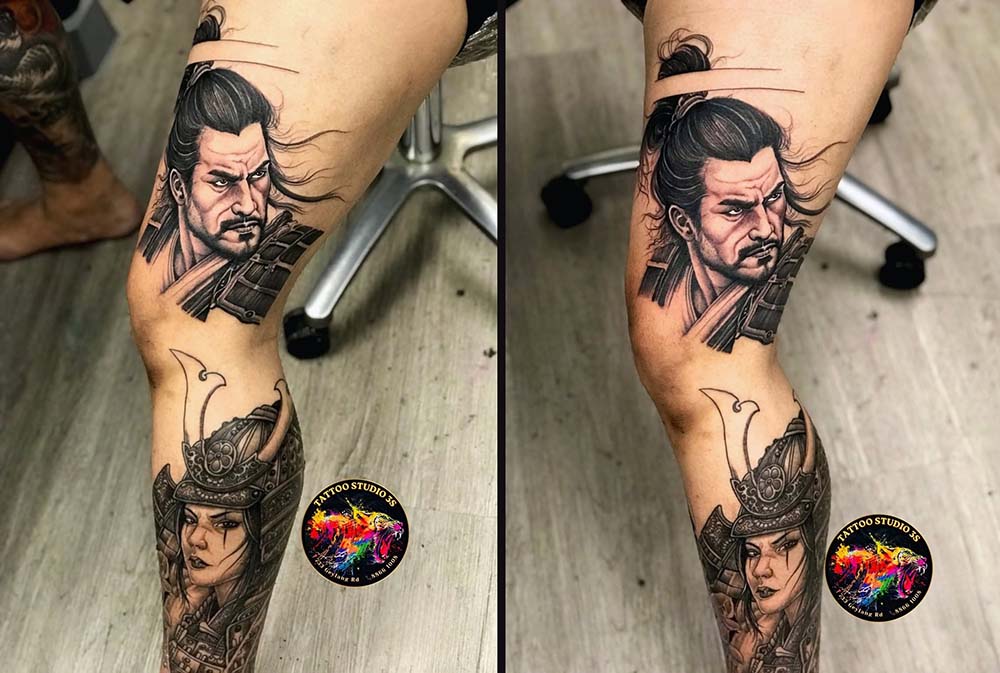
Realism: Portraits, Wildlife
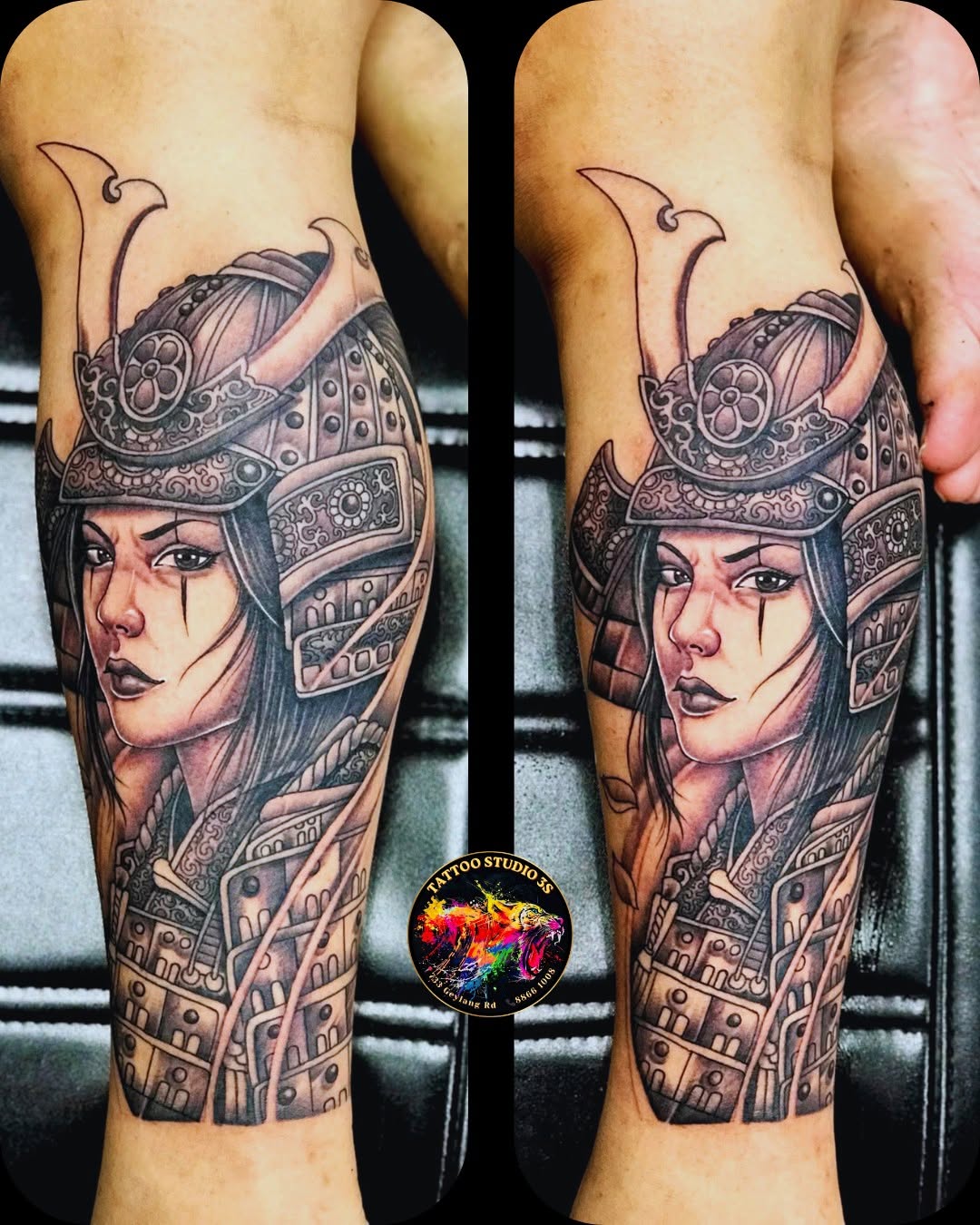
Realism tattoos use the leg’s ample space to render highly detailed portraits or wildlife scenes with lifelike shading and depth. The scale of a full leg allows for backgrounds and secondary elements that smaller realism pieces simply can’t accommodate.
Geometric & Mandala Patterns
Geometric shapes and mandala designs take advantage of the leg’s symmetry, often centering intricate patterns around the knee or thigh and radiating outward in a visually balanced composition.
Tribal & Polynesian Designs
Tribal and Polynesian tattoos have a long history of being placed on the legs, with bold black patterns that follow muscle lines and traditionally carry deep cultural and personal significance.
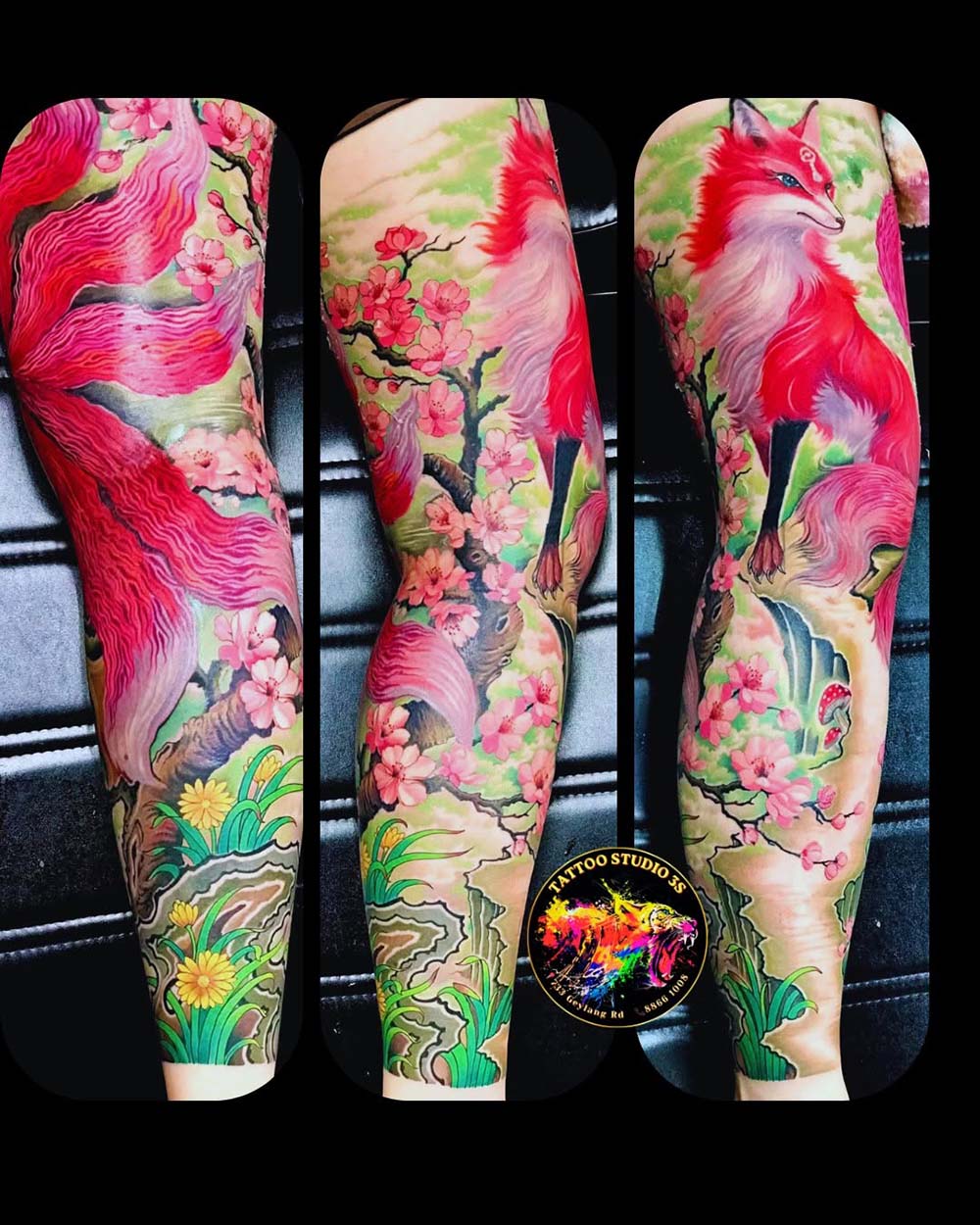
Floral & Botanical Wraps
Floral wraps use flowers, leaves, and vines to create a flowing, organic design that spirals around the leg, often blending multiple flower types into a single continuous botanical composition.
Top Full Leg Designs for Men
Men’s full leg tattoos often favor bold, high-impact imagery with strong cultural or symbolic weight.
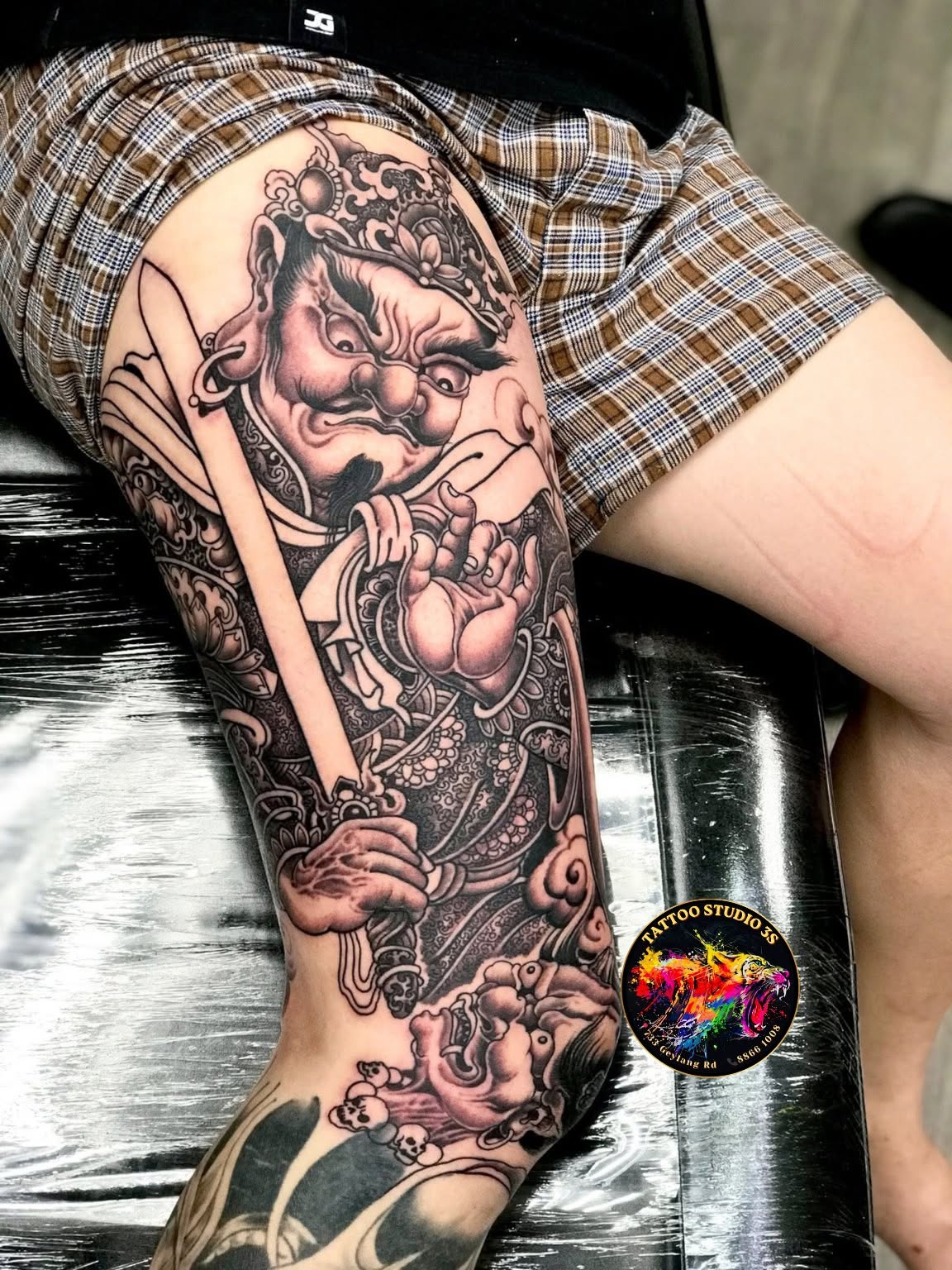
– Dragon & Warrior-Themed Leg Pieces: Dragons, samurai, and warrior figures are enduringly popular for men’s leg tattoos, often symbolizing strength, honor, and battle-tested resilience. Their dynamic poses work especially well when wrapped around the natural curve of the leg.
– Tribal/Polynesian Leg Sleeves: Tribal and Polynesian leg sleeves remain a top choice for men seeking bold, high-contrast designs rooted in cultural tradition and personal heritage.
– Skull & Dark Art Themes: Skulls, reapers, and other dark art imagery bring dramatic visual weight to a leg piece, often paired with flames, chains, or smoke for added intensity.
– Nature & Animal Motifs: Wolves, lions, snakes, and detailed forest or mountain scenes are popular choices for men who want their leg tattoo connected to strength and the natural world.
Top Full Leg Designs for Women
Women’s full leg tattoos often emphasize graceful flow, texture, and personal meaning, though style choices are never limited by gender.
– Floral Thigh-to-Calf Wraps: A continuous floral design that wraps from thigh to calf is one of the most requested full leg concepts for women, offering an elegant, flowing composition that follows the leg’s natural lines.
– Mandala & Fine-Line Leg Art: Mandala patterns and delicate fine-line work bring intricate symmetry and a meditative quality to a leg piece, often centered around the knee or upper thigh.
– Watercolor Designs: Watercolor leg tattoos use soft, blended color and paint-like splashes to create a dreamy, artistic effect, frequently layered with florals or abstract shapes.
– Symbolic/Script Leg Tattoos: Leg pieces built around meaningful quotes, dates, or symbols allow for a highly personal design that can be as subtle or as prominent as the wearer chooses.
Full Leg Designs by Meaning
Beyond aesthetic style, many people choose their full leg design around a specific message or personal story.
– Power & Courage Symbolism: Lions, tigers, warriors, and storm imagery are common choices for representing inner strength and the courage to face challenges head-on.
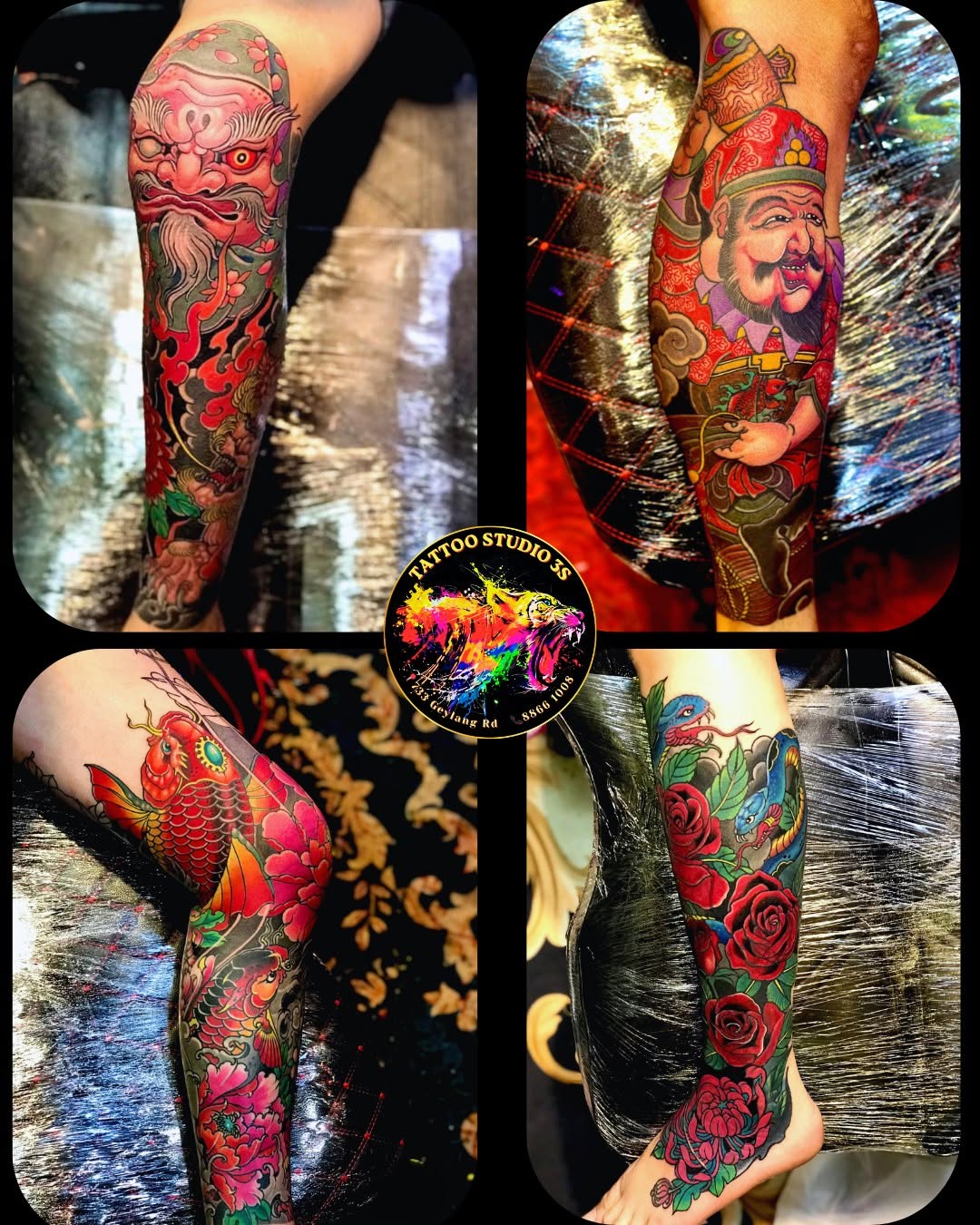
– Cultural/Heritage Themes (Polynesian, Japanese): Traditional Polynesian and Japanese motifs allow the leg to serve as a tribute to cultural identity and family heritage, often carrying specific meanings tied to lineage, protection, or achievement.
– Nature & Growth Concepts: Trees, vines, and blooming flowers are frequently used to represent personal growth, resilience, and the idea of flourishing despite adversity.
– Personal Transformation Stories: Some full leg tattoos are designed as a visual timeline, using shifting imagery or evolving detail to represent a significant personal journey or transformation.
Cost & Timeline for a Full Leg Tattoo
Number of Sessions Required
A full leg tattoo is a long-term project, generally requiring between 8 and 20+ sessions depending on the size, detail, and color complexity of the design. Given the size of the area, most artists recommend spacing sessions out to allow proper healing between visits.
Price Ranges by Style/Coverage Area
Pricing for a full leg tattoo varies significantly based on the studio, the artist’s experience, and how much of the leg is being covered. Simpler black-and-grey designs on a smaller portion of the leg will generally cost less than a full-color wraparound piece covering the entire limb. It’s best to consult with a chosen artist for an accurate, personalized quote based on the specific design.
Cost Factors (Thigh vs. Calf vs. Full Wrap)
Several factors influence the final price of a full leg tattoo:
– Coverage area: A thigh-only or calf-only piece will typically cost less than a full wraparound design covering the entire leg.
– Detail level: Dense, highly detailed compositions require more time and therefore cost more than simpler designs.
– Color vs. black-and-grey: Full-color work generally costs more due to the additional time and ink required to achieve rich, saturated results.
Does a Full Leg Tattoo Hurt?
Pain Map (Thigh vs. Knee vs. Shin vs. Calf)
Pain levels vary noticeably across the leg. The outer thigh is generally one of the more tolerable areas, thanks to its thicker muscle and fat padding. The calf is also relatively manageable for most people. The knee and shin, on the other hand, tend to be significantly more painful, since the skin there sits directly over bone and cartilage with little cushioning.
Managing Pain Across Multi-Session Pieces
A few practical strategies can help make a multi-session leg tattoo more comfortable:
– Get adequate rest and eat a proper meal before each session.
– Stay well-hydrated in the days leading up to the appointment.
– Wear loose, comfortable clothing to the studio.
– Avoid alcohol and blood-thinning medication beforehand.
– Communicate with the artist about breaks, especially when working over more sensitive areas like the knee or shin.
Choosing the Right Full Leg Design
Working with Leg Contours/Muscle Shape
The best full leg tattoos are designed to follow the natural contours of the leg, using muscle lines and joint movement to guide the composition so the piece looks dynamic whether the leg is standing, bent, or in motion.
Balancing Front, Side, and Back Leg Panels
A full leg offers multiple visible “panels,” including the front, side, and back of the leg. Thoughtful designs balance these sections so the tattoo looks complete and cohesive from every angle, not just from the front.
Selecting an Artist Experienced in Large-Scale Work
Large-scale leg pieces require a different skill set than smaller tattoos, particularly when it comes to maintaining proportion and flow across such a large area. It’s worth seeking out an artist with a strong portfolio specifically in full leg or large-scale body work.
FAQs
How many sessions for a full leg tattoo?
Most full leg tattoos require between 8 and 20 sessions, depending on the size, style, and level of detail involved in the design.
Is the knee/shin area more painful?
Yes, the knee and shin are generally considered more painful than the thigh or calf, since the skin in these areas sits close to bone with less muscle and fat for cushioning.
Can you still wear shorts/skirts comfortably during healing?
During the initial healing period, it’s best to wear loose, breathable clothing over the tattooed area and avoid anything that rubs against fresh ink. Once healed, shorts and skirts can typically be worn without issue.
How to maintain color vibrancy long-term?
Protecting the tattoo from prolonged, unprotected sun exposure with a high-SPF sunscreen, keeping the skin moisturized, and scheduling occasional touch-ups over the years are the most effective ways to keep colors looking vibrant.
A full leg tattoo transforms the entire limb into a large-scale canvas for meaningful and visually striking artwork. From bold Japanese imagery and cultural Polynesian patterns to delicate florals and symbolic designs representing strength or personal growth, a full leg tattoo offers plenty of room to create a truly unique piece. While it requires a significant commitment of time, budget, and patience during the healing process, the result can be a cohesive and impressive artwork that flows naturally from the hip to the ankle.
If you’re ready to turn your full leg tattoo idea into reality, contact Tattoo Studio 3S to book a consultation with an experienced tattoo artist. Share your ideas, preferred style, and inspiration, and our team can help you develop a personalized design that complements the natural shape of your leg and reflects your story. Get in touch with Tattoo Studio 3S today and start planning your next full leg tattoo.