Japanese tattoos are instantly recognizable for their bold imagery, flowing compositions, rich symbolism, and powerful storytelling. From legendary dragons and determined koi fish to elegant cherry blossoms and dramatic Hannya masks, every element can carry a deeper meaning while contributing to the overall visual flow. Whether you are considering a Japanese full sleeve, full back piece, or a smaller design, understanding the symbolism behind each motif can help you create a tattoo that feels both visually impressive and personal. Below, explore popular Japanese tattoo ideas, their meanings, placement options, and important considerations before getting inked.
What Is A Japanese Tattoo?
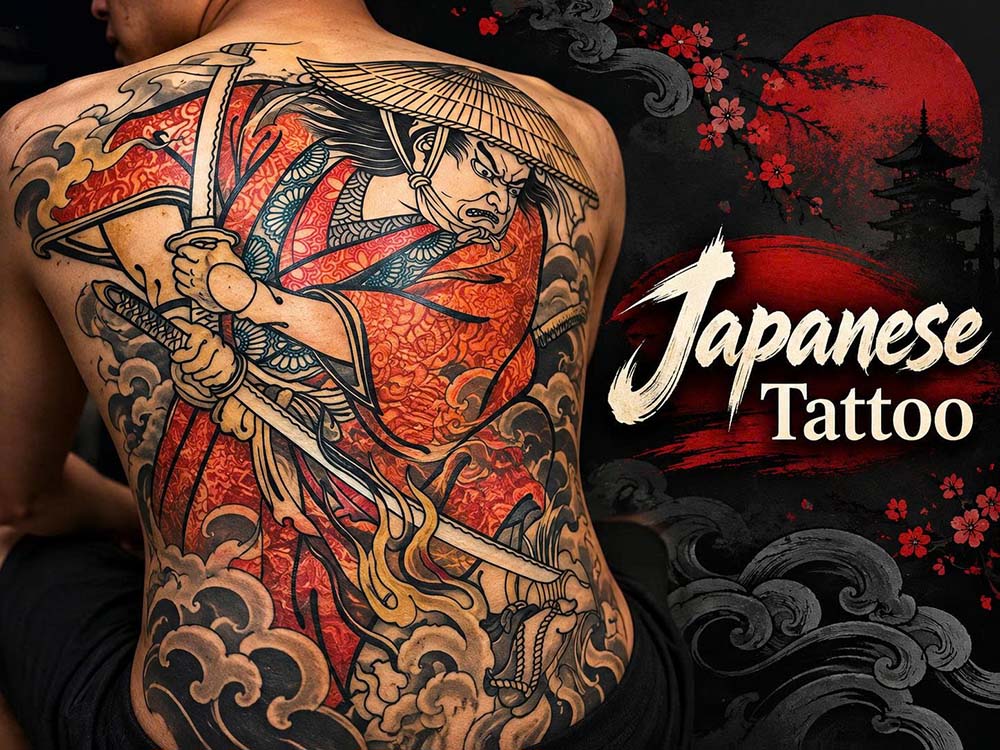
A Japanese tattoo is a style inspired by traditional Japanese art, folklore, mythology, nature, and cultural imagery. It often features recognizable subjects such as dragons, koi fish, tigers, phoenixes, Samurai, Geisha, masks, waves, clouds, and flowers. Rather than treating every element as a separate image, Japanese tattoo designs often connect the main subject with background elements to create a continuous composition. This makes the style particularly suitable for large areas such as the arms, back, chest, and legs.
Traditional Irezumi And Modern Japanese Tattoos
Traditional Japanese tattooing is commonly associated with Irezumi, a broad term often used when discussing Japanese tattoo traditions. Classic designs tend to feature strong outlines, established motifs, carefully planned backgrounds, and large compositions that follow the natural shape of the body. Modern Japanese tattoos can retain these visual foundations while incorporating contemporary tattooing techniques. Artists may experiment with realistic shading, finer details, different color palettes, or black-and-grey treatments. This gives clients more freedom to create a design inspired by Japanese tattoo traditions while still reflecting their individual aesthetic.
What Makes Japanese Tattoos So Distinctive?
One of the most distinctive characteristics of Japanese tattooing is its flow. Dragons can twist around an arm, koi can swim through waves, and flower petals can connect different parts of a large composition. Strong outlines, dynamic movement, recognizable symbolism, contrasting colors, and carefully designed negative space also contribute to the style. Background elements such as wind bars, clouds, water, waves, smoke, and flowers are especially important. They help transform separate images into one cohesive tattoo.
The Meaning And Symbolism Behind Japanese Tattoos
– Symbolism plays an important role in many Japanese-inspired tattoos. Animals, mythological creatures, flowers, masks, and natural elements can each carry traditional or contemporary associations.
– For example, dragons are often associated with strength and wisdom, while koi fish can represent perseverance and determination. Cherry blossoms commonly evoke the fleeting nature of life, while tigers are frequently associated with courage and strength.
– Color can also affect the visual mood and interpretation of a tattoo. Red creates an intense, energetic appearance; black provides strong contrast; blue works naturally with water imagery; while gold or yellow can make dragons, phoenixes, and decorative details more striking.
– The strongest Japanese tattoo compositions usually consider the relationship between every element. A koi swimming through waves, a dragon surrounded by clouds, or a tiger paired with peonies can tell a more complete visual story than several unrelated motifs placed together.
30+ Japanese Tattoo Ideas And Their Meanings
There are countless ways to personalize Japanese tattoo designs. The following motifs are among the most recognizable choices and can be adapted into different compositions, colors, and placements.
1. Japanese Dragon Tattoo
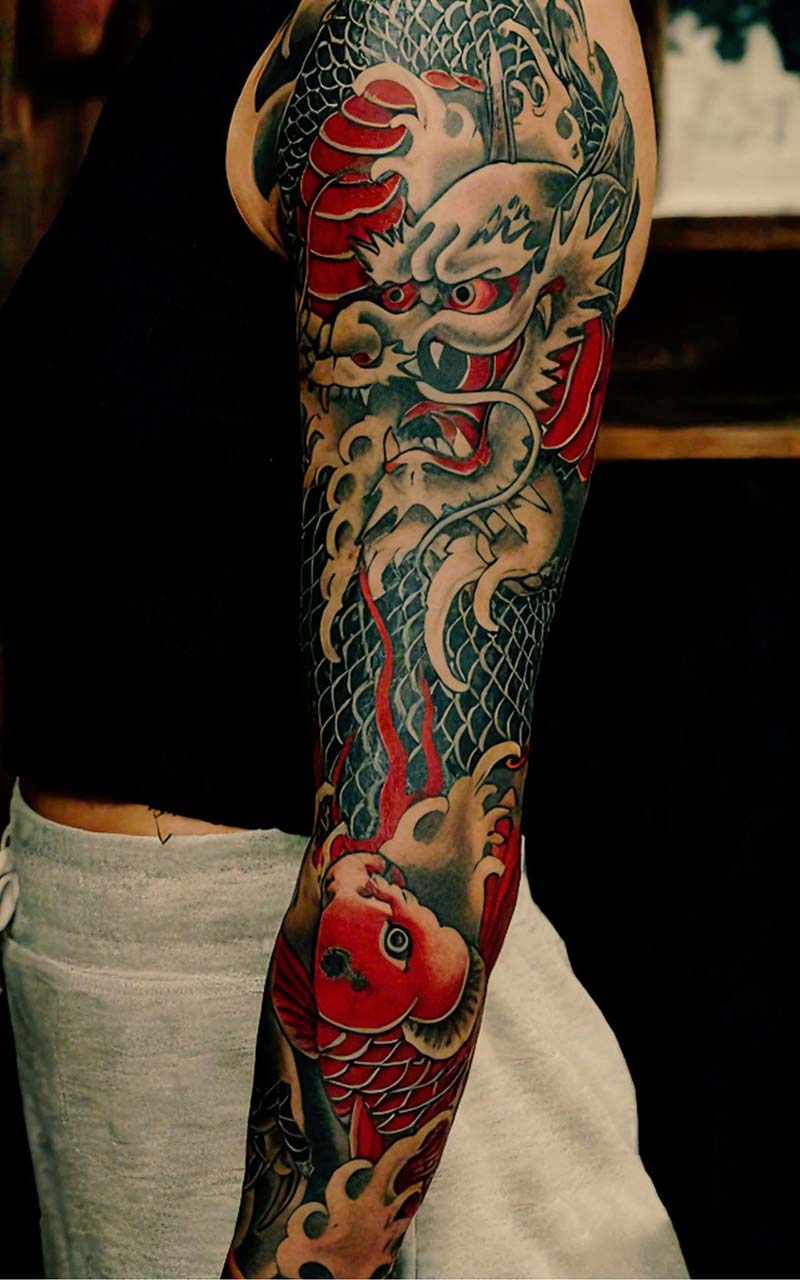
The Japanese dragon tattoo is a powerful choice for anyone who wants a large, dramatic design. Dragons in Japanese-inspired tattoo art are often associated with strength, wisdom, protection, and powerful natural forces. Their long, winding bodies work especially well on the back, arm, thigh, or leg. Clouds, waves, wind, and flowers can be incorporated around the dragon to create a more complete composition.
2. Koi Fish Tattoo
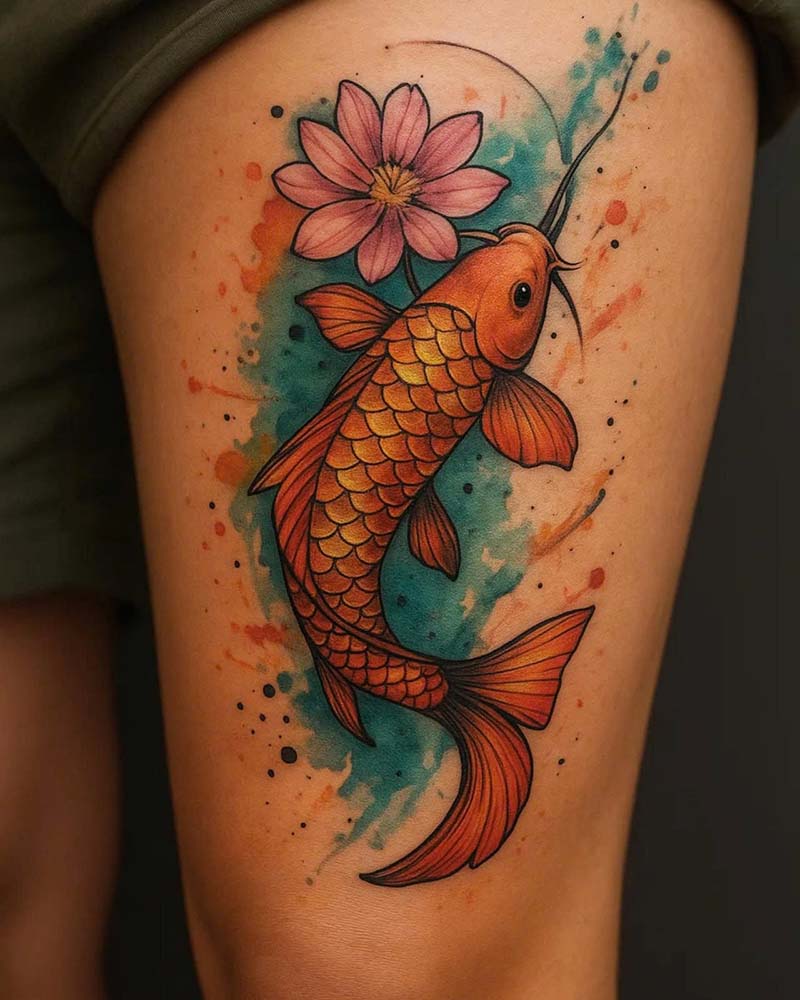
Koi fish are commonly associated with perseverance, determination, transformation, and overcoming adversity. The movement of a koi makes it ideal for flowing compositions. It can swim upward along the arm or leg or become part of a larger water scene featuring waves, flowers, and other Japanese-inspired elements.
3. Japanese Tiger Tattoo
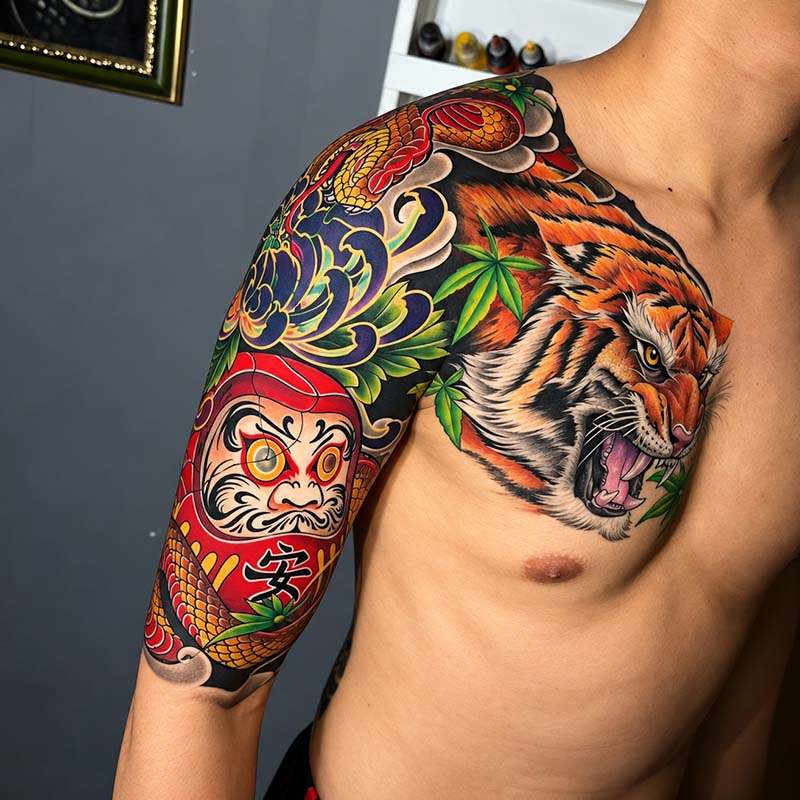
A Japanese tiger tattoo creates an immediate sense of power and movement. Tigers are commonly associated with courage, strength, confidence, and protection. A roaring tiger can become the focal point of a back, chest, thigh, or sleeve tattoo. Peonies, bamboo, wind, and clouds are popular complementary elements.
4. Japanese Phoenix Tattoo
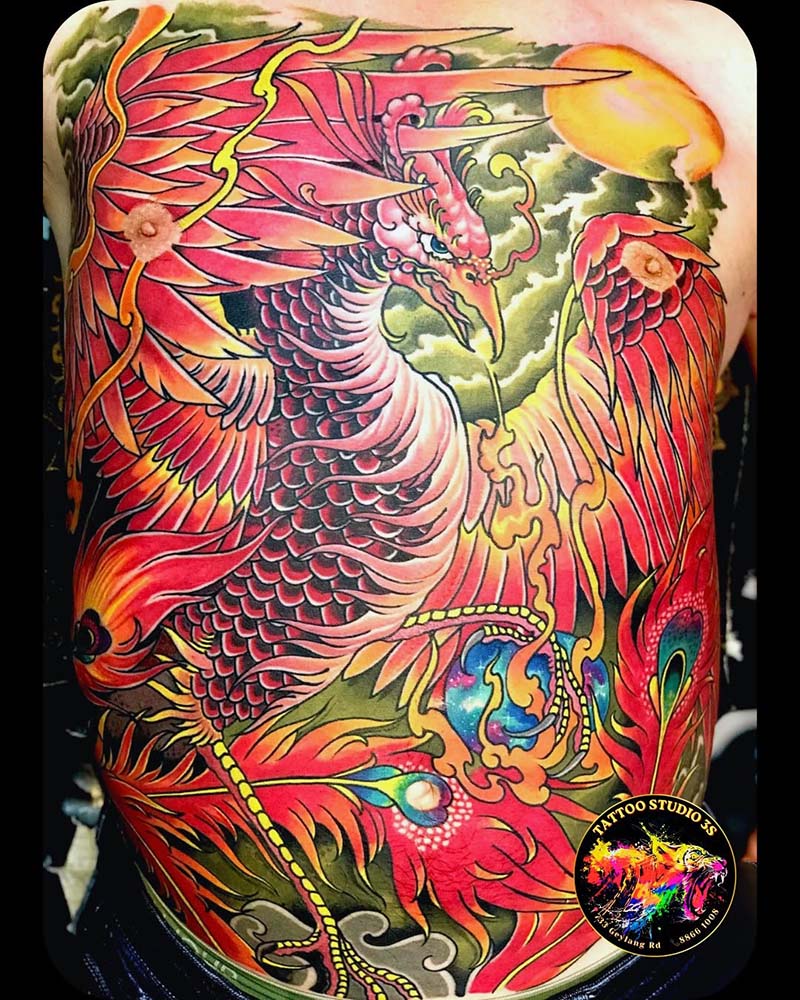
The phoenix is frequently associated with rebirth, renewal, resilience, and transformation. Its wings and long feathers allow artists to create highly dynamic compositions. A Japanese phoenix tattoo can look particularly impressive across the back or extending from the shoulder down the arm.
5. Samurai Tattoo
Samurai-inspired tattoos can symbolize courage, discipline, loyalty, honor, and determination. These designs may feature a Samurai warrior, armor, helmet, katana, or battle scene. Because of the amount of detail involved, Samurai tattoos are often suited to larger areas such as the back, thigh, chest, or full sleeve.
6. Geisha Tattoo
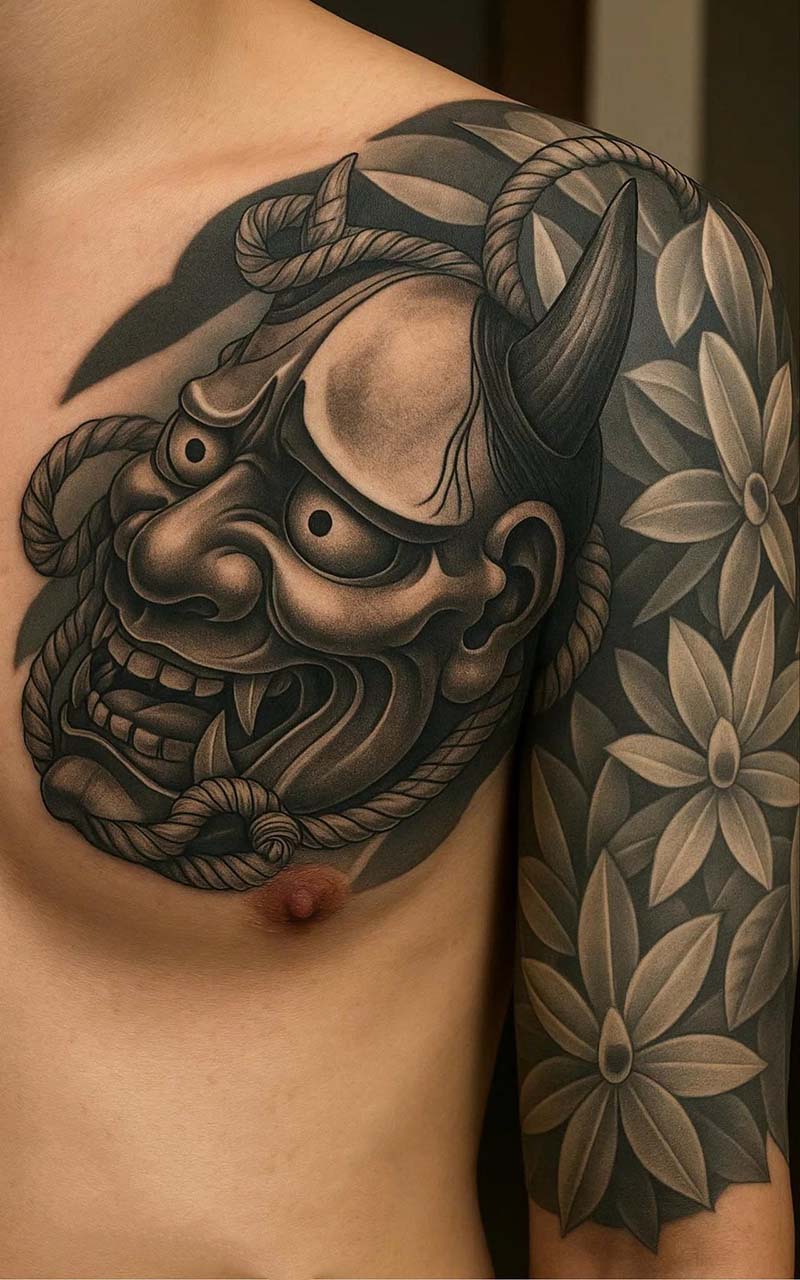
Geisha tattoos are often chosen for their elegance and intricate visual details. Depending on the composition, they may evoke beauty, artistry, mystery, refinement, or grace. Fans, traditional clothing, flowers, decorative hairpieces, and Japanese architectural elements can add further depth to the design.
7. Hannya Mask Tattoo
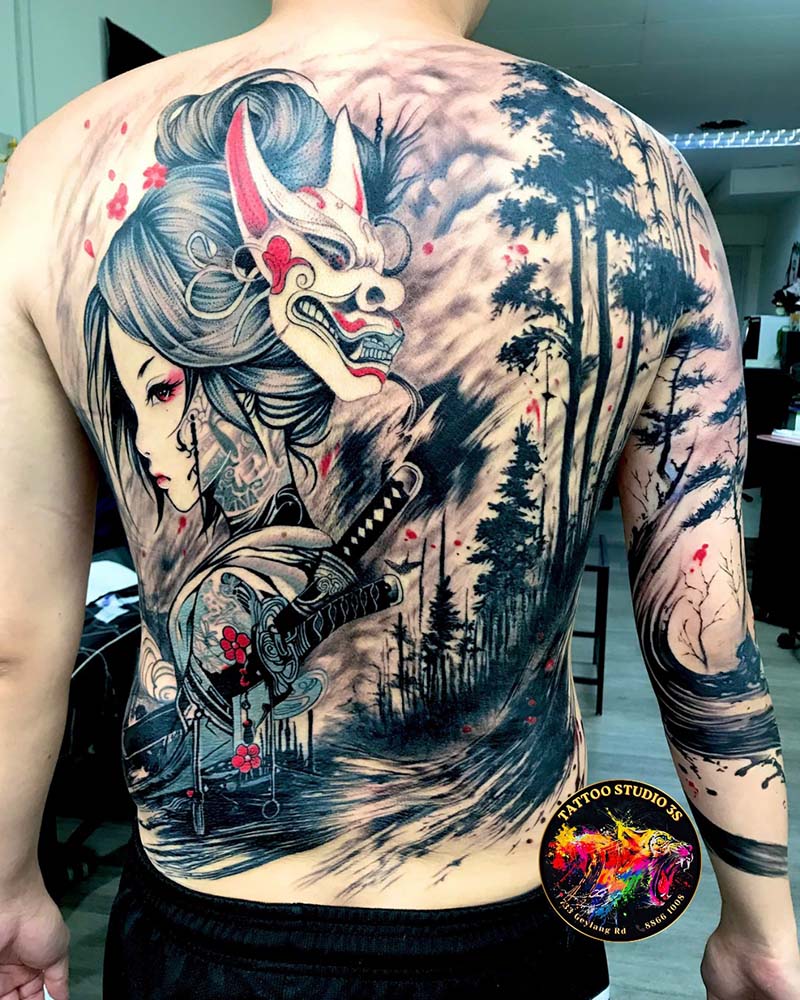
The Hannya mask originates from Japanese Noh theatre and represents a complex emotional figure, traditionally depicting a woman transformed by jealousy, anger, and anguish. As a tattoo, the Hannya mask creates a dramatic focal point and can be interpreted in different personal ways. It is frequently combined with flowers, snakes, waves, or other decorative elements.
8. Japanese Snake Tattoo
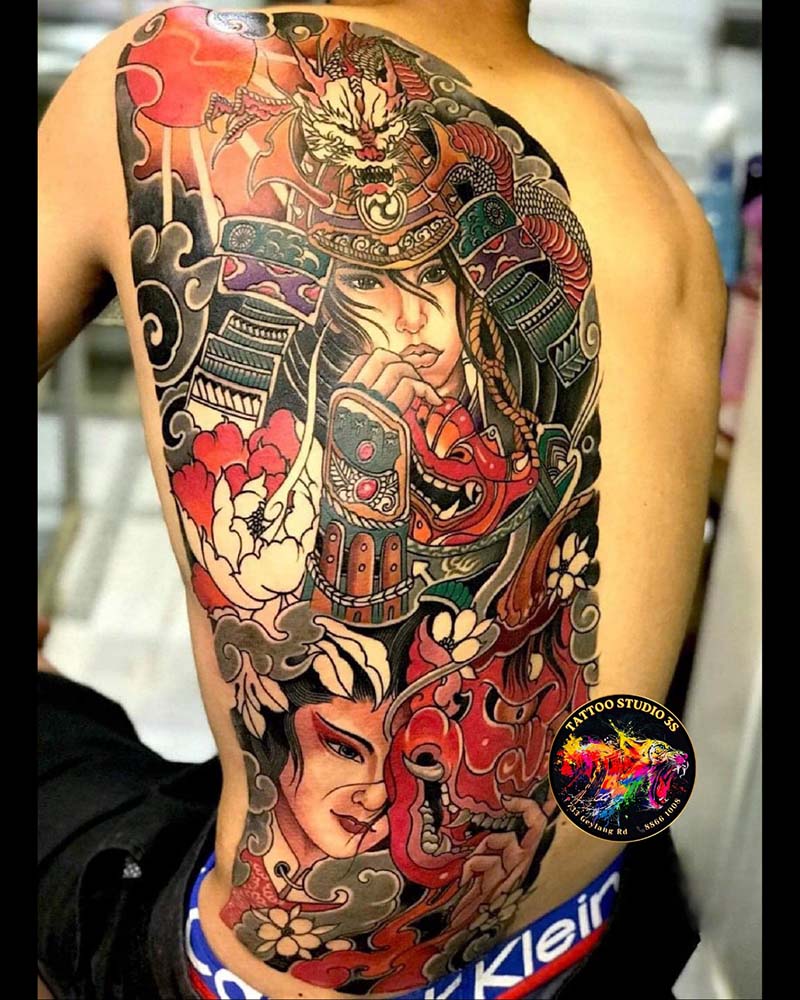
A snake tattoo works naturally with the flowing structure of Japanese-inspired body art. Its flexible shape can wrap around an arm, leg, shoulder, or torso. Snakes may be associated with transformation, protection, renewal, and adaptability. Pairing a snake with chrysanthemums, peonies, or Hannya imagery can produce a visually rich composition.
9. Oni Mask Tattoo
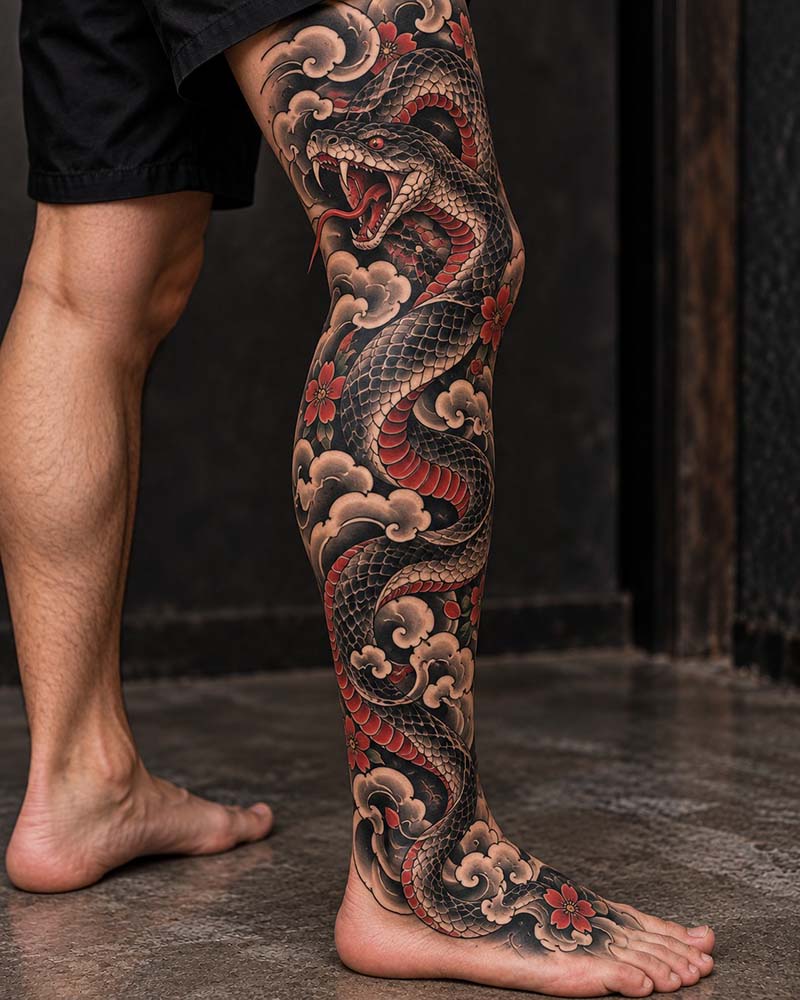
Oni are supernatural figures found in Japanese folklore and are commonly portrayed with horns, fierce expressions, and exaggerated features. Oni mask tattoos offer strong visual impact and are especially suitable for people who prefer darker, more intimidating tattoo imagery. Bold colors can further emphasize the mask’s dramatic appearance.
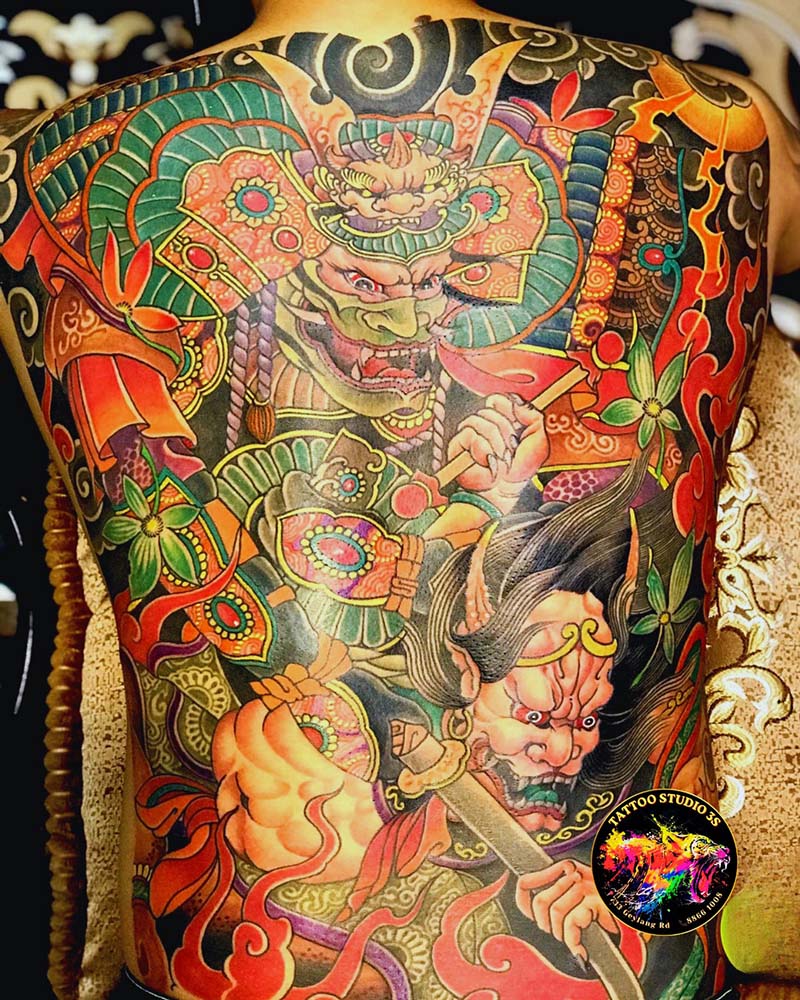
10. Japanese Wave Tattoo
Japanese-inspired waves create movement and can represent the power, unpredictability, or constant motion of nature. Waves are also extremely useful as supporting imagery. They can surround koi fish, dragons, flowers, or other subjects and help connect different parts of a sleeve or leg tattoo.
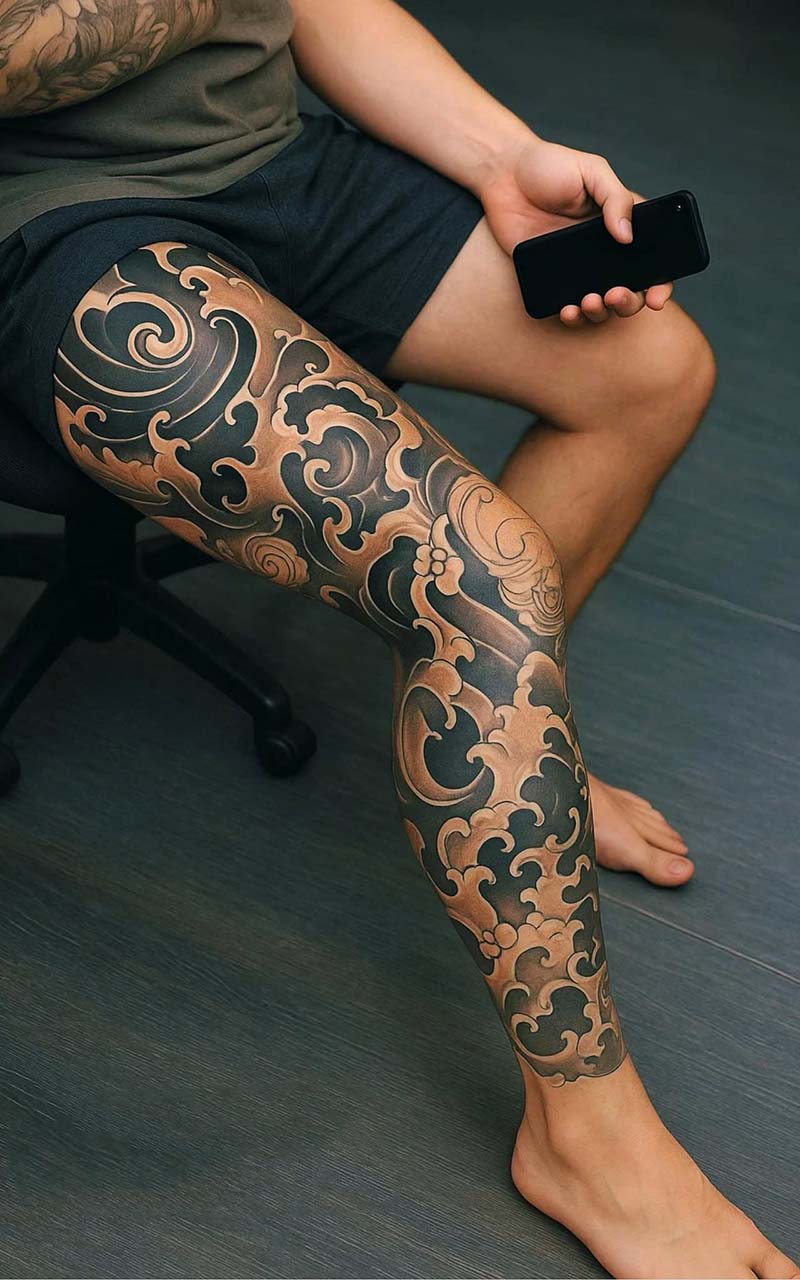
11. Japanese Cloud Tattoo
Clouds are commonly used as background elements to create depth and separation between larger motifs. They work particularly well with dragons, phoenixes, Samurai, and other subjects associated with the sky. Their curved shapes also help a design follow the contours of the body.
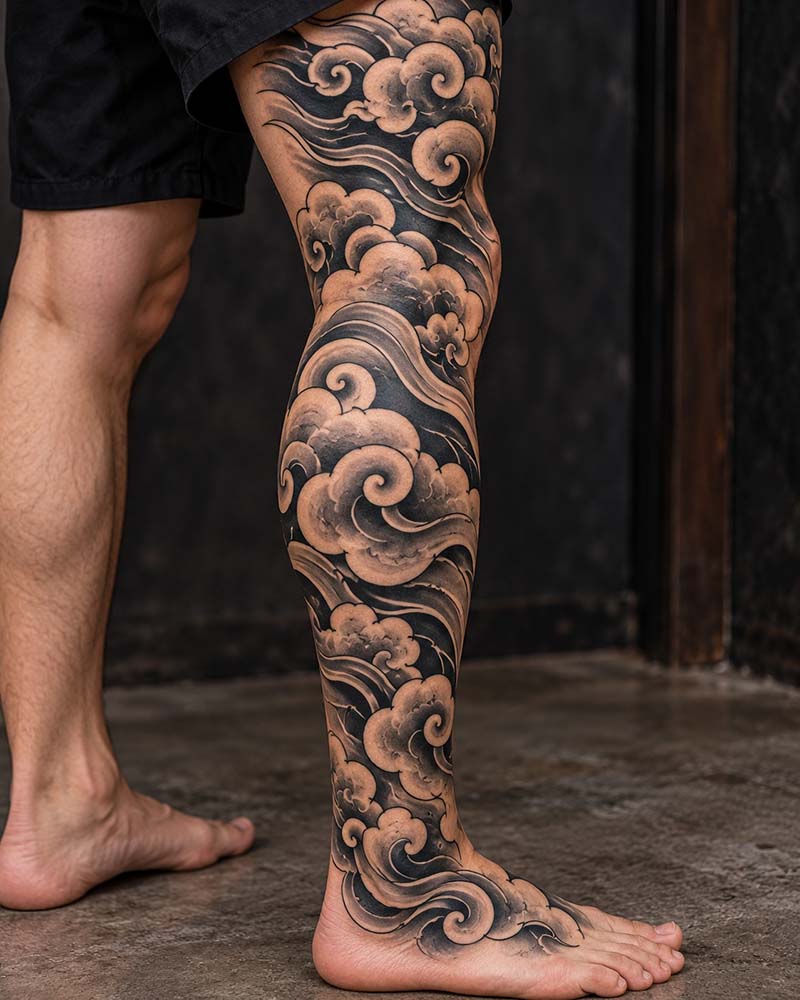
12. Cherry Blossom Tattoo
Cherry blossoms, or sakura, are strongly associated with spring in Japan and are often used to evoke beauty, transience, and the fleeting nature of life. Their delicate appearance provides an attractive contrast to powerful subjects such as dragons, tigers, Samurai, and Hannya masks.
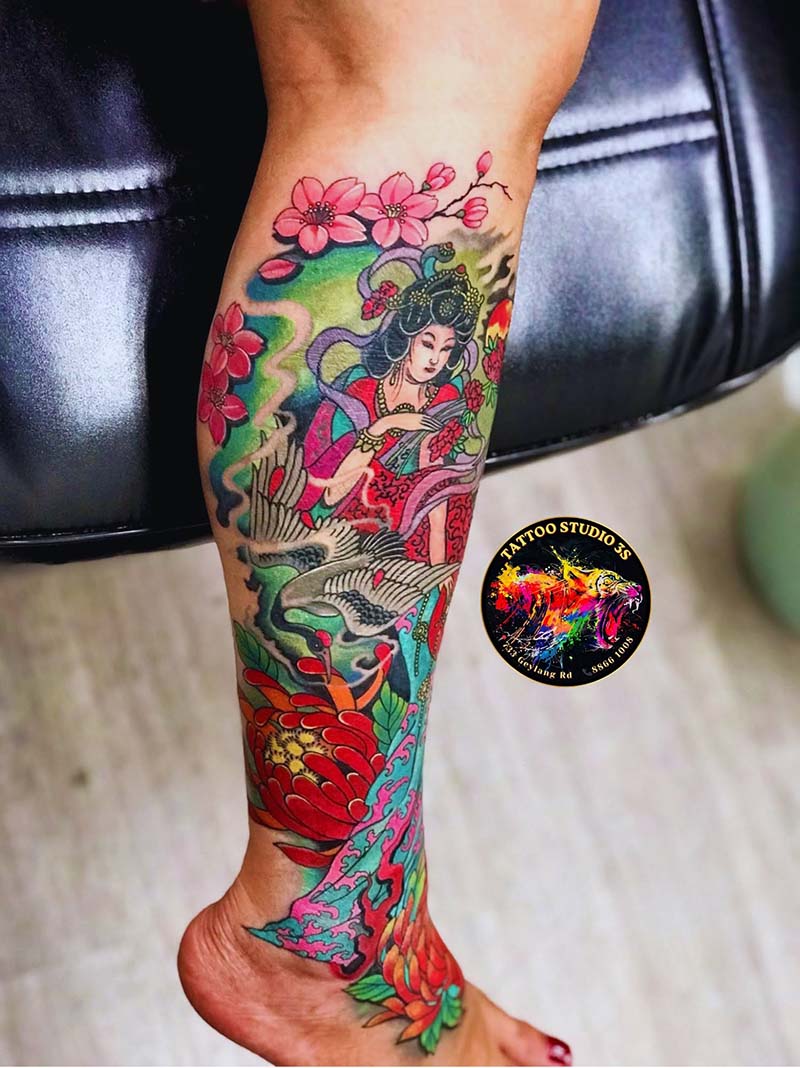
13. Japanese Peony Tattoo
Peonies are popular floral motifs in Japanese-inspired tattooing because of their large petals and strong visual presence. They can be associated with prosperity, beauty, courage, and good fortune. Peonies work especially well alongside tigers, lions, snakes, and other bold subjects.
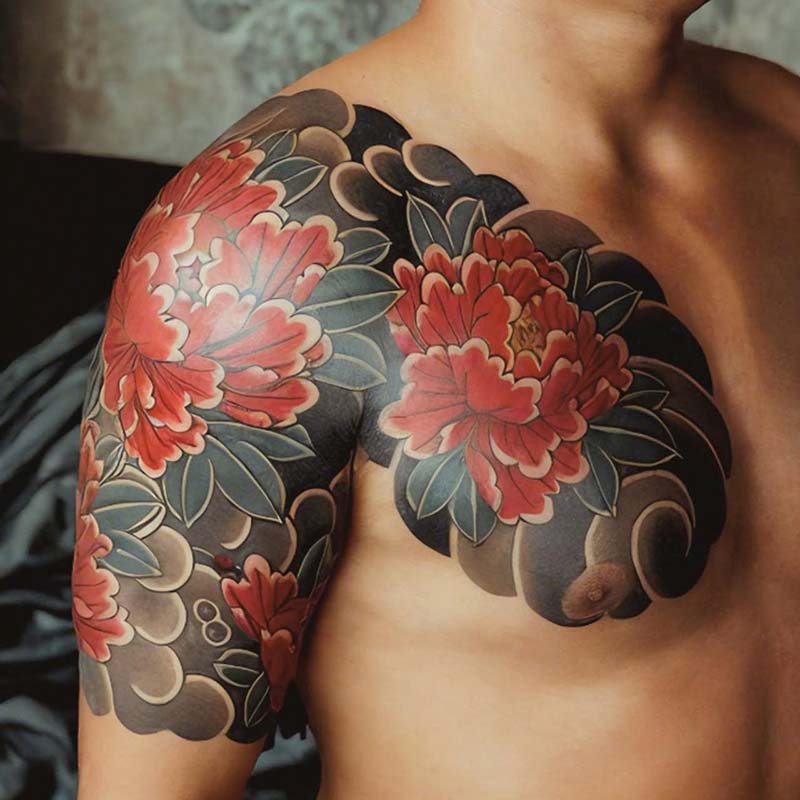
14. Japanese Chrysanthemum Tattoo
The chrysanthemum has a long cultural history in Japan and is closely associated with the Imperial Family. Its layered petals create a highly decorative tattoo motif. Chrysanthemums can be used independently or incorporated into sleeves, back pieces, and leg tattoos to balance larger imagery.
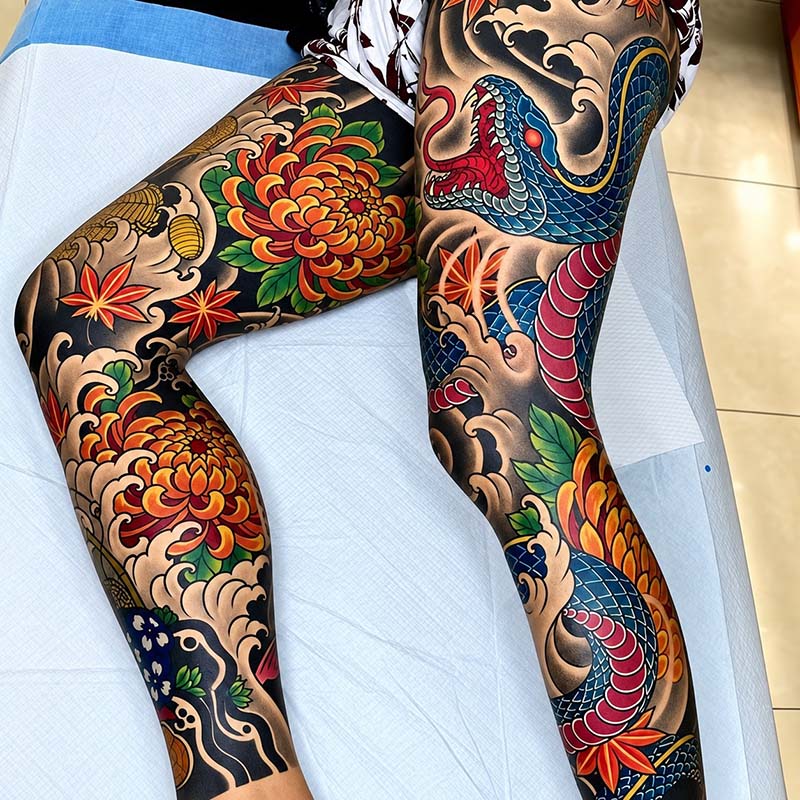
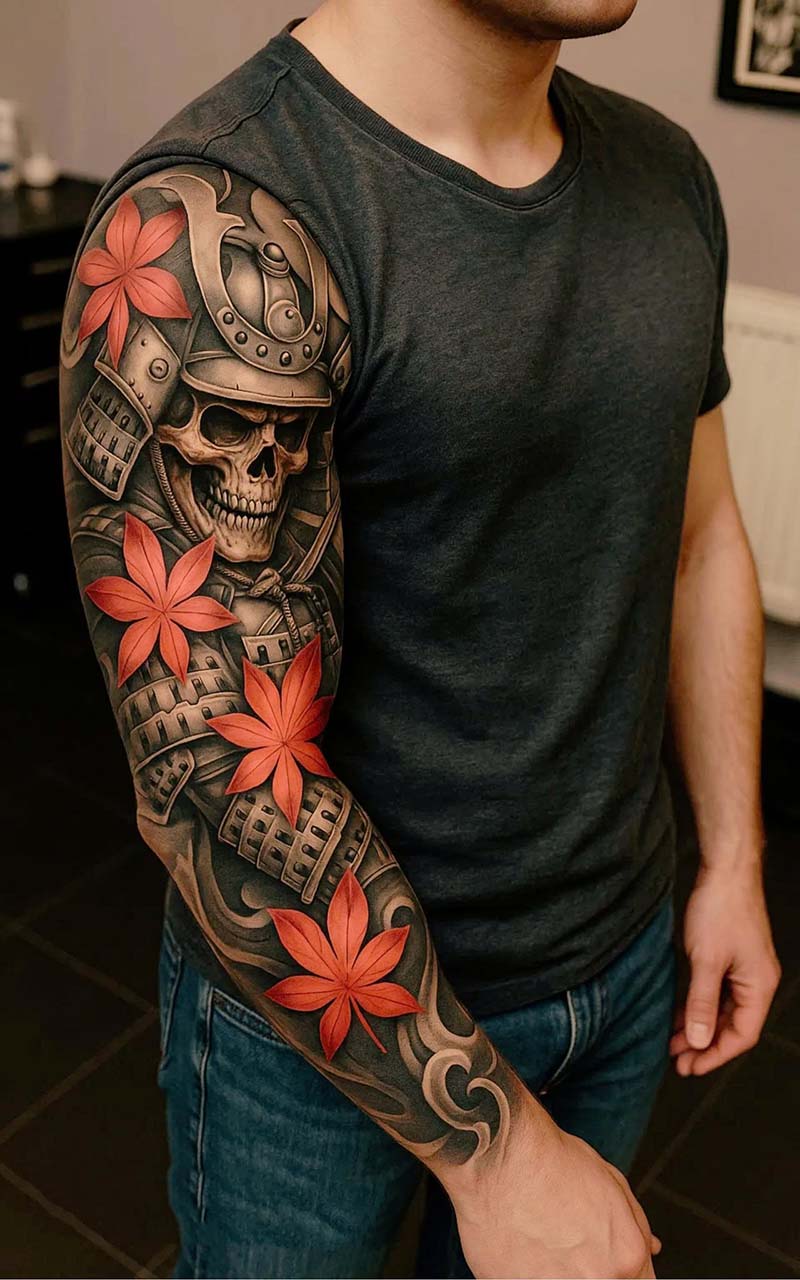
15. Japanese Maple Leaf Tattoo
Japanese maple leaves can symbolize change, transition, and the passing of seasons. Their smaller size makes them useful as connecting elements within larger designs. Red and orange maple leaves can also provide beautiful contrast against dark waves, clouds, or black-and-grey subjects. Beyond these 15 main ideas, Japanese tattoo compositions can be expanded through different combinations, poses, colors, background treatments, and placements. This creates dozens of possibilities from the same core motifs.
Japanese Tattoo Ideas By Placement
Placement has a major influence on Japanese tattoo composition. Because many designs rely on movement and interconnected imagery, choosing the placement before finalizing the artwork allows the artist to design specifically around the body’s natural contours.
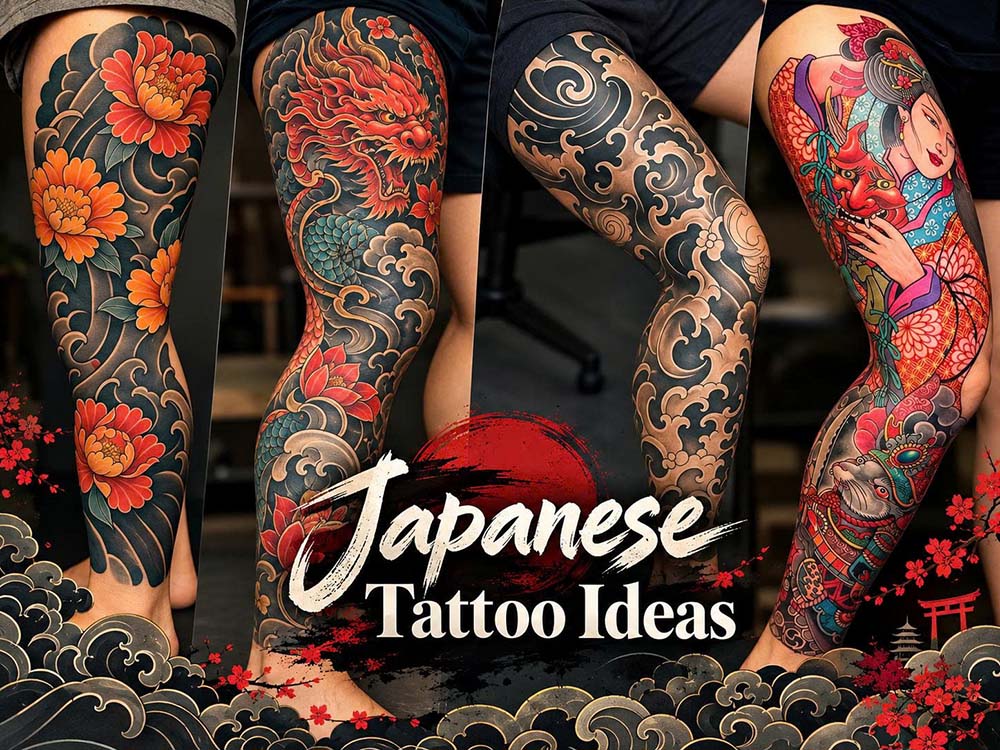
– Japanese Full Sleeve Tattoo: A Japanese full sleeve tattoo offers enough space to combine a dominant subject with supporting imagery. A dragon can wrap from the shoulder toward the forearm, while koi can move through waves along the arm. Tigers or Samurai can serve as focal points, with clouds, flowers, wind, and water filling the surrounding areas. A well-planned sleeve should look cohesive from every angle rather than appearing like several independent tattoos placed next to one another.
– Japanese Full Back Tattoo: The back provides one of the largest uninterrupted canvases on the body, making it particularly suitable for detailed Japanese tattoo designs. Dragons, phoenixes, Samurai, Hannya masks, and tigers can become dramatic central subjects. The surrounding space allows artists to add clouds, waves, flowers, smoke, or other elements without overcrowding the main image.
– Japanese Full Leg Tattoo: A Japanese full leg tattoo can extend from the upper thigh toward the ankle, creating a long vertical composition. Dragons, snakes, koi, and waves work particularly well because their shapes can naturally follow the leg. Larger focal elements can be positioned on the thigh or calf while smaller motifs connect the entire piece.
– Japanese Chest And Shoulder Tattoo: The chest and shoulder provide a broad area for designs that emphasize movement and strength. A dragon, tiger, Samurai, or Hannya mask can begin on the chest and extend toward the shoulder and upper arm. This placement can also become the foundation for a future full sleeve.
– Japanese Half Sleeve Tattoo: A half sleeve is a good option for those who want the visual impact of Japanese tattooing without covering the entire arm. Designs may extend from the shoulder to the elbow or from the elbow toward the wrist. Dragons, koi, Hannya masks, tigers, peonies, and waves are all suitable choices.
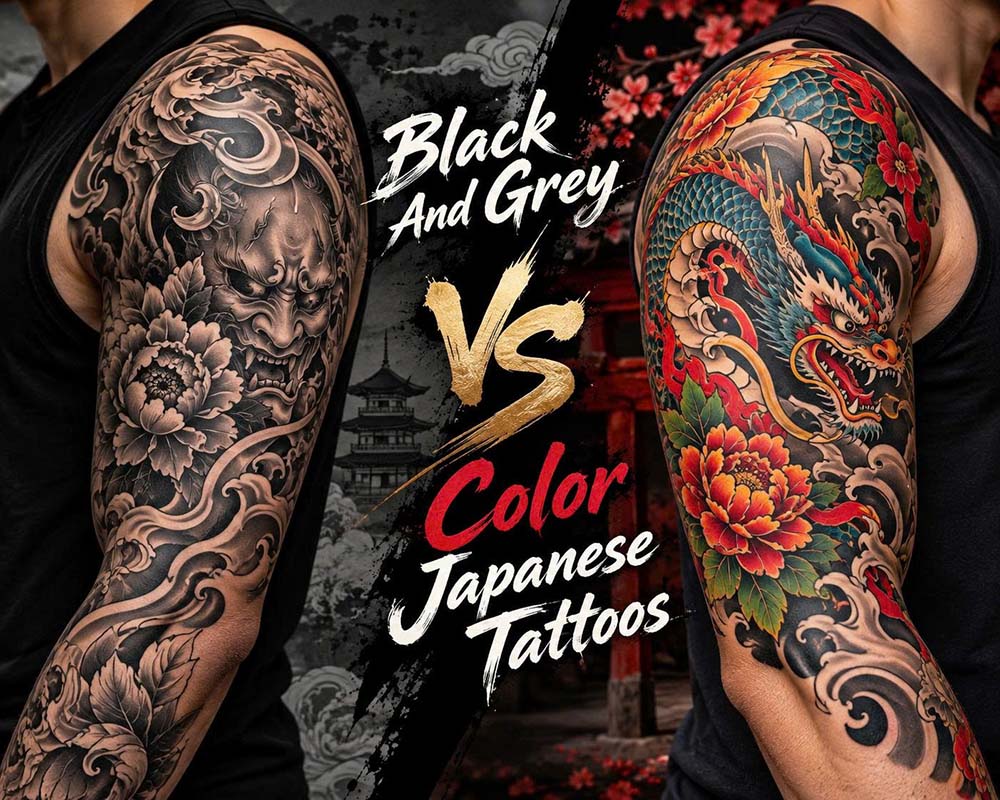
Black And Grey Vs Color Japanese Tattoos
Both black-and-grey and color approaches can work beautifully for Japanese-inspired tattoos. The right choice depends on the desired visual effect, subject, existing tattoos, skin characteristics, and personal preference.
Black And Grey Japanese Tattoos
Black-and-grey Japanese tattoos emphasize contrast, shading, texture, and form. Without multiple colors competing for attention, the eye naturally focuses on linework and composition. This approach can be especially effective for Samurai, Hannya masks, tigers, dragons, and darker dramatic themes.
Traditional Color Japanese Tattoos
Color creates a bold and highly recognizable appearance. Reds, blues, greens, yellows, oranges, and black can be combined to distinguish the main subject from background elements. Color can be particularly striking for koi, dragons, phoenixes, flowers, maple leaves, and large-scale Japanese pieces.
How To Choose The Right Japanese Tattoo Design
A Japanese tattoo should not be selected based only on an attractive reference image. Meaning, body placement, scale, visual flow, and the relationship between individual motifs all deserve consideration.
Consider The Meaning Of Each Symbol
(Cân nhắc ý nghĩa của từng biểu tượng)
Research the imagery you are interested in before finalizing your design. A dragon, koi, Hannya mask, Samurai, or cherry blossom can carry different cultural associations and personal interpretations. Understanding these associations helps you choose imagery that connects with the story or idea you want your tattoo to express.
Choose A Design That Fits Your Placement
Different body areas require different compositions. A long dragon may flow naturally along an arm or leg, while a phoenix with extended wings may work better across the back. The tattoo should be designed for the body rather than simply transferring a flat reference image onto the skin.
Think About The Overall Composition
If you are planning a full sleeve, back piece, or full leg tattoo, think beyond the main subject. Background elements, negative space, flowers, waves, clouds, and transitions all influence how the final piece looks. Planning these details from the beginning can create a more cohesive result.
Work With An Artist Experienced In Japanese Tattoos
Large Japanese-inspired tattoos require careful planning, especially when several motifs need to flow across curved areas of the body. Review an artist’s portfolio and pay attention to their linework, shading, color saturation, composition, and healed work where available. Discuss your preferred motifs, placement, size, and style before beginning the tattoo.
How Long Does A Japanese Tattoo Take?
There is no fixed amount of time for a Japanese tattoo. The duration depends on the size, level of detail, color, placement, artist’s technique, and how well the client tolerates each session. A relatively small motif may be completed in one session, while large Japanese tattoos usually require multiple appointments. A Japanese full sleeve may involve several sessions to complete outlines, shading, background work, and color. A full leg tattoo can similarly require numerous sessions because of its large surface area. A Japanese full back tattoo is an especially substantial project and may take many sessions over an extended period. Your tattoo artist can provide a more realistic estimate after reviewing the final design and placement.
Does A Japanese Tattoo Hurt?
Yes, Japanese tattoos can hurt just like other tattoo styles, but the level of discomfort varies considerably between individuals and body areas. Fleshier areas are often easier for many people to tolerate, while areas close to bone or with thinner skin—such as the ribs, spine, elbow, knee, ankle, and certain parts of the chest—may feel more intense. Large-scale Japanese tattoos can also feel more challenging because individual sessions may last several hours. Taking appropriate breaks and dividing a large project into manageable sessions can make the process more comfortable.
Japanese Tattoo Aftercare Tips
Proper aftercare helps support normal healing and preserve the appearance of your tattoo.
- Follow the specific instructions provided by your tattoo artist. In general, keep the tattooed area clean, avoid unnecessary touching or scratching, and use only the recommended aftercare products.
- Avoid picking at peeling or scabbing skin. During healing, limit activities that expose the fresh tattoo to prolonged soaking, excessive friction, or direct sunlight.
- For large pieces completed across multiple sessions, consistent aftercare becomes especially important because each section needs adequate time to recover before subsequent work.

Get A Custom Japanese Tattoo At Tattoo Studio 3S
– A Japanese tattoo is more than choosing a dragon, koi, tiger, or Samurai from a reference image. The best results come from designing each element around your body, preferred symbolism, placement, and overall aesthetic.
– At Tattoo Studio 3S, clients can discuss custom Japanese-inspired designs ranging from individual motifs to larger projects such as Japanese full sleeves, full back tattoos, and full leg tattoos.
– Our tattoo artists can help you explore suitable subjects, placement, scale, background elements, and color direction to create a composition tailored to your ideas.
– Whether you prefer the dramatic presence of a Japanese dragon, the flowing movement of koi and waves, the strength of a tiger, or the intricate detail of a Hannya mask, start with a consultation to develop the concept before getting inked.
CONTACT
- Hotline: +65 8866 1008
- Address: 733 Geylang Road, #02-01, Singapore 389644
Frequently Asked Questions About Japanese Tattoos
What Is The Most Popular Japanese Tattoo?
Dragons, koi fish, tigers, Hannya masks, Samurai, phoenixes, waves, and floral motifs are among the most recognizable Japanese tattoo ideas. Popularity varies depending on personal taste, symbolism, and placement.
What Does A Japanese Dragon Tattoo Mean?
Japanese dragon tattoos are commonly associated with strength, wisdom, protection, and powerful forces of nature. The exact interpretation can vary depending on the design, surrounding elements, and the wearer’s personal meaning.
What Does A Koi Fish Tattoo Symbolize?
Koi fish tattoos are often associated with perseverance, determination, transformation, and overcoming challenges. Direction, color, and surrounding imagery can further shape the interpretation of the design.
Can I Combine Multiple Japanese Symbols In One Tattoo?
Yes. Combining multiple motifs is one of the strengths of Japanese-inspired tattoo composition. For example, koi can be combined with waves and flowers, dragons with clouds, or tigers with peonies. However, the elements should be carefully planned so that their scale, visual direction, background, and overall theme work together.
Are Japanese Tattoos Suitable For Full Sleeve And Full Back Designs?
Yes. Japanese-inspired tattooing is particularly well suited to full sleeves, full back pieces, full legs, and other large-scale designs because the style allows multiple subjects and background elements to flow across the body. The larger canvas also provides more room for detail and makes it easier to create transitions between the main subject, flowers, waves, clouds, and negative space.
How Do I Choose A Japanese Tattoo Artist?
Look for an artist whose portfolio demonstrates experience with Japanese-inspired tattoos, particularly if you are planning a full sleeve, full back, or full leg piece. Pay attention to composition, clean linework, shading, color application, background transitions, and how the tattoo follows the shape of the body. A consultation is also useful for discussing your concept and determining whether the artist’s approach matches the style you want.
A thoughtfully planned Japanese tattoo can transform traditional imagery into a highly personal piece of body art. From dragons and koi to Samurai, Hannya masks, waves, and cherry blossoms, the key is choosing meaningful elements and bringing them together in a composition designed specifically for your body.