Japanese dragon tattoos are among the most recognizable designs in Japanese tattoo art. With their long, flowing bodies, expressive faces, detailed scales, and dramatic backgrounds, these mythical creatures can create striking compositions that naturally follow the shape of the body. Beyond their visual impact, Japanese dragons are associated with ideas such as strength, wisdom, protection, courage, and transformation. They can appear alone or alongside waves, clouds, koi fish, peonies, cherry blossoms, tigers, phoenixes, and other traditional motifs.
Whether you are considering a full sleeve, back piece, chest tattoo, or a smaller design, understanding the symbolism and visual language behind a Japanese dragon tattoo can help you create a piece that feels both meaningful and personal.
What Is A Japanese Dragon Tattoo?
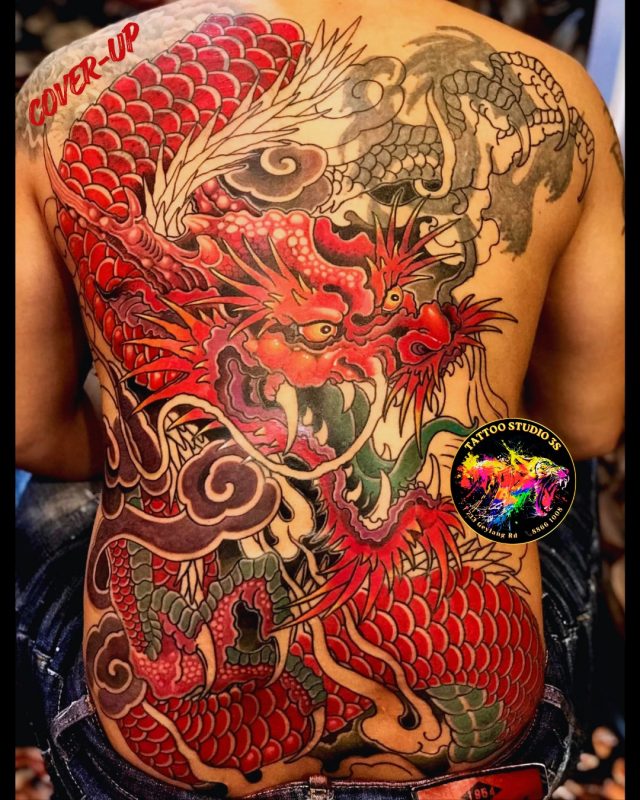
A Japanese dragon tattoo is a tattoo inspired by the dragon imagery found in Japanese mythology, folklore, and traditional art. Japanese dragons are typically depicted as long, serpentine creatures with powerful claws, prominent scales, horns, whiskers, and highly expressive faces. Unlike the winged dragons commonly seen in Western fantasy, Japanese dragons usually do not have wings. Their bodies twist naturally through clouds, wind, water, or waves, making them especially suitable for large tattoo compositions. In Japanese-style tattooing, the dragon is rarely treated as an isolated image. Background elements such as clouds, waves, wind bars, flowers, and other symbolic motifs can connect the entire piece and create the characteristic movement associated with Japanese tattoo art.
The Origin Of Dragons In Japanese Tattoo Art
Dragon imagery in Japan developed through a mixture of indigenous beliefs and influences that arrived from other parts of East Asia, particularly China. Over time, dragons became deeply integrated into Japanese mythology, religious imagery, folklore, and visual art. They are frequently associated with water, rainfall, rivers, seas, and natural forces. Rather than simply representing destruction, Japanese dragons may be portrayed as powerful spiritual beings connected with wisdom, protection, and control over elements of nature. These characteristics made the dragon a natural subject for traditional Japanese tattooing. Its elongated body also gives tattoo artists considerable freedom to create flowing compositions across the back, arms, chest, shoulders, and legs.
Japanese Dragon Vs Chinese Dragon
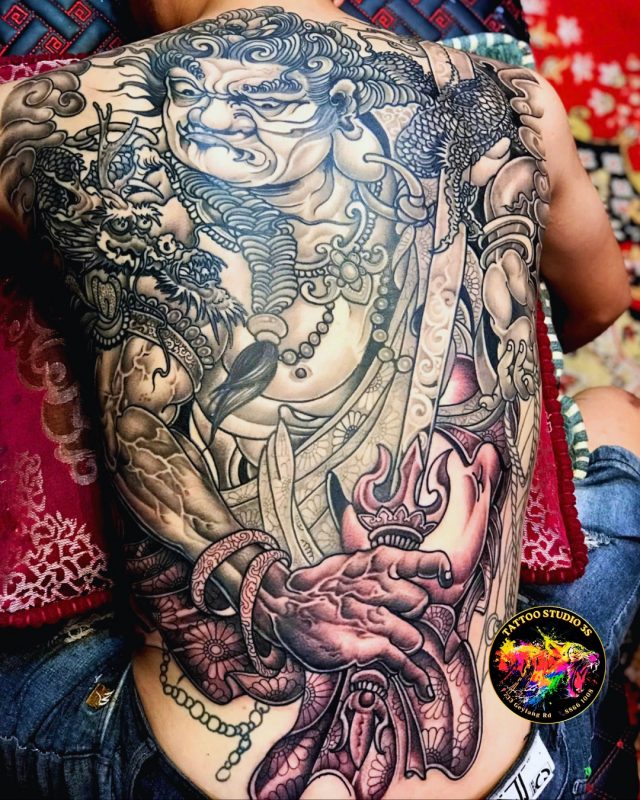
Japanese and Chinese dragons share many visual characteristics because of centuries of cultural exchange. Both are commonly depicted with long serpentine bodies, claws, scales, horns, and associations with water, weather, spiritual power, and good fortune. However, artistic conventions can differ depending on the period and artwork. One commonly cited distinction in traditional depictions is the number of claws, with some Japanese dragons shown with three claws while Chinese imperial dragons were famously depicted with five. For tattooing, the difference is not always determined by a single physical feature. Background composition, facial treatment, movement, accompanying motifs, and the overall artistic tradition often contribute more to whether a piece reads as Japanese or Chinese.
Japanese Dragon Vs Western Dragon
Japanese and Western dragons can look dramatically different.
– Japanese dragons usually have long, snake-like bodies and are commonly shown without wings. They often move through clouds, waves, wind, or water, creating a flowing composition that works naturally with the body’s contours.
– Western dragons are more commonly depicted with large wings, four legs, heavy reptilian bodies, and fire-breathing imagery. In European legends and modern fantasy, dragons are often portrayed as dangerous creatures, guardians of treasure, or powerful opponents.
– Japanese dragon imagery, meanwhile, often places greater emphasis on natural forces, spiritual power, wisdom, protection, and water. These differences give Japanese dragon tattoos their distinctive visual character and symbolism.
Japanese Dragon Tattoo Meaning And Symbolism
The meaning of a Japanese dragon tattoo can change according to its color, pose, surrounding elements, and the personal interpretation of the wearer. Rather than having one universal meaning, the dragon can represent several interconnected ideas.
Strength And Power
The dragon’s commanding appearance makes it a natural symbol of strength and power. A large dragon wrapping around the arm, leg, or back can express confidence, resilience, and the determination to face difficult situations.
Wisdom And Protection
Japanese dragons can also be associated with wisdom and guardianship. For some wearers, a dragon tattoo represents guidance, protection, or the ability to use strength with intelligence rather than aggression.
Courage And Perseverance
A dragon fighting through waves, wind, or turbulent clouds can visually represent overcoming challenges. This makes it a meaningful option for people who want their tattoo to mark resilience, endurance, or an important period in their lives.
Good Fortune And Prosperity
East Asian dragon traditions have long connected dragons with auspicious ideas, rain, abundance, and prosperity. In a tattoo, these associations can be interpreted as hopes for good fortune, success, and positive opportunities.
Transformation And Personal Growth
The dragon can also represent transformation. A Japanese dragon tattoo may mark personal development, leaving behind an old chapter, or becoming stronger through challenging experiences.
Japanese Dragon Tattoo Meaning By Color
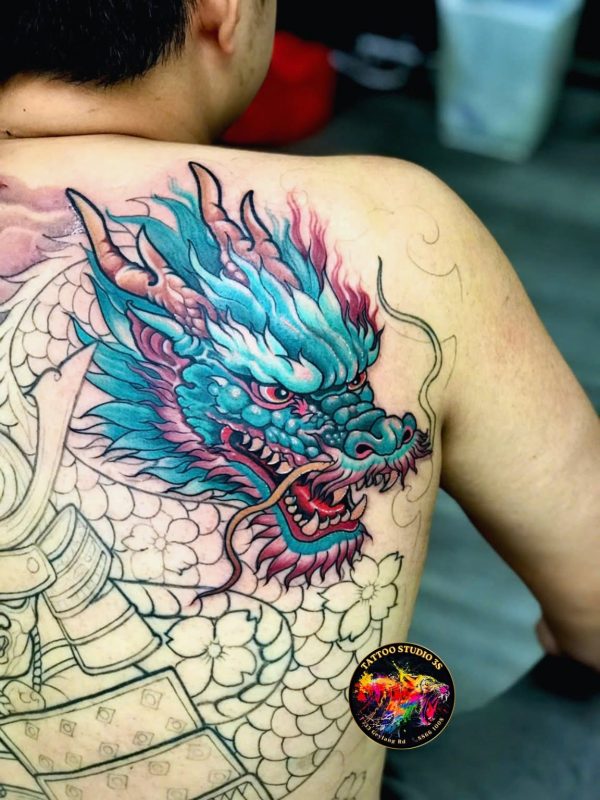
Color can dramatically change the appearance and personal symbolism of a Japanese dragon tattoo. While color meanings are not universal rules, certain shades are often chosen to reinforce particular moods or themes.
Black Japanese Dragon Tattoo
Black creates a strong, dramatic appearance and works particularly well with bold outlines and detailed shading. A black dragon may be interpreted as representing strength, experience, authority, mystery, or resilience.
Red Japanese Dragon Tattoo
Red immediately attracts attention and gives the dragon an energetic appearance. It can evoke passion, courage, intensity, vitality, and power, making it suitable for bold Japanese tattoo compositions.
Blue Japanese Dragon Tattoo
Blue naturally complements the dragon’s association with water and sky. It can suggest calmness, depth, wisdom, stability, or control while pairing beautifully with waves and clouds.
Green Japanese Dragon Tattoo
Green can create a strong connection with nature, renewal, and growth. A green dragon is an appealing choice for designs involving plants, flowers, water, or other natural imagery.
Gold And Yellow Japanese Dragon Tattoo
Gold and yellow can make a dragon appear particularly striking and regal. These colors are often visually associated with prosperity, wealth, confidence, warmth, and positive energy.
20+ Japanese Dragon Tattoo Design Ideas
The flexibility of the dragon makes it possible to create countless compositions. From traditional Irezumi-inspired pieces to contemporary black and grey designs, the following ideas can provide inspiration for your next tattoo.
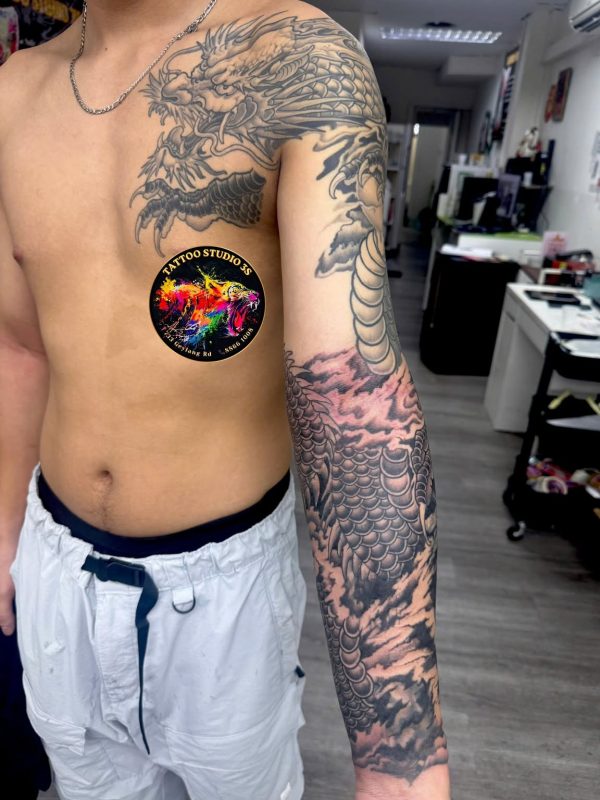
1. Traditional Japanese Dragon Tattoo
A traditional Japanese dragon tattoo emphasizes strong outlines, flowing movement, recognizable Japanese motifs, and a carefully structured background. The dragon may twist between waves, clouds, wind bars, and flowers to form one continuous composition. This approach works especially well for full sleeves, back pieces, chest panels, and large leg tattoos.
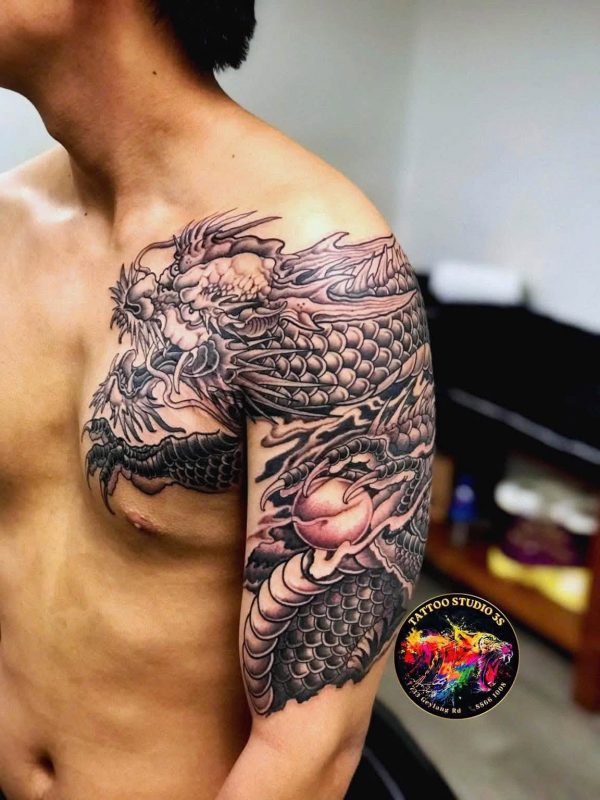
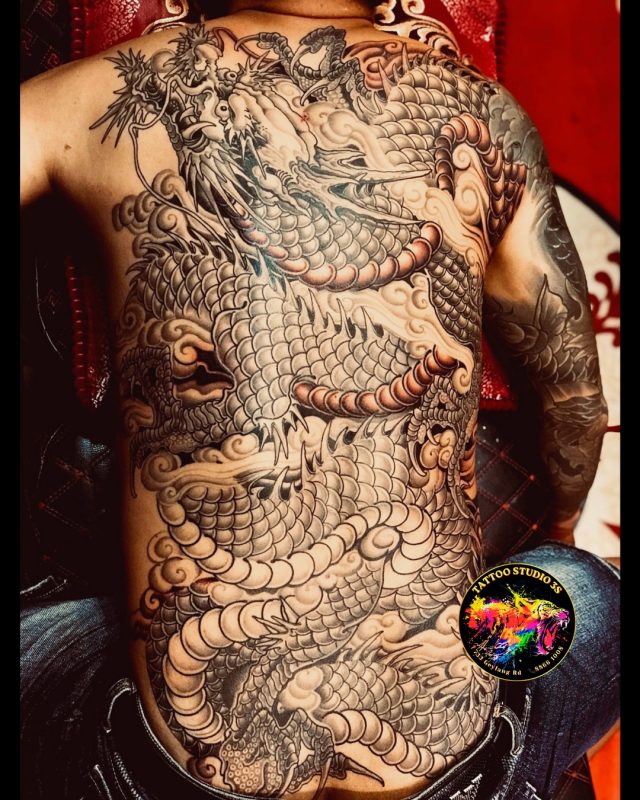
2. Black And Grey Japanese Dragon Tattoo
Black and grey allows the scales, face, claws, and background to become the main focus without relying on bright colors. Different shades of black and grey can create depth between the dragon and surrounding clouds or waves. This style can feel dramatic and sophisticated while retaining the powerful character of Japanese imagery.
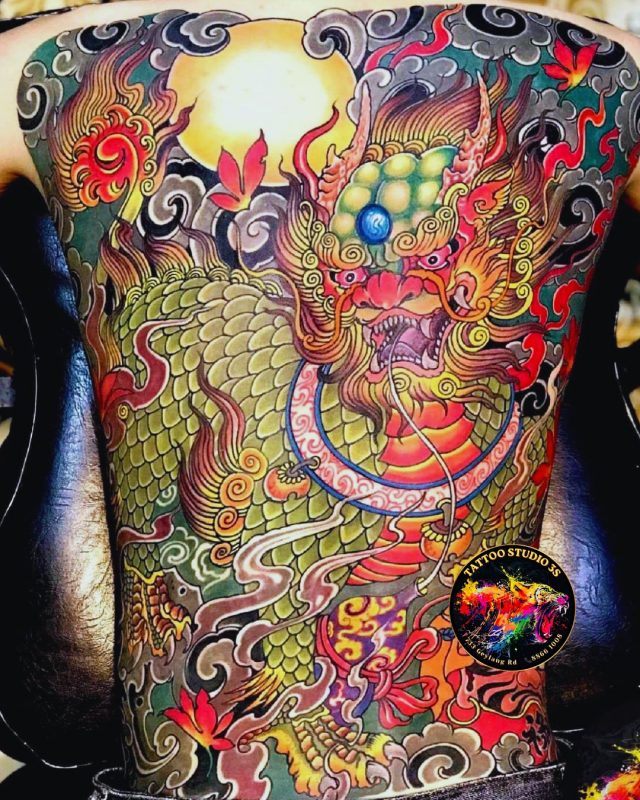
3. Color Japanese Dragon Tattoo
A full-color dragon offers enormous creative freedom. Red, blue, green, gold, orange, and other shades can be combined with contrasting flowers, waves, and backgrounds. Color can also help separate different components of a complex sleeve or back piece, making the dragon easier to identify within a highly detailed composition.
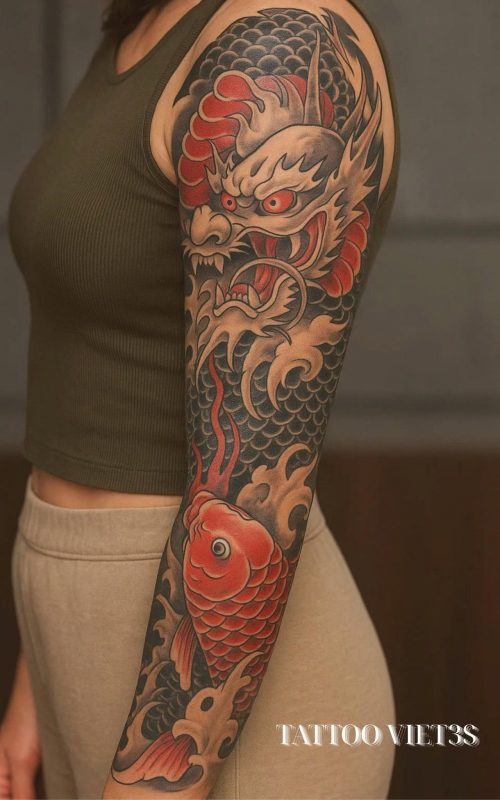
4. Japanese Dragon And Koi Fish Tattoo
Dragon and koi imagery creates a composition strongly associated with perseverance and transformation. The combination can be particularly meaningful for someone who wants their tattoo to represent overcoming difficulties and progressing toward a stronger version of themselves. Water and waves can visually connect the two subjects, making this combination ideal for sleeves, backs, and legs.
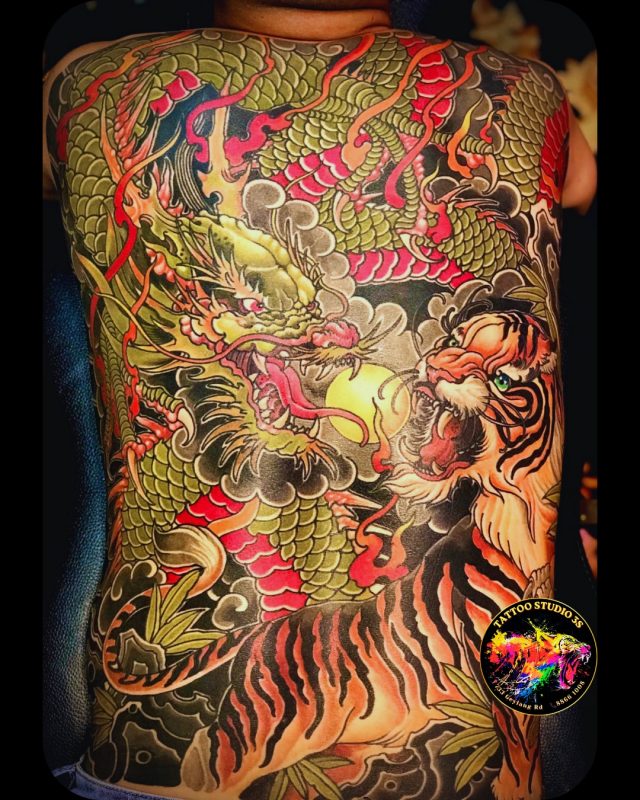
5. Japanese Dragon And Tiger Tattoo
The dragon and tiger create one of the most visually powerful pairings in Asian-inspired tattoo art. The dragon can represent spiritual or celestial power, while the tiger conveys physical strength, courage, and earthly energy. Placing the two together creates contrast and dynamic tension, particularly across the back or chest.
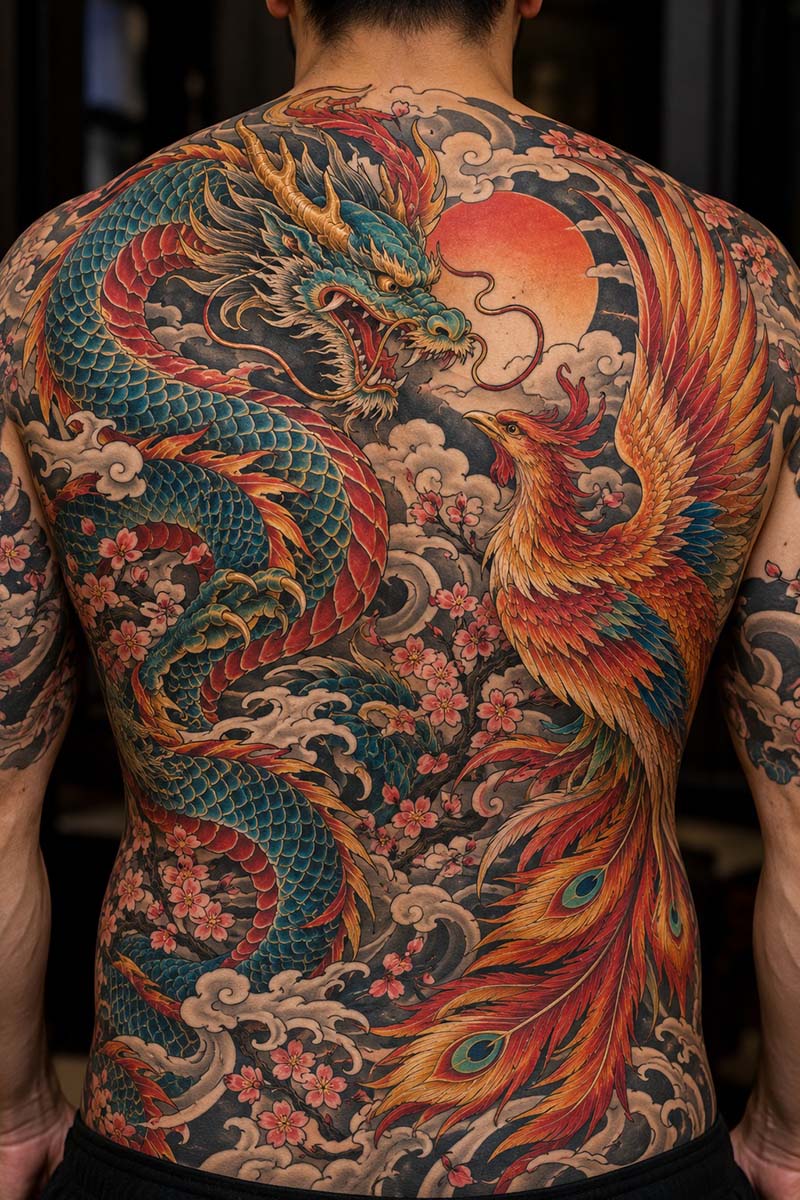
6. Japanese Dragon And Phoenix Tattoo
Combining a dragon with a phoenix produces a highly elaborate design filled with movement and color. The phoenix can evoke rebirth and renewal, while the dragon contributes strength and wisdom. Together, they can form a symbolic composition centered on transformation, harmony, and personal development.
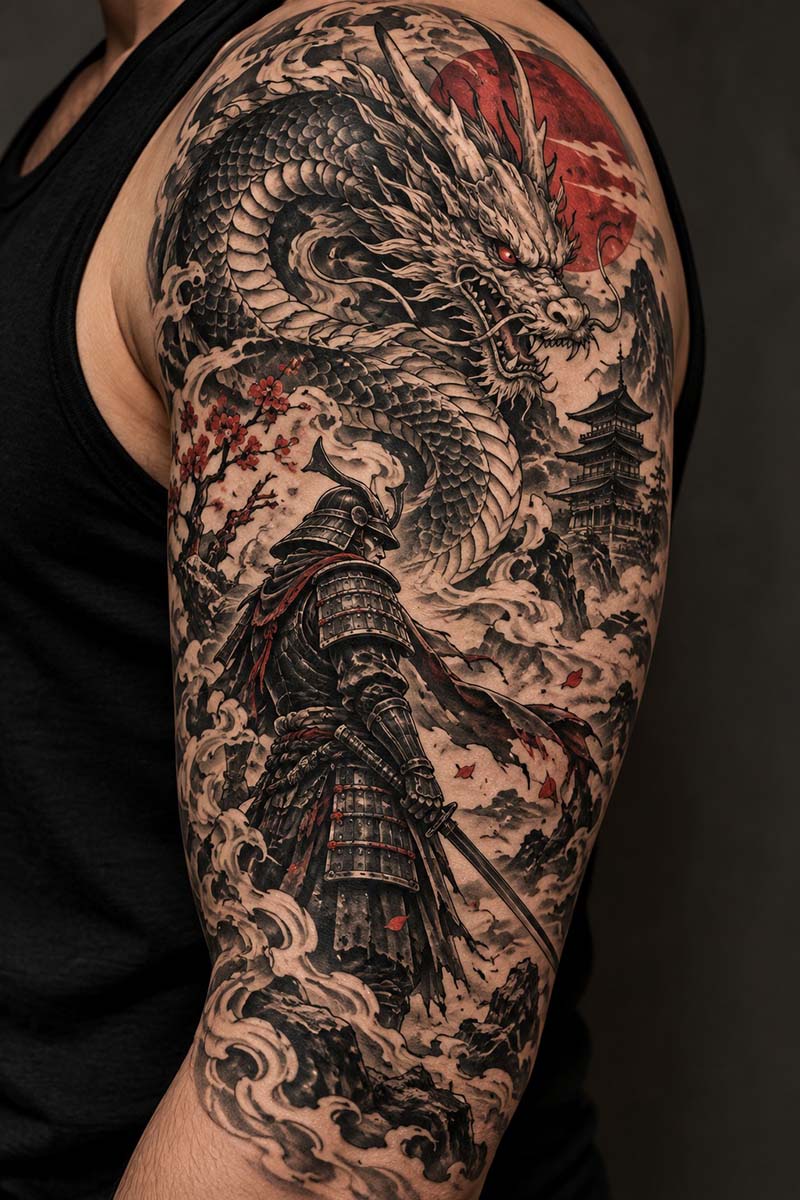
7. Japanese Dragon And Samurai Tattoo
A samurai and dragon tattoo combines two visually commanding subjects. Samurai imagery can evoke discipline, courage, loyalty, and martial strength, while the dragon introduces supernatural power and movement. Because both subjects require substantial detail, this combination works particularly well as a back piece, sleeve, or large thigh tattoo.
8. Japanese Dragon And Hannya Mask Tattoo
Pairing a Japanese dragon with a Hannya mask creates a darker and more emotionally intense composition. The expressive Hannya face contrasts with the flowing shape of the dragon, allowing the artist to explore themes such as powerful emotions, internal conflict, protection, and transformation. Flowers, smoke, or waves can be used to connect the two elements.
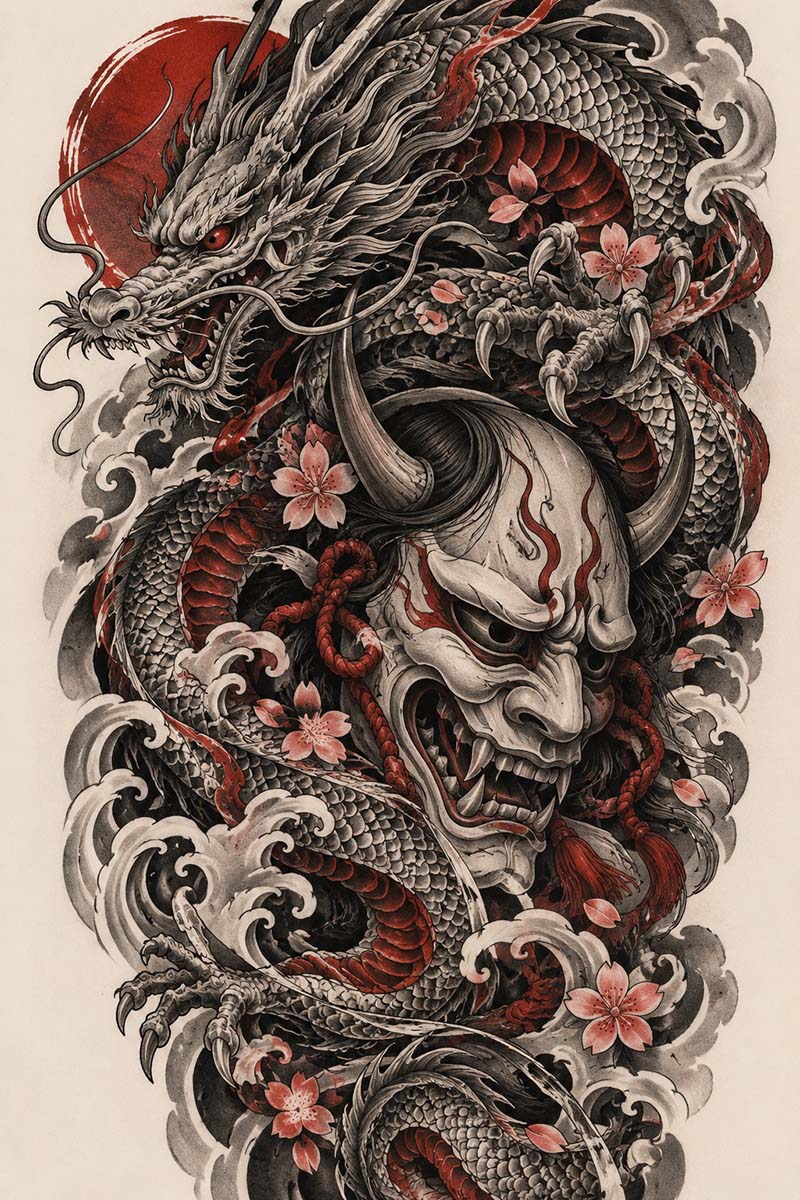
9. Japanese Dragon And Cherry Blossom Tattoo
Cherry blossoms soften the imposing appearance of a dragon and introduce a sense of delicacy. Because cherry blossoms are strongly associated with the fleeting nature of life and beauty, they can add another symbolic layer to a dragon representing strength and endurance. The contrast also works exceptionally well in colorful Japanese tattoos.
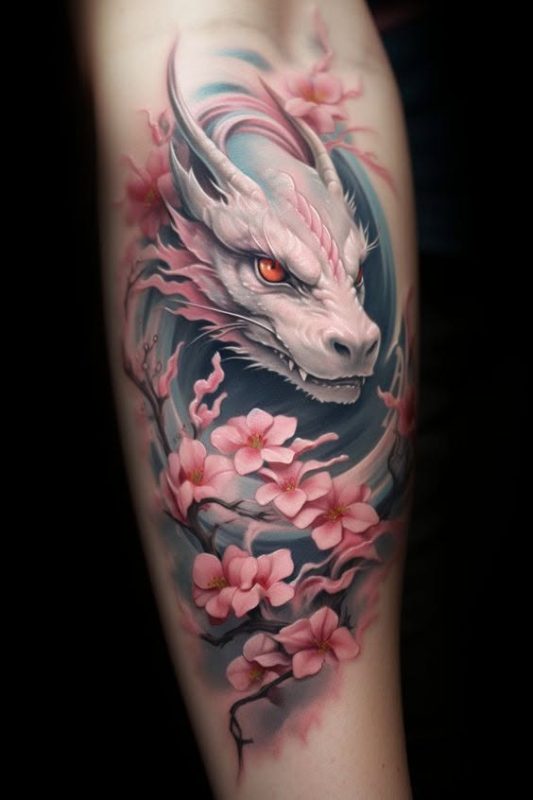
10. Japanese Dragon And Peony Tattoo
Large peony blossoms provide an excellent visual counterpoint to the scales and claws of a dragon. Their rounded petals can fill negative spaces around the dragon while introducing additional color. This pairing is particularly effective for sleeves and back pieces where the flowers can help balance the overall composition.
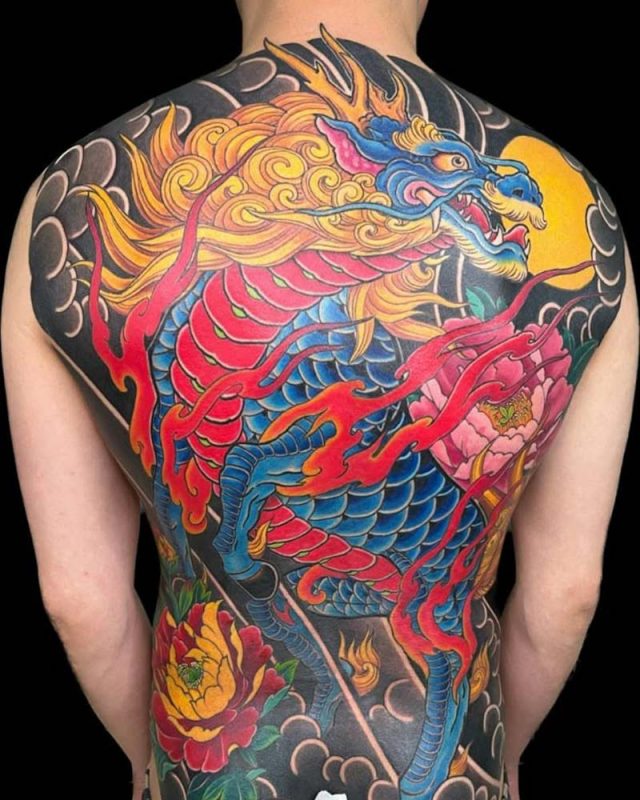
11. Japanese Dragon And Lotus Tattoo
A lotus can bring a calmer and more spiritual feeling to a Japanese dragon composition. The flower is widely associated with purity, renewal, and spiritual growth in Asian religious traditions. Combined with a dragon, it can create a design centered on strength, wisdom, and personal transformation.
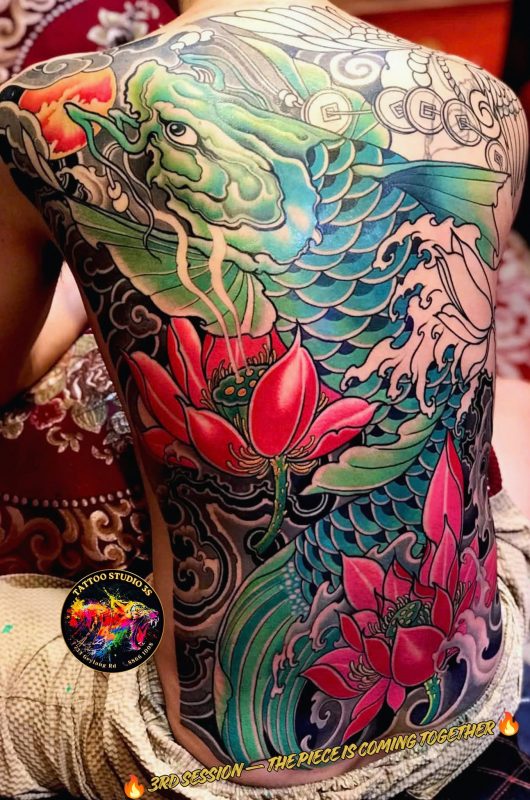
12. Japanese Dragon And Wave Tattoo
Waves are a natural partner for Japanese dragons because of their strong association with water. Large curling waves can follow the movement of the dragon’s body, creating an energetic composition from shoulder to wrist or thigh to ankle. The contrast between scales, foam, and water also gives the artist opportunities to build texture and depth.
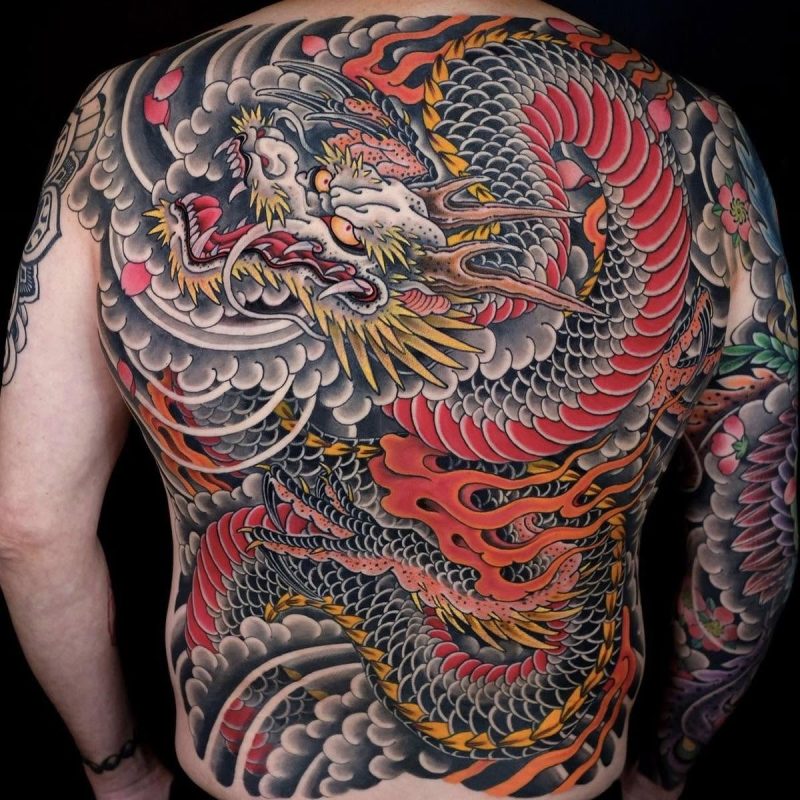
13. Japanese Dragon And Cloud Tattoo
Clouds create depth and movement while allowing the dragon to appear as though it is moving through the sky. They can also fill awkward spaces between the dragon’s body, claws, and other motifs. This makes clouds especially useful when building cohesive sleeves and large-scale Japanese pieces.
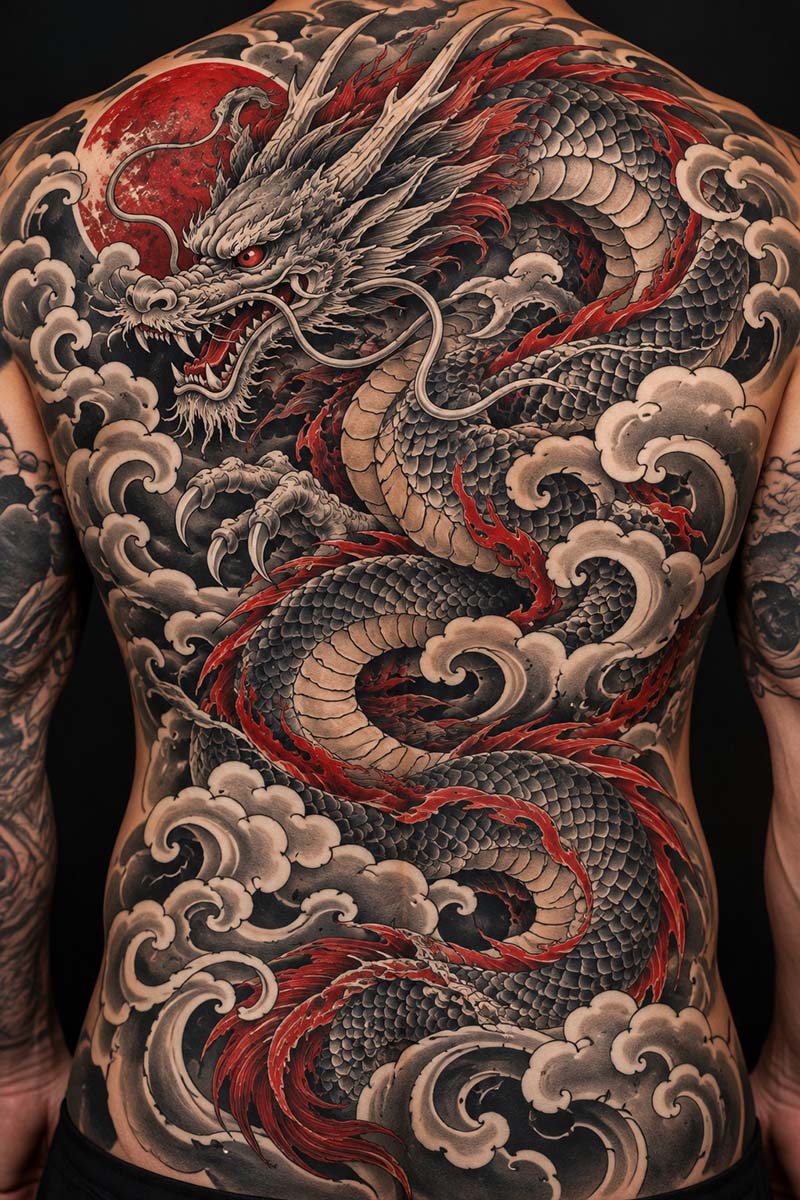
14. Japanese Dragon And Fire Tattoo
Although Japanese dragons have particularly strong associations with water, fire can be incorporated as a dramatic artistic element. Flames surrounding a dragon create an intense, energetic appearance and work particularly well with red, orange, yellow, and black palettes. The result can be a bold contemporary interpretation of Japanese dragon imagery.
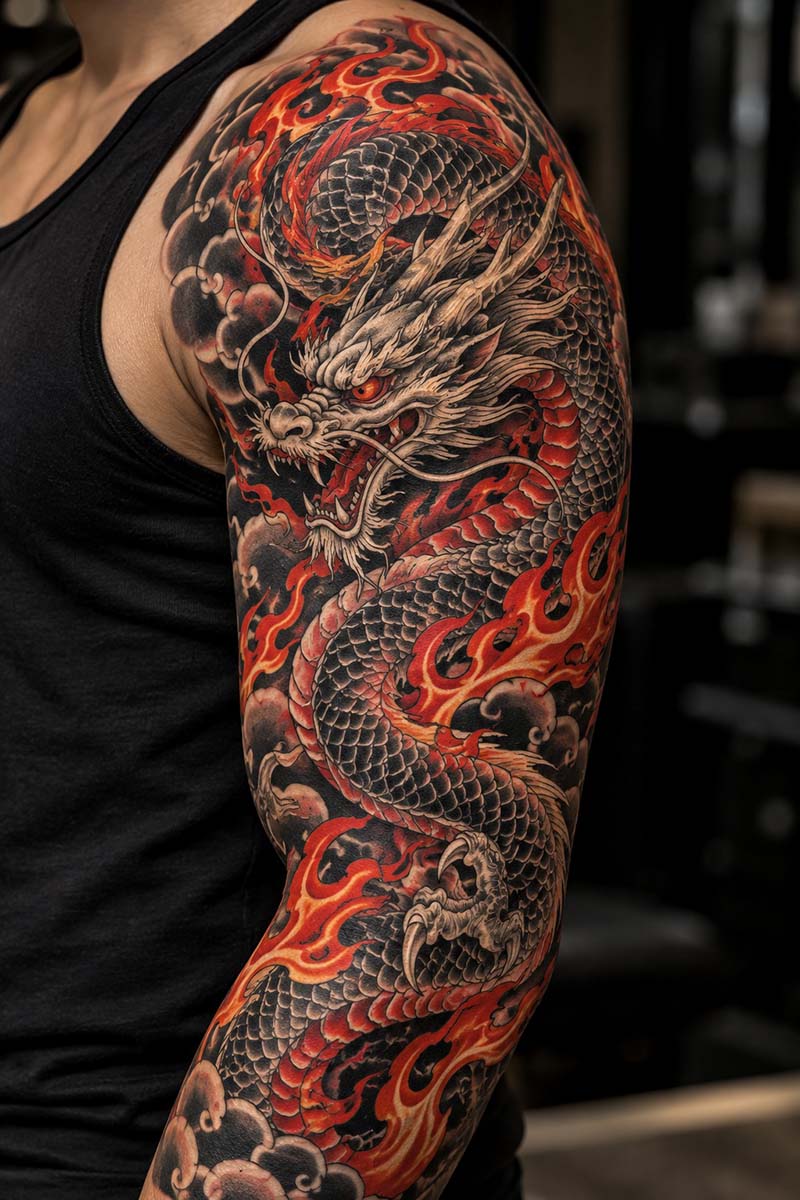
Best Placements For A Japanese Dragon Tattoo
(Những vị trí đẹp để xăm rồng Nhật Bản)
Choosing the right placement is particularly important because the dragon’s long body should ideally flow with the natural lines of your anatomy.
- Back: The back provides one of the largest uninterrupted canvases on the body. It allows the artist to create a large dragon surrounded by detailed waves, clouds, flowers, and other imagery.
- Full sleeve: The dragon’s serpentine body can wrap naturally around the arm from shoulder to wrist. Clouds, wind, waves, and flowers can then fill the surrounding spaces.
- Chest: A dragon across the chest creates a powerful visual statement. The design can also connect with the shoulder, sleeve, or back to create a larger Japanese tattoo composition.
- Shoulder: The rounded shape of the shoulder works well with a coiling dragon. It also provides an excellent starting point if you plan to extend your tattoo into a half or full sleeve later.
- Leg/thigh: The thigh offers substantial room for detail, while a dragon can continue down the leg to create a long vertical composition.
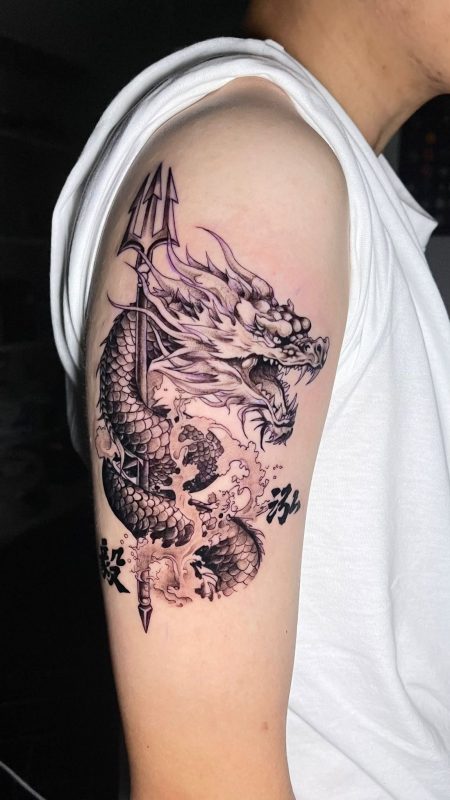
- Forearm: A forearm dragon is suitable for people who want a more visible design without committing to a complete sleeve. The design should be carefully simplified so important facial and scale details remain readable.
Black And Grey Vs Color Japanese Dragon Tattoos
(Nên chọn hình xăm rồng Nhật Bản đen xám hay có màu?)
Both black and grey and full-color Japanese dragon tattoos can look impressive, but they create very different visual effects.
– Black and grey emphasizes contrast, shading, texture, and form. Without multiple colors competing for attention, details such as scales, teeth, claws, facial features, clouds, and waves can become particularly prominent. It is a strong choice for people who prefer a darker or more understated aesthetic.
– Color tattoos create a much more vibrant effect. Strong reds, greens, blues, yellows, and oranges can distinguish the dragon from flowers, waves, clouds, and other background elements.
– Your decision should ultimately consider your preferred aesthetic, skin tone, tattoo size, placement, existing tattoos, and the overall composition rather than color alone.
How To Choose The Right Japanese Dragon Tattoo Design
A successful Japanese dragon tattoo should work as a complete composition rather than simply placing a dragon illustration onto the skin.
– Decide What Your Dragon Should Represent: Think about why you are choosing the dragon. Is it about strength, protection, perseverance, transformation, wisdom, or simply your appreciation for Japanese tattoo art? Having a clear direction can help the artist choose an appropriate pose, expression, colors, and supporting imagery.
– Choose The Right Supporting Elements: Koi fish, peonies, cherry blossoms, lotus flowers, waves, clouds, tigers, phoenixes, and Hannya masks can dramatically change the visual character of the tattoo. Rather than adding motifs simply because they look attractive, consider how they interact visually and symbolically with the dragon.
– Match The Design To Your Body Placement: A tattoo should be designed specifically for the area where it will be placed. A dragon for the back can spread outward and contain considerable detail. A sleeve requires a more vertical, wrapping composition, while a forearm tattoo needs to remain readable within a narrower space.
– Work With An Artist Experienced In Japanese Tattoos: Japanese tattoos require careful attention to composition, linework, background, movement, and the relationship between individual motifs. Working with an artist experienced in Japanese-style tattooing can help ensure the dragon follows your anatomy naturally and remains visually balanced from different angles.
How Much Does A Japanese Dragon Tattoo Cost?
There is no single fixed price for a Japanese dragon tattoo. The final cost depends heavily on the scale and complexity of the project. A smaller dragon with limited background work will generally require less time than a detailed full sleeve or back piece. Full-color designs may also require additional work because of the amount of color packing, blending, and detailing involved. The artist’s experience, studio location, level of detail, body placement, and number of sessions can all affect the total price.
For large-scale Japanese tattoos, it is often more useful to discuss the complete project with your artist rather than focusing only on the price of an individual session. A consultation allows the artist to assess your chosen placement and provide a more realistic estimate.
Does A Japanese Dragon Tattoo Hurt?
Yes, getting a Japanese dragon tattoo involves some discomfort, but the intensity varies considerably depending on placement and individual pain tolerance. Fleshier areas such as the outer upper arm and thigh are often considered easier to tolerate than areas with less cushioning. Tattoos around the ribs, sternum, spine, elbow, knee, ankle, and other bony or sensitive areas may feel more intense. Large Japanese dragon tattoos can also take multiple sessions. You do not necessarily need to complete a sleeve or back piece in one sitting. Breaking the project into manageable sessions gives the skin time to recover and can make the overall process easier.
Japanese Dragon Tattoo Aftercare Tips
Proper aftercare helps your tattoo heal while preserving fine details and color.
– Follow the specific aftercare instructions provided by your tattoo artist, as recommendations can vary depending on the tattoo and dressing used. Keep the area clean and avoid unnecessary touching while it heals.
– Do not scratch or peel flaking skin, even when the tattoo becomes itchy. Avoid prolonged soaking in pools, baths, hot tubs, or the sea during the initial healing period.
– Fresh tattoos should also be protected from excessive sun exposure. Once completely healed, appropriate sun protection can help reduce fading over time, particularly in colorful pieces.
– Large Japanese dragon tattoos may be completed across several sessions, so good aftercare between appointments is particularly important.

Get Your Japanese Dragon Tattoo At Tattoo Studio 3S
A Japanese dragon tattoo becomes especially impressive when the design is created around your individual body shape rather than copied directly from an existing image.
At Tattoo Studio 3S, Japanese dragon tattoos can be developed as custom pieces based on your preferred symbolism, placement, size, and visual style. Whether you prefer a dramatic black and grey dragon, a vibrant full-color composition, a complete sleeve, or an expansive back piece, the design can be planned to flow naturally with your anatomy.
You can also discuss supporting elements such as waves, clouds, koi fish, peonies, cherry blossoms, tigers, phoenixes, or Hannya masks to create a more complete composition. If you already have an idea or reference image, bring it to your consultation so the tattoo artist can help adapt the concept into a design created specifically for you.
CONTACT
Hotline: +65 8866 1008
Address: 733 Geylang Road, #02-01, Singapore 389644